
President Tinubu Declines Meeting With South African Envoys Amid Xenophobic Attacks
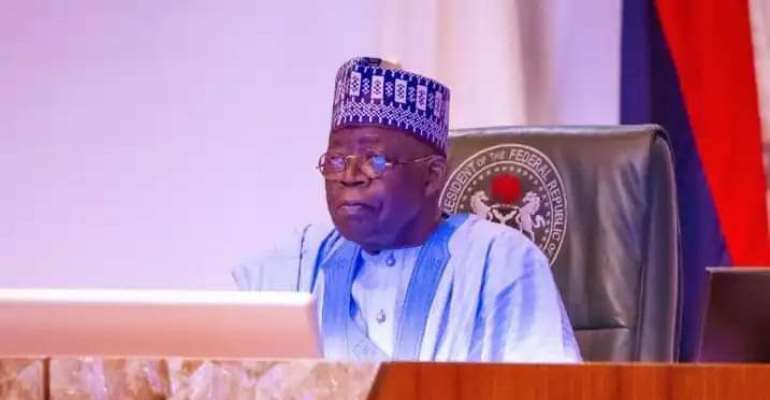
President Bola Tinubu on Monday declined to personally receive a special delegation from South Africa led by the country's Minister of International Relations and Cooperation, Ronald Lamola, amid renewed xenophobic attacks against Nigerians in South Africa.
Instead, the President directed the delegation to meet with the Minister of State for Foreign Affairs, Ambassador Sola Enikanolaiye, to discuss the diplomatic crisis and report back to him.
The South African delegation, sent by President Cyril Ramaphosa, reportedly arrived in Abuja on Friday carrying a special message for Tinubu following the recent wave of attacks on Nigerians and other African nationals in South Africa.
Presidency sources said the delegation had initially sought an audience with the President shortly after arriving in the country but was informed that no prior arrangement had been made.
One Presidency official disclosed that although the visitors were asked to return on Monday, Tinubu later instructed that discussions be held with the Minister of State for Foreign Affairs instead.
“They actually came here on Friday wanting to see the President. But there was no prior notice. We asked the President, and he said they could come on Monday. But when Monday came, he simply directed them to meet the Minister of State for Foreign Affairs, who would brief him afterward,’’ the source said.
Another Presidency source confirmed that the planned meeting with Tinubu did not take place.
The diplomatic development comes as relations between Nigeria and South Africa remain strained over recurring xenophobic attacks, which recently forced the evacuation of nearly 600 Nigerians from South Africa.
Sources also indicated that the Minister of Foreign Affairs, Ambassador Bianca Odumegwu-Ojukwu, who is currently attending official engagements in Addis Ababa, advised that it was inappropriate for Tinubu to personally receive the delegation while attacks against Nigerians and their businesses were still ongoing.
Receiving the South African delegation in Abuja, Enikanolaiye said Tinubu had mandated him to engage the visitors on finding lasting solutions to the violence, stressing that the long-standing ties between both countries should not be undermined by attacks targeting African migrants.
"It is with profound pleasure that I welcome our brothers from South Africa. President Bola Ahmed Tinubu had actually asked us to meet with you and exchange views and perspectives on how to address and resolve the ongoing Afrophobic attacks in South Africa, of which Nigerians and other citizens of Africa have been victims," he said.
The minister expressed concern over the repeated attacks on Nigerians, noting that similar incidents had occurred in 1995, 1998, 2006, 2015, 2016, 2019, 2021, 2024 and 2026.
According to him, at least 98 Nigerians have been killed in hate-related mob attacks since 2022.
Enikanolaiye recalled Nigeria's support for South Africa during the anti-apartheid struggle, arguing that the violence contradicted the historic relationship between both nations.
While reiterating Nigeria's opposition to criminality, he insisted that anyone accused of committing offences should be subjected to due legal process rather than mob justice.
"The Nigerian government will not support drug peddlers, but what we're saying is that they should be treated in accordance with your constitution, international human rights instruments and the minimum requirement of humanity," he stated.
He further accused South African authorities of failing to adequately protect victims, alleging that security agencies had, in some instances, appeared helpless while attacks were being carried out.
The minister also described the humanitarian consequences of previous attacks as devastating, recalling the evacuation of almost 1,500 Nigerians during an earlier wave of violence.
"I shed tears in the plane when I saw children, women and the elderly returning home almost with nothing. Some of them had their properties looted and destroyed," he said.
Responding, Lamola said President Ramaphosa had sent him to reaffirm South Africa's rejection of xenophobia, racism and all forms of intolerance.
He, however, maintained that South Africa would continue enforcing its immigration laws and tackling criminal activities within its borders.
Lamola described migration as a continental challenge requiring cooperation between African countries and expressed optimism that continued dialogue between Abuja and Pretoria would help ease tensions and strengthen bilateral relations.