
Why Democracy Is Not Working In Africa
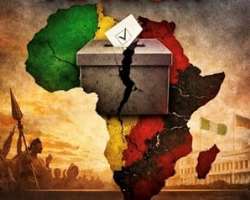
Quite often, democracy is presented as the ideal system of government for every nation. Across Africa, elections are held regularly, constitutions guarantee fundamental rights, and governments proudly describe themselves as democratic. Yet, despite these outward symbols, many African countries continue to struggle with authoritarianism, electoral violence, corruption, weak institutions, and a widening gap between leaders and citizens.
This raises an uncomfortable but necessary question: why has democracy failed to deliver its promises in much of Africa? The answer lies in the continent's colonial history. The irony is striking. European powers that championed democracy at home ruled Africa through systems that were anything but democratic. Africans were never taught democracy through practice, instead, Africans experienced governance based on conquest, coercion, racial malpractices, and exclusion. It is therefore unsurprising that many post-colonial African states inherited institutions that were designed to control people rather than empower them.
Colonial administrations did not seek the consent of the governed. Governors-General were appointed from Europe, not elected by Africans. Traditional institutions were manipulated to serve colonial interests, while dissent was suppressed through force. Laws were enacted without public consultation, taxation was imposed without representation, and political participation was limited to a privileged few. Essentially, colonial governments were accountable to London, Paris, Lisbon, or Brussels and never to the African people.
When independence arrived in the 1950s and 1960s, African leaders inherited state structures that were overly centralised and authoritarian. The machinery of government had been designed to extract resources, maintain order, and preserve power. Very little effort, if any, was made to nurture democratic values such as tolerance, compromise, accountability, or civic participation. Elections replaced colonial appointments, but many of the underlying institutions remained unchanged. The result was predictable, as numerous post-independence leaders simply occupied the seats vacated by colonial rulers. One-party states emerged, constitutions were frequently amended to extend presidential terms, and military coups became commonplace. In many cases, elections became contests over access to state resources rather than opportunities for citizens.
One major challenge is that, in post-colonial Afria, institutions tend to preserve the colonial values upon which they were created. A state established for domination does not automatically become one that serves its citizens simply because a national flag replaces a colonial one. Genuine democratic transformation requires more than periodic elections; it requires rebuilding institutions around transparency, accountability, justice, and citizen participation.
Another challenge is that democracy in Africa has too often been measured by external standards rather than local realities. International observers frequently judge democratic success by whether elections are peaceful and procedurally acceptable. Yet democracy is far more than voting every four or five years. It also demands an independent judiciary, a professional civil service, free media, vibrant civil society, respect for minority rights, and leaders willing to accept electoral defeat. These democratic habits cannot flourish overnight in societies whose first sustained experience of modern statehood was authoritarian colonial rule.
There is also value in rediscovering indigenous African traditions of governance. Before colonialism, many African societies practised forms of consensus-building, consultation, and collective decision-making through councils of elders, village assemblies, and traditional institutions. While these systems were not democratic in the modern liberal sense, they often emphasised dialogue, accountability, and community participation. Modern African democracies need not imitate foreign models exclusively; they can blend constitutional democracy with indigenous traditions that strengthen legitimacy and public trust.
The future of democracy in Africa depends not on abandoning democratic ideals but on deepening them. Strong institutions must take precedence over strong personalities. Civic education should cultivate citizens who understand both their rights and responsibilities. Electoral commissions must be genuinely independent, while the rule of law should apply equally to rulers and the ruled.
Democracy in Africa is not failing because Africans are incapable of democratic governance. Democracy struggles in Africa because the continent inherited political systems shaped by colonial domination rather than democratic participation. That inheritance continues to cast a long shadow. Breaking free from it requires courage, institutional reform, and a commitment to building governments that derive their legitimacy not from inherited power but from the freely expressed will of the people.
Only then can democracy truly become African, not merely in geography, but in spirit and practice.
Magaji <[email protected]> writes from Abuja