
The Writers, Books And Ideas That Shaped My Pen
There is a popular Yoruba song by the late Olando Owoh which says:
"Ohun tí mo rí ni máa wí, ohun tí ó ṣo mí di aláròyé ni máa sọ."
Translated into English, it means: "I will speak about what I have seen; I will tell the experiences that made me a public commentator." This philosophy has remained the foundation of my writing. I do not write merely to entertain. I write because ideas, experiences and history compel me to do so. Many people who read my articles today may assume that my interest in public affairs developed recently. The truth is quite different. My passion for reading, critical thinking and social commentary was cultivated over many decades through the influence of great African writers, political thinkers and journalists.
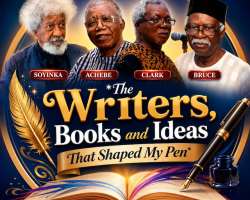
Among those who profoundly influenced my intellectual development are four distinguished Nigerian professors who attained the highest academic distinction largely through their exceptional scholarship and creative contributions rather than by earning doctoral degrees: Professor Wole Soyinka, Professor Chinua Achebe, Professor J. P. Clark-Bekederemo and Professor Bruce Onobrakpeya. Their lives demonstrate that while academic qualifications are important, originality, scholarship and enduring contributions to humanity can also define greatness.
Of these literary giants, Wole Soyinka has perhaps influenced me the most. I have read almost all his novels and dramatic works, with the exception of Kongi's Harvest. Among his works, The Interpreters remains the most intellectually demanding. Written when Soyinka was still a relatively young writer, the novel challenged conventional thinking with its sophisticated language, symbolism and philosophical depth. It taught me that serious writing should not merely provide answers; it should provoke questions and encourage readers to think beyond the obvious.
The works of Chinua Achebe equally left a lasting impression on me. I have read virtually all his novels except Arrow of God. His masterpiece, Things Fall Apart, remains one of Africa's greatest literary achievements because it restored the dignity of African civilisation at a time when colonial narratives distorted African history. Achebe's famous observation that, "Until the lions have their own historians, the history of the hunt will always glorify the hunter," continues to remind me that Africans must tell their own stories from their own perspectives.
I also read many works by Professor J. P. Clark-Bekederemo, whose poetry and drama revealed the richness of African culture and the complexities of the Nigerian experience. His writings demonstrated that literature is not only an artistic expression but also a powerful instrument for preserving history and confronting injustice. Beyond Nigerian literature, I immersed myself in the works of Nelson Mandela, Camara Laye and numerous African authors whose writings deepened my understanding of colonialism, freedom, identity and human dignity. One novel that profoundly affected me emotionally was Festus Iyayi's Violence. Its vivid portrayal of poverty, exploitation and inequality moved me to tears and convinced me that literature possesses the power to awaken social conscience.
My literary exposure was not limited to African writers. During my younger years, I carefully studied twelve plays by William Shakespeare. Among them, Julius Caesar remains my favourite because of its timeless lessons on power, betrayal, ambition and political manipulation. Shakespeare's famous declaration, "The fault, dear Brutus, is not in our stars, but in ourselves," reinforced my belief that societies are transformed by human choices rather than destiny alone. Outside literature, political philosophy also shaped my thinking. During the ideological contest between capitalism and socialism, I devoted considerable time to reading socialist literature and books on the former Soviet Union. These readings broadened my understanding of class struggle, economic justice and governance. Although I developed my own independent perspectives, those books taught me the importance of examining issues from multiple ideological viewpoints before reaching conclusions.
Likewise, I read extensively on the transatlantic slave trade and African history. Those accounts strengthened my appreciation of the resilience of African people and the enduring consequences of historical injustice. They also reinforced my conviction that education and historical consciousness remain indispensable for Africa's development. My intellectual formation extended beyond books. As a secondary school student, I eagerly anticipated Dele Giwa's Wednesday columns in the National Concord newspaper. Following his assassination, I continued reading his fearless investigative journalism in Newswatch magazine, which he co-founded. His courage demonstrated that journalism is a public trust and that truth often demands sacrifice. Another influential columnist was Lam Adesina, whose writings in the Nigerian Tribune combined political insight with clarity and conviction. His articles taught me that effective commentary should enlighten readers rather than merely provoke them.
My youthful years also exposed me to political activism. I associated with progressive circles inspired by Dr Beko Ransome-Kuti's radical social criticism and the socialist ideas of the late Comrade Ola Oni. During Nigeria's military era under General Sani Abacha, I participated with others in facilitating Professor Attahiru Jega's visit to the University of Ilorin despite the tense political atmosphere. Experiences such as these strengthened my lifelong commitment to democracy, justice and intellectual freedom. Looking back today, I realise that whatever merit people find in my writings did not emerge overnight. It is the cumulative product of decades of disciplined reading, engagement with great literature, exposure to courageous journalism, participation in democratic struggles and continuous reflection on African society.
By the grace of Allah, this lifelong commitment to learning has enabled me to make my own modest contributions to scholarship and public discourse. To date, I have published over 30 articles in recognised local and international academic journals, written more than 60 articles in reputable newspapers, and contributed scholarly papers and chapters to four published books. These accomplishments are not a measure of personal greatness but evidence that persistent reading, disciplined study and consistent writing eventually produce meaningful results.
The American writer James Baldwin once observed, "You think your pain and your heartbreak are unprecedented in the history of the world, but then you read." That quotation perfectly captures my own journey. Books taught me that every society has confronted challenges, and that thoughtful writing can become an instrument for social transformation.
Similarly, Chinua Achebe wisely reminded us that,
"A man who does not know where the rain began to beat him cannot say where he dried his body."
My own intellectual journey began with the books I read, the people I encountered and the ideals I embraced. They continue to influence every article, essay and opinion I write today. If my writings contribute in any meaningful way to public discourse, it is because I stand on the shoulders of these remarkable writers, journalists and thinkers whose works first inspired me to observe carefully, think critically and speak courageously.
Above all, I hope my journey will inspire younger generations. Sadly, the culture of reading is gradually declining among many young people. Too many now rely on brief social media posts instead of immersing themselves in books that develop the mind and broaden the intellect. This trend should concern every parent, teacher and policymaker because a nation that neglects reading weakens its future.
Parents, in particular, have a critical responsibility. They must not leave the intellectual and moral development of their children entirely to schools. They should monitor their children's reading habits, encourage discipline, cultivate curiosity and create homes where books are valued. Good character, sound judgement and a love for knowledge begin in the family. While methods of discipline may differ from one family to another, the underlying principle remains timeless: children need guidance, supervision and consistent moral instruction if they are to realise their full potential. My earnest appeal to young people is simple: cultivate the habit of reading. Read beyond your school textbooks. Read literature, history, philosophy, politics, science and biographies.
Every great leader, scholar and writer was first a dedicated reader. Books expand the imagination, sharpen critical thinking and prepare ordinary people for extraordinary achievements. As I reflect on my own journey, I remain profoundly grateful to Allah for the opportunities He has given me to learn, write and contribute, however modestly, to scholarship and national discourse. If my story encourages even one young person to pick up a book, think independently and pursue knowledge with discipline and perseverance, then I will consider my efforts richly rewarded. For, in the end, books do more than educate us they transform us. They shape our minds, refine our character and prepare us to make meaningful contributions to humanity.
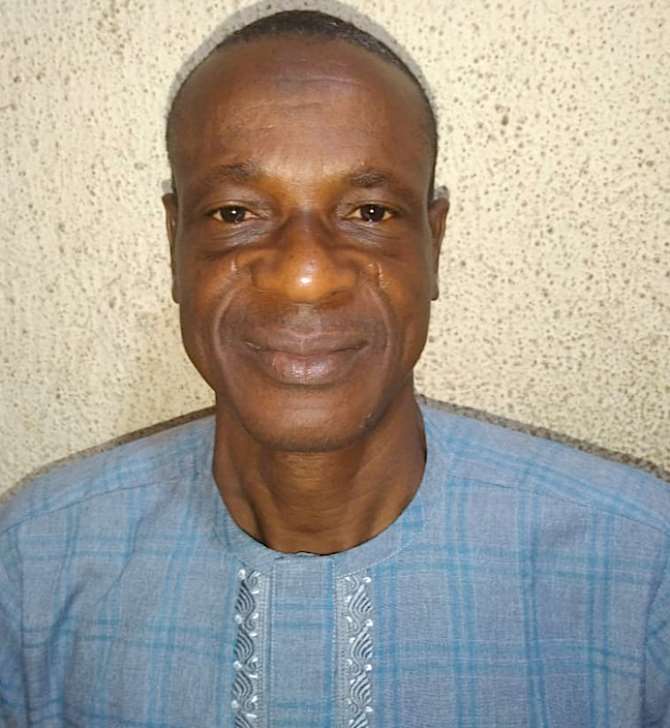
Dr. Gidado Abdulkarim Salimon writes from No 1b Halal Street Daudu Islamic Village, Ilorin kwara state.
Contact Information: Email: [email protected]