
Are Nigerians Ready To Fight Corruption Or Only Blame Politicians
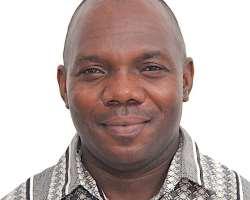
“The battle against corruption cannot be won by government action alone. It requires families to teach honesty, schools to instill ethical values, religious and community leaders to model integrity, businesses to reject fraud, and citizens to obey the law even when shortcuts are tempting. Every act of integrity strengthens the nation's moral foundation, just as every dishonest act weakens it.”
Corruption has long been regarded as one of Nigeria's most significant barriers to development. It weakens institutions, deters investment, erodes public trust, and deprives citizens of vital services. Each time a new corruption scandal surfaces, public outrage is swift, and politicians and government officials often bear the brunt of criticism. Such backlash is generally warranted, given the inherent responsibility of public office for accountability and transparency. However, an important question remains: Are Nigerians genuinely committed to combating corruption, or are they merely blaming politicians while neglecting their own responsibilities?
Corruption is not limited to government offices; it permeates various aspects of society, affecting interactions among individuals, businesses, institutions, and public officials. For instance, a motorist may offer a bribe to a traffic officer to avoid penalties for offenses such as driving without a valid license or possessing expired vehicle documents. Students may resort to paying for leaked examination questions, impersonating candidates, or bribing invigilators to overlook cheating during examinations conducted by WAEC, NECO, JAMB, or universities. During elections, politicians often distribute cash or gifts to sway voters, while some voters willingly accept these incentives in exchange for their votes. Job seekers may rely on personal connections, commonly referred to as "man-know-man," or offer bribes to secure employment rather than compete on merit. Individuals may obtain or use fraudulent academic certificates, driver's licenses, medical reports, or other official documents to secure jobs or other advantages.
Business owners might intentionally underreport income, maintain multiple sets of financial records, or fail to remit taxes to minimize their tax liabilities. Parents or applicants may offer bribes or use influential contacts to gain admission to schools or universities, circumventing established admission criteria. Individuals may present forged land documents, sell the same property to multiple buyers, or manipulate records for personal gain. Traders may alter measuring scales, sell counterfeit or adulterated products, or misrepresent the quality of goods to maximize profits. Employees might collude with suppliers to inflate prices or accept kickbacks in exchange for awarding contracts. People may submit fraudulent insurance claims, falsify bank information, or obtain loans through deceptive means. Researchers might plagiarize existing literature, falsify data, or pay others to write their theses or dissertations. Furthermore, a religious leader may misuse funds collected for charitable or religious purposes or exploit public trust through fraudulent fundraising activities. In both the public and private sectors, employers often engage in nepotism, recruiting or promoting friends and relatives regardless of their qualifications, thereby disadvantaging more deserving candidates.
Many Nigerians genuinely want a society free from corruption and often express outrage when public officials are implicated in financial scandals or abuses of power. Yet a significant gap often exists between publicly condemning corruption and accepting it in everyday life. While citizens are quick to criticize politicians for mismanaging public resources, some still offer bribes to get their way or to avoid punishment for a crime. Although these actions may seem minor compared with large-scale political corruption, they contribute to a culture that normalizes dishonesty and undermines accountability. This contradiction reveals that the battle against corruption is not solely a legal or political issue; it is also a moral and cultural one. A genuine commitment to combating corruption requires individuals to uphold integrity, even when dishonest shortcuts seem more convenient or advantageous.
Every day, the country suffers. Fuel prices spike, schools fall into disrepair, and hospitals struggle to provide even basic services. And what do we do in response? We point fingers, raise our voices, and vent our frustrations on social media. Yet too often, we return to our routines, becoming the very problem we condemned only hours earlier. Nigeria is in distress. However, no diagnosis can lead to recovery if the patient refuses to acknowledge that they, too, play a part in the affliction. We suffer from what might be called the "It's the government's fault" syndrome. While it’s undeniable that leadership has frequently failed—often in disastrous ways—this truth has become a convenient shield, allowing many citizens to evade their own responsibilities.
We blame Abuja for impassable roads, yet some of us block drainage channels to expand our shops or homes, contributing to floods that damage those very roads. We bemoan the electricity company for incessant blackouts, while some illegally bypass electricity meters, claiming, "everyone is doing it." We denounce politicians as corrupt, yet we accept ₦2,000 or a bag of rice in exchange for our votes, dismissing it as merely "stomach infrastructure." We condemn bribery in government offices while offering "something for the weekend" to avoid following due process.
The painful truth is that public corruption thrives where private corruption is tolerated. Governments do not become corrupt in isolation; they often mirror the values, behaviors, and compromises prevalent in the societies from which they arise. A nation cannot expect integrity at its highest levels while normalizing dishonesty at the grassroots. This is not a justification for the nation’s corrupt practices. It is a reminder that everyone bears significant responsibility and must be held to the highest standards of accountability. Reviving our nation is a collective responsibility. We cannot credibly wage war against corruption in high places while remaining complicit in it within our homes, businesses, offices, and marketplaces. The fight against corruption begins long before an election is won or a public office is assumed. It starts with the everyday choices ordinary citizens make. Until we reject corruption not only when it harms us but also when it benefits us, we will continue to produce the very leaders we claim to despise.
Perhaps the most perilous phrase in Nigeria today is "There is nothing I can do." At first glance, it may seem modest or realistic, but in truth, it signals surrender. It reflects resignation rather than a sense of responsibility. We act as though over 220 million Nigerians are merely powerless bystanders in their nation's affairs. Yet it is the citizens who elect their leaders, decide which issues take precedence in public discourse, expose corruption, demand accountability, and influence the moral fabric of society. To say, "There is nothing I can do," often amounts to "I do not wish to take responsibility." Democracy seldom dies suddenly; more often, it gradually withers when citizens neglect their civic duties because participation feels inconvenient, exhausting, or seemingly futile. A democracy cannot thrive if its people retreat into indifference.
Equally destructive is the politics of "my brother, my tribe, my religion." We have reduced nation-building to a contest of loyalties rather than a pursuit of the common good. Once "our man" assumes office, corruption is redefined as political strategy or ethnic favoritism. Conversely, when "their man" is in power, even sensible policies are rejected solely because they come from the opposing camp. We excuse incompetence in those who resemble us while condemning competence in those who do not. This tribal, ethnic, and religious partisanship has become one of the greatest obstacles to national progress. A corrupt official does not become honest simply because he shares our surname, speaks our language, or worships in our church or mosque. If Nigeria is ever to transcend mediocrity, we must learn to evaluate leaders not by their identities but by their integrity, competence, and dedication to public service.
A spiritual paradox warrants our attention. Nigerians rank among the most religious people globally, and our faith is one of our greatest strengths. Yet faith should inspire responsibility rather than replace it. As the Apostle James reminds us, "Faith by itself, if it has no works, is dead" (James 2:17). We fervently pray for a stable electricity supply, yet we often remain silent when transformers in our neighborhoods are vandalized. We fast and seek God's guidance for better roads, yet many of us contribute to the problem by dumping refuse into drainage channels, which exacerbates floods that damage those very roads. We pray against corruption while we offer or acceptbribes when it serves our interests.
Prayer is undoubtedly vital, but it cannot replace civic virtue. God calls us not only to pray for a better nation but also to strive to be better citizens. Divine grace does not relieve us of human responsibility; rather, it empowers us to fulfill it. Nigeria will not be transformed by prayer alone, nor by protests or elections in isolation. Authentic change will occur when millions of ordinary Nigerians reject a culture of excuses, embrace personal responsibility, and commit to doing what is right, even when no one is watching. This is how nations are rebuilt—from the conscience of their citizens outward.
The hard truth Nigerians must understand is this: Corruption flourishes where citizens either tolerate, excuse, or benefit from it. Too often, we celebrate wealth without asking where it came from. We admire luxury cars, grand mansions, and private yachts more than we scrutinize public budgets and government spending. We mourn the deterioration of our institutions, yet we routinely undermine them by relying on personal connections rather than following due process. We offer bribes to bypass queues, secure contracts, or evade penalties, only to complain afterward that the system is broken.
This decay is not merely institutional; it is also cultural. From a young age, many children are taught to cut corners rather than stand firmly for what is right. For example, I once sent a young boy to buy an item and gave him ₦1000. I told him the item cost ₦500 and that he could keep the ₦500 balance as a reward after making the purchase. Unfortunately, he could not find the item. To my surprise, he returned with only ₦500, explaining that the item was unavailable. He had already kept the ₦500 despite not completing the errand. That incident made me reflect. Who taught him he was entitled to a reward for a task he never completed? Where did he learn that it was acceptable to benefit from an unearned advantage? While it may seem like a minor incident, it illustrates how attitudes toward honesty and accountability can take root early in life. This is not to suggest that one child's actions define an entire society or that corruption has a single source. Rather, it reminds us that the values children absorb at home, in school, and in their communities shape their understanding of integrity and responsibility.
Therefore, the fight against corruption does not begin only in courtrooms or at anti-corruption agencies. It begins in our homes, where children learn the difference between what is earned and what is not, between honesty and deceit, and between integrity and expediency. If we want a society that rejects corruption, we must first cultivate those values within our families.
The battle against corruption cannot be won by government action alone. It requires families to teach honesty, schools to instill ethical values, religious and community leaders to model integrity, businesses to reject fraud, and citizens to obey the law even when shortcuts are tempting. Every act of integrity strengthens the nation's moral foundation, while every dishonest act weakens it.
Nigeria's future depends not only on stronger institutions but also on stronger character. Fighting corruption is not merely about exposing politicians; it is about building a society where honesty is valued, accountability is expected, and corruption is rejected at every level. Until Nigerians hold themselves to the same standards they demand of their leaders, the nation's anti-corruption campaign will remain incomplete. The fight against corruption is a shared responsibility, and lasting change begins with accountable leadership and responsible citizenship.
Rev. Ma, S.J., is a Jesuit priest and public policy analyst. He currently writes from Abuja, Nigeria.