
From Flyover To Fun Spot: When Benin Residents Turned A Bridge Into The City's New Tourist Attraction
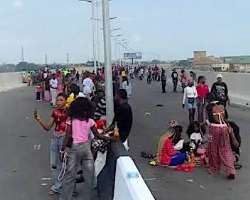
There are moments when a piece of public infrastructure becomes more than concrete, steel and asphalt. It becomes a symbol. It becomes a conversation starter. Sometimes, it even becomes an unexpected tourist attraction. That was exactly what happened in Benin City following the completion of the state's first flyover at Ramat Park.
Long before the project was formally commissioned, it had already become one of the most talked-about landmarks in Edo State. But unlike what many expected, the excitement had little to do with traffic engineering or transportation planning. Instead, it was about selfies, TikTok videos, comedy skits, family outings and social media content.
For several weeks, not a few Benin residents transformed the flyover into what could best be described as the city's newest leisure destination. Young people climbed the bridge with smartphones in hand. Families visited in the evenings. Church groups stopped by after programmes to take group photographs. Students struck poses against the panoramic backdrop, while content creators discovered what they considered Benin City's newest "Instagram-worthy" location.
On any given day, one could mistake the bridge for a recreational park rather than a transport facility. It was an unusual but fascinating sight.
Across the world, flyovers are built primarily to ease traffic congestion, reduce accidents and improve mobility. Rarely do they become places where people deliberately gather simply to admire the view. Yet that was precisely the case in Benin.
For many residents, especially those who had never travelled to cities such as Lagos, Abuja or Port Harcourt where flyovers are commonplace, standing atop the structure offered a completely new perspective of their city. Looking down from the elevated roadway, many experienced a sense of pride that photographs alone could never capture.
Social media quickly amplified the excitement. Videos of residents dancing on the bridge, taking selfies and filming comedy skits attracted thousands of views online. The flyover became free publicity for Benin City, projecting an image of a city embracing modern infrastructure. Perhaps the most remarkable aspect of the phenomenon was that nobody officially declared the bridge a tourist attraction. The people did.
In many developed societies, governments spend enormous resources trying to make public spaces attractive enough for people to visit voluntarily. In Benin, residents did the marketing themselves. They saw beauty where others merely saw concrete.
The spontaneous public embrace of the flyover also revealed something deeper about human psychology. People naturally gravitate towards symbols of progress.
For many Edo residents, the bridge represented far more than a solution to traffic congestion. It symbolized development, modernization and the possibility that their city was entering a new era of urban transformation.
That emotional connection explains why people travelled from different parts of the metropolis simply to spend a few minutes walking on it and taking photographs. One could argue that the excitement was temporary. Perhaps it was. After all, every new attraction eventually loses its novelty.
But the fact that residents responded so enthusiastically should not be dismissed as mere excitement over a bridge. It reflected a population eager to celebrate visible development. Unfortunately, the era of the flyover as Benin City's unofficial relaxation spot appears to have come to an end. The Edo State Government recently blocked public access to the bridge, preventing pedestrians from climbing onto it before its official commissioning and operational use.
From a safety standpoint, the decision is understandable. An active flyover is designed for vehicles, not sightseeing. Large crowds gathering on such infrastructure could create safety risks, interfere with final preparations or expose the government to avoidable liabilities.
Still, many residents cannot hide their disappointment. What had evolved organically into a favourite hangout disappeared almost overnight.
For those who had enjoyed the evening breeze, the elevated city view and the unique atmosphere, the closure felt like the end of a brief but memorable chapter in Benin's social life. Perhaps the episode offers a lesson for urban planners.
Modern cities need more than roads and bridges. They also need accessible public spaces where citizens can relax, interact and create memories. The overwhelming public response to the flyover demonstrated that Benin residents are hungry for recreational spaces.
If a transport bridge could attract such crowds without any organized entertainment, imagine what purpose-built parks, observation decks, waterfront promenades or civic plazas could do for the city's social and tourism landscape.
Infrastructure should, of course, perform its primary function. The Ramat Park flyover is expected to ease traffic congestion, improve connectivity towards Agbor, Asaba, Ekpoma, Auchi and Abuja, and contribute to better traffic flow around one of Benin City's busiest intersections. That remains its real purpose.
Yet for a brief period before the barricades went up, it served another purpose no engineer had anticipated. It made people smile. It gave young people fresh content to create. It brought families together for photographs. It gave residents a new way to appreciate their city from above.
In a society often weighed down by economic hardship and daily pressures, perhaps that was no small achievement. The bridge may now be closed to curious pedestrians, but the memories remain. For a few unforgettable weeks, Benin City's first flyover was more than a flyover. It was the city's happiest meeting point, its most photographed landmark and, quite unexpectedly, its newest leisure destination.