
As The Horn Of Africa Nears Boiling Point, Time For Urgent Diplomacy
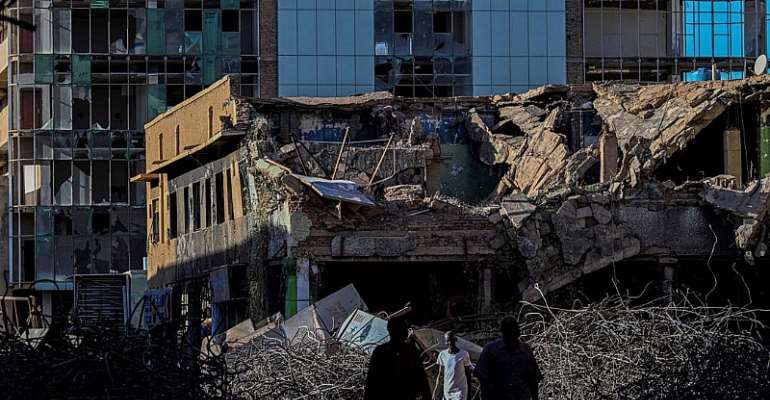
The Horn of Africa is beset with overlapping wars and crises, with Sudan and Ethiopia at the centre. The crossover among conflicts poses an increasing threat to the region, and the need for de-escalation is growing more acute.
he Horn of Africa, already reeling from the pitched battle for Sudan, risks sliding into even greater turmoil as that war spills over into other arenas. The fault lines in the region are not new, but they are deepening. Rivalries in the Horn are also increasingly entangled with one another and with those in the Middle East, making regional politics ever more fraught. Broad de-escalation is sorely needed, both among Horn countries and by the Middle Eastern powers most involved in the region.
A Tumultuous Region
The Horn of Africa, sitting across from the Arabian Peninsula on the western shores of the Red Sea, is one of the world’s most tumultuous regions. Two of its component countries, Eritrea and South Sudan, are still newly sovereign, having emerged from decades of conflict to achieve independence in 1993 and 2011, respectively. Breakaway Somaliland, which wants to follow suit, has been self-governed since Somalia’s military government collapsed in 1991. Ethiopia, the region’s landlocked heavyweight with some 120 million people, has lurched from one upheaval to another over the past century. Its last decade has been especially turbulent, after a 2018 change in government led to a civil war in the Tigray region. That war pitted new Prime Minister Abiy Ahmed’s federal government against the Tigray People’s Liberation Front (TPLF), which prior to his election had dominated Ethiopian politics for nearly 30 years; it was one of the most lethal conflicts in recent decades, with a death toll estimated in the hundreds of thousands. Though the war ended in 2022, tensions are still running high, due in no small part to spiralling enmity between Ethiopia and Eritrea. The latter allied with Abiy in the 2020-2022 conflict but has now switched sides to make common cause with the TPLF.
But the most dangerous development for the region in recent years has been the raging civil war in Sudan. In 2023, a power struggle erupted between the Sudanese army and its junta partners-turned-rivals, the paramilitary Rapid Support Forces (RSF), most of whose members hail originally from Darfur in western Sudan. Early fighting centred in the capital Khartoum, destroying state institutions and forcing most of Sudan’s political elite as well as its professional and middle classes to flee en masse. Since then, hostilities have spread south and west, leading to the country’s de facto partition, with the army controlling the Nile Valley (including Khartoum, which it recaptured) and points east. The RSF holds the more remote west, including most of Darfur. The main front lines are in the Kordofan region, wedged between Darfur and the Nile. The war has displaced millions and produced the world’s worst humanitarian crisis. Now in its fourth year, it shows no sign of abating.
Outside Powers and Spiking Tensions
Sudan’s fragmentation is shaking the Horn to the core. Outside powers have long meddled in the region, but the war in Sudan has seen their involvement reach an alarming new level. Several countries have fuelled the conflict, pouring in arms and financing that have kept both sides in fighting shape at critical moments. Occasionally, these outside actors have reshaped the battlefield by introducing new technology, especially drones and air defence systems. Saudi Arabia, which tried at first to stay neutral, is now perhaps the army’s most important diplomatic partner, while Egypt and Türkiye are also key backers. Meanwhile, the United Arab Emirates has provided heavy support to the RSF, while several of Sudan’s neighbours (mostly those friendly with Abu Dhabi) have allowed the RSF to use their territory for arms transfers and troop movements. The UAE continues to deny helping the RSF, a factor that complicates serious peacemaking efforts since it has often stifled frank discussion of what ending the war would take.
The tug of war over Sudan is remaking the region. At the heart of the new tensions is the feud that this conflict has stoked between Saudi Arabia and the UAE. Just a few years ago, Riyadh and Abu Dhabi were working closely together in much of the Horn, including in backing Sudan’s ill-fated junta after it seized power in 2019, promising to oversee a transition to an elected government. But the subsequent crack-up of that junta has driven them apart, as they vie for regional influence. Sudan’s strategic relevance to Gulf Arab states is partly a function of geography – it sits at the crossroads of the Arab and African worlds, straddling the Nile Valley and perched along the narrow Red Sea. History is also important: the Gulf states are keenly aware that Sudan has at times collaborated with Iran and that it harboured Islamist ideologues (including Osama bin Laden) during the long reign of strongman Omar al-Bashir.
Saudi Arabia, which sits in close proximity on the Red Sea’s opposite coast, considers Sudan’s stability especially vital. Saudi officials have grown increasingly frustrated at the UAE’s support for the RSF as well as its blanket denials. They worry that civil war will end in Sudan’s disintegration or create a state of persistent conflict that would spill over into neighbouring states of strategic importance to Riyadh. That development, in turn, could translate into continuing perils on the kingdom’s western perimeter (near both its second-largest city, Jeddah, and the holy sites, Mecca and Medina), as well as generally threaten the stability of the Red Sea basin. The UAE, for its part, quietly casts Saudi Arabia as trying to impose itself as a regional hegemon.
As the war in Sudan burns on, Saudi Arabia has sent senior envoys to Sudan’s neighbours – including Ethiopia, South Sudan and Chad – in an effort to convince them to stand back from the war and stop arms from flowing across their borders to the RSF. Chad’s President Mahamat Déby, an Emirati ally, was one of Saudi Crown Prince Mohammed bin Salman’s guests of honour during the hajj in late May. Saudi Arabia has also (together with Egypt) been strengthening its ties with Eritrea and Djibouti, Red Sea littoral states that have both fallen out with the UAE. Both worry about how Abu Dhabi’s ally Ethiopia will pursue its growing ambitions to gain access to the sea. Prime Minister Abiy has appeared keenest on reacquiring Assab, once Ethiopia’s main port, which came under Eritrea’s sovereignty when the latter attained independence.
The spike in tensions between the Gulf states may be especially acute in the Horn, but it is also manifesting elsewhere.
The spike in tensions between the Gulf states may be especially acute in the Horn, but it is also manifesting elsewhere. In December 2025, the UAE and Saudi Arabia, which not long ago collaborated against the Houthi rebels who control much of Yemen, clashed dramatically over that country’s Hadramawt region. There, an offensive by the UAE-backed separatist Southern Transitional Council (STC) near Saudi Arabia’s borders infuriated Riyadh. Local Yemeni forces, supported by Saudi airstrikes, expelled the STC forces.
Gulf officials widely viewed the escalation in Yemen, and the corresponding rupture in relations between Riyadh and Abu Dhabi, as tied to the intensifying Saudi-Emirati dispute over the war in Sudan. The UAE believes that the Saudi crown prince, visiting Washington in November, asked U.S. President Donald Trump to sanction Abu Dhabi over its role in the civil war. Saudi officials say the crown prince asked for sanctions on the RSF, not the UAE. One way or another, many in the Gulf, including in the Saudi capital, saw the Hadramawt campaign as the UAE’s retaliation. (The Emirates deny playing any role in Hadramawt and say the fighting there was unrelated to Sudan.)
Even more recently, the U.S.-Israeli war with Iran appears to have further deepened the divide between Saudi Arabia and the UAE, raising the stakes in their battle for influence in the Horn. Both states depend on the Strait of Hormuz for maritime commerce, but Abu Dhabi much more so, as Riyadh has other outlets on the Red Sea. Against this backdrop, the UAE, which also absorbed the lion’s share of Iranian attacks on Gulf states, took issue with the mediation efforts in which Saudi Arabia, Egypt and Türkiye participated, alongside Pakistan and Qatar. With the deal struck by the U.S. and Iran in June to end the war now seemingly falling apart, the perception that Iran can close the strait virtually at will is likely to magnify the strategic importance of the Red Sea basin, especially for Saudi Arabia.
Finally, Israel contributed to tensions in the Horn by becoming the first country to recognise Somaliland, where its security partner, the UAE, has built a military airstrip and a modern deep-sea commercial port. While Saudi Arabia, Egypt, Türkiye, Qatar and other Muslim-majority countries joined Mogadishu in condemning the Israeli move, the UAE did not.
Blocs and Flashpoints
The combination of the Horn’s disputes and the jockeying among Middle Eastern powers creates a dangerous dynamic in both regions. As the Hadramawt episode demonstrated, it is easy for sparks to travel from one trouble spot to another, igniting clashes.
The informal blocs forming on both sides of the Sudanese civil war exacerbate the risk. Those that tend to be on the army’s side include Saudi Arabia, Egypt, Türkiye, Qatar, Eritrea, Djibouti and Somalia. Those often lining up with the UAE (and, often, with the RSF) are Ethiopia, breakaway Somaliland and Somalia’s semi-autonomous Puntland region, as well as Uganda and Chad.
To be sure, these cohorts are loose and porous. Türkiye is still a major investor in and ally of Ethiopia, even as it supports the Sudanese army and the Somali government. Kenya, South Sudan and Libya’s east-based administration have tried to stand astride the divide even while remaining friendly with the RSF and UAE. While Israel is bound to the UAE by the Abraham Accords and a robust defence partnership, it has shown no strong preference in the Sudan war. Saudi Arabia is also a major investor in Ethiopia, and the two countries remain in close diplomatic contact, despite tensions over Sudan. Abiy meets regularly with the leaders of Djibouti and Somalia, even if relations are often fraught.
Still, overall, the trend is one of deepening polarisation between these groups, with growing apparent coordination within each axis against the other. The worry is that states in both camps will carry the enmities nurtured in Sudan into other flashpoints, increasing the risk that violence breaks out and spreads. Two new developments in the Horn are particularly worrying in this regard.
The testiness between Ethiopia and Sudan’s army-led government is veering toward open antagonism and proxy conflict.
First, the testiness between Ethiopia and Sudan’s army-led government is veering toward open antagonism and proxy conflict. The RSF appears to enjoy a degree of freedom of movement in Ethiopia along the border with Sudan’s Blue Nile state, and reports have documented a flow of equipment through Ethiopia to the front in Kordofan. Sudan also accuses Ethiopia of allowing the UAE to fly drones from Ethiopian territory into Sudan, including one that struck Khartoum in early May. Ethiopia and the UAE deny these charges, while Egypt and Saudi Arabia have issued statements backing the army’s position (though without naming Ethiopia directly). Meanwhile, Addis Ababa sees the Sudanese army as allying with its domestic foes, notably the TPLF, as well as external adversaries Egypt and Eritrea. The force known as Army 70 is a special sore spot for Addis Ababa: predominantly comprised of thousands of Tigrayan Ethiopians, it is based in eastern Sudan and has fought the RSF alongside the Sudanese army.
Secondly, Ethiopia’s internal quarrels are getting hotter and more bound up with regional disagreements. In a major escalation in April, the TPLF announced it was restoring its chair Debretsion Gebremichael (who led Tigray during the 2020-2022 war) as regional president, dissolving the interim administration formed under the 2022 peace deal. Thus far, Abiy has responded cautiously to the provocation, for instance remarking on 7 July that he wants peace despite those (he did not name them) pushing for a new war in Tigray. Yet it remains unclear what will happen now. The regional picture is aggravating the situation, with Abiy, whose party was returned to power on 1 June, viewing the TPLF as in cahoots with his opponents Eritrea and the Sudanese army. Addis Ababa appears unlikely to swallow the status quo indefinitely, while the TPLF also appears to be gearing up for a fight with a mass conscription drive.
Contagion Scenarios
Greater instability in either Ethiopia or Sudan would be dangerous in and of itself, and could also have spillover effects, drawing in still more outsiders or spreading into new corners of the Horn.
In terms of concrete contagion scenarios, perhaps the easiest to imagine would begin with new hostilities breaking out between federal and TPLF forces in Tigray. Should such a conflict erupt, it would be difficult to contain the fallout. The fighting would likely heighten already acute tensions between Ethiopia and Eritrea, given Asmara’s new alliance with the TPLF, risking open hostilities between the two countries. In some scenarios, a new Ethiopia-Eritrea war could spark a battle for control of Eritrea’s Red Sea coast, entangling regional players already involved in the war in Sudan. Egypt could be tempted to rally around Eritrea in such circumstances. A confrontation short of open war could see Eritrea (and the Sudanese army) step up support for Abiy’s domestic opponents. The other side of the equation might find the UAE backing Ethiopia, while the latter doubles down on its ties to the RSF, pouring fuel on the fire of Sudan’s conflict.
If conflict expands in either Ethiopia or Sudan, still more countries could become involved.
If conflict expands in either Ethiopia or Sudan, still more countries could become involved. Especially vulnerable is South Sudan, where civil war is already raging in the tri-border area with Sudan and Ethiopia. External actors could easily find proxies there to support. One can also imagine proxy contests afflicting Somalia, which is embroiled in its own political crisis, pitting the government in Mogadishu against several federal member states; the most powerful among them is Puntland, which as noted has warm relations with the UAE. Delayed elections and the prospect of a dramatic reduction in international security support make the situation even more fraught. Disputes between Mogadishu and Hargeisa about the status of Somaliland could also become a platform for external rivalries to play out.
Surveying the landscape of overlapping allegiances and war zones, a senior regional official imagined a worst-case tableau in which fresh conflict in Tigray leads to a belt of interconnected wars “stretching from Yemen in the east to Chad in the west”.
A Time for Preventive Diplomacy
With dry timber stacking up throughout the Horn, there is an increasingly urgent need for broad-based preventive diplomacy. Such a push should have several elements.
The top diplomatic priority should be preventing a return to full-scale war in Tigray. In practice, that means supporting the shuttle diplomacy that has already begun between Addis Ababa and Tigray’s capital Mekelle, carried out by African Union (AU) envoy and former Nigerian President Olusegun Obasanjo and others, including U.S. Ambassador Ervin Massinga. In parallel, President Abiy’s allies, including the U.S., the UAE, Türkiye, Italy and key African states (especially Kenya and South Africa), should urge Addis Ababa to pursue intensive back-channel diplomacy with the TPLF to resolve the standoff, warning of the unpredictable and costly nature of a new war. Mediators should anticipate that in any such negotiations, Abiy will press the TPLF to sever its ties to Asmara, while the TPLF will insist on maintaining its dominant position in Tigray. Efforts by the U.S., Saudi Arabia, Kenya, EU, Italy and others to quiet the enmity between Addis Ababa and Asmara could help defuse that dangerous dynamic.
Another priority should be the Sudan-Ethiopia relationship, which badly requires repair. Already, the two sides appear to be taking small but meaningful steps to stop matters from spiralling out of control. A May meeting in Djibouti between Abiy and Malik Agar, who serves as deputy sovereign council chair under Abdel Fattah al-Burhan – who both chairs the council and leads the Sudanese army – helped reopen high-level bilateral channels, leading to renewed direct communication between Abiy and Burhan in recent weeks. The next step should be an in-person meeting between the latter two focused on easing the tensions caused by support for proxies. Realistically, both sides are likely to retain their ties across the border, but it might be possible to make incremental progress on certain ground rules – for example, freezing arms supplies and tamping down on the freedom of movement or provision of safe haven for the other’s adversaries – that would help manage the risk of escalation.
Last, and perhaps most important, is the need to address the stubborn conflict in Sudan, which is in many ways the prime driver of instability in the Horn. There, as Crisis Group has long argued, Saudi Arabia, the UAE and Egypt, the players with the closest ties to the warring parties, will have to make the first move. The key task is to narrow their differences over Sudan’s post-war endgame so that they can collectively press the two belligerents to commit to a war-ending ceasefire and political transition.
This will mean moving beyond maximalist positions to discuss the details of what an actual post-war transitional arrangement would look like. It will probably need to include a broad-based civilian government and a defined role for Burhan and the army. Some details will have to be worked out through coordinated security and political negotiations among key Sudanese players. Given the RSF’s tattered reputation, the UAE will need to guarantee that the paramilitary will honour ceasefire commitments it makes – which may have to include withdrawal from specific territories and promises to integrate some of its forces into the national army and/or demobilise its fighters. Egypt and Saudi Arabia (along with other key army allies Türkiye and Qatar) will need to work together to obtain Burhan’s buy-in for a truce and his acquiescence to broader negotiations among Sudan’s political camps to form a civilian government that can help reunite the country.
Washington, which brought Riyadh, Cairo and Abu Dhabi together in a Quad format intended to facilitate mediation, and which brokered a September 2025 roadmap that was supposed to guide these efforts, should continue trying to bridge differences. But given uncertainty about Washington’s level of commitment, others – starting with other Gulf states but also including the European Union, the UN, Norway and the UK – should step up their engagement, with a focus on the practical details of moving forward. This track will need to be coordinated with the Quintet political process (another, but still incipient, diplomatic initiative that includes the AU, UN and EU) that seeks to bring Sudan’s various competing camps into negotiations over the post-war future. Practically speaking, mediators may need to shuttle back and forth between the Quad and Quintet formats (should the latter gain liftoff) to fine-tune the details of Sudan’s transition. Now is a good time for a surge of activity: ground fighting generally slows during Sudan’s rainy season, which runs from July to September. A window of opportunity is open to push for a truce before the onset of fuller-scale hostilities.
The growing rivalry among Middle East regional powers over their competing visions in the Horn of Africa looks in desperate need of new guardrails.
At the same time, the growing rivalry among Middle East regional powers over their competing visions in the Horn of Africa looks in desperate need of new guardrails. It is hard to escape the need for franker, more constructive conversations between Riyadh and Abu Dhabi about the Horn and their respective interests, combined with clear steps to lower the temperature in Sudan and elsewhere. Members of the informal blocs that have lined up on either side of the Sudan conflict should take care not to back their friends blindly and miss opportunities for de-escalation, and all should halt the arms flows that are helping escalate the conflict. Egypt and Ethiopia, meanwhile, should look at this delicate moment as reason to dial down the acrimony between them, rooted in a contest for control of the Nile. Outside actors, such as Türkiye, Saudi Arabia, the U.S. and EU, should encourage them in that direction.
In sum, there is a path toward de-escalation in the Horn of Africa, but only if the main protagonists on both sides of the rising tensions recognise the danger ahead and act accordingly. If they instead double down on expanding the Horn’s fault lines – hardening the two emerging blocs and dumping endless resources into overlapping conflicts – the consequences could be grave indeed. The Horn of Africa is combustible. If a transnational fire breaks out, it could take years to extinguish and leave a charred, smouldering region in its wake.