
Trapped in Black Tents: Nigerian Girls Beg For Rescue From Trafficking Camp in Mali
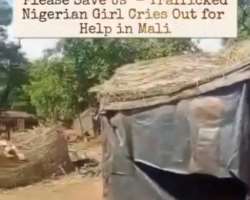
A 29-second video that surfaced online shows rows of black tarp shelters on bare earth in Mali, with a young Nigerian woman narrating in distress. She says Nigerian boys and women brought her and others across the border and that they sleep in these conditions, afraid of being harmed. The footage, credited to Oga TV, has renewed alarm about human trafficking from Nigeria to West African countries. Investigative reports, government data, and testimonies over the last decade show that Mali and other transit routes are used to move Nigerian women and girls for forced labor and sexual exploitation. This story traces what the video shows, what victims and officials have reported, and what is being done to stop it, ODIMEGWU ONWUMERE unearths
"This is the place that we are in Mali. In Mali, this is the place that our Nigeria patron "them", our Nigerian boys, Nigerian women, receive us and bring us to this place. This is where we used to sleep in Mali. Look at the place that we used to sleep in Mali here. Look at what we, we, we cross our border right away from Nigeria to come and do. Look at the place here. This place now, they go come tear the manner, kill you. This place now, look at it."
That is the voice on the video. It is shaky, urgent, and it was recorded on a phone as the camera pans across a dusty clearing. The ground is red and dry. There are no concrete walls, no proper roofs. Instead, there are about a dozen makeshift shelters lined up in rows.
Each one is built with wooden poles, covered with black plastic sheets and patched with old tarpaulins. Some have blue patches. The roofs are weighed down with sticks and stones. Inside, the floor is just earth.
There is no furniture visible. Outside, a few trees and bushes mark the edge of the camp. The sky is bright. It looks like daytime in a rural area.
At the top of the video, white text reads: "Please Save Us" - Trafficked Nigerian Girl Cries Out for Help in Mali. A watermark at the bottom says "Oga TV."
The woman speaking does not show her face. She is filming the shelters and describing them as the place where she and other Nigerians sleep. She mentions being brought by "Nigerian boys" and "Nigerian women" who acted as patrons.
She says they crossed the border from Nigeria and ended up here. Then she adds a warning that people can come and "tear the manner" and kill them, using Nigerian Pidgin to describe a violent attack. The fear in her voice is clear.
This video did not appear in isolation. For years, Nigerian authorities, international agencies, and journalists have documented how young Nigerians, especially women and girls, are moved across West Africa with promises of jobs, only to end up in exploitative situations. Mali has repeatedly come up in those reports as both a destination and a transit point.
According to the National Agency for the Prohibition of Trafficking in Persons, NAPTIP, Nigeria has been a source, transit, and destination country for human trafficking. In its 2023 and 2024 reports, NAPTIP said it rescued and counseled hundreds of victims who were trafficked to Mali, Burkina Faso, Niger, and other neighboring countries.
Many of the victims were between 15 and 25 years old. They were promised restaurant jobs, hairdressing, or trading opportunities. Instead, they were put in camps, had their documents seized, and were forced to work without pay or to engage in commercial sex to "repay" a debt that kept growing.
The International Organization for Migration has tracked similar patterns. In its West Africa reports, IOM noted that irregular migration routes from Nigeria through Niger into Mali are controlled by networks that include both Nigerian and foreign facilitators.
Women are often recruited by other women who present themselves as successful returnees. That matches what the voice in the video says: "our Nigerian women receive us." The use of female recruiters makes it easier for victims to trust the process at first.
Mali itself has been dealing with insecurity for more than a decade. Armed groups operate in the northern and central parts of the country. Borders are porous. That makes it easier for trafficking networks to move people with little detection.
Reports from the United Nations Office on Drugs and Crime have flagged that in conflict and post-conflict areas, trafficking increases because law enforcement is weak and people are desperate for work.
The shelters in the video, with no clear address and no formal structure, fit the description that aid workers have given of informal camps where trafficked persons are kept before being moved further or put to work.
Journalists who have covered rescue operations say the conditions are often exactly like what the video shows. In 2022, NAPTIP announced that it had worked with Malian authorities to rescue 26 Nigerian girls from a camp in Bamako.
The girls told investigators they were living in tents, sleeping on the floor, and were being forced to sell goods on the street and remit money to their traffickers.
In 2021, the Nigerian Embassy in Bamako said it had facilitated the return of over 100 Nigerian women who were stranded after being trafficked. Many of them described being lured with promises of jobs in Europe, but ended up stuck in Mali.
The phrase "our Nigeria patron them" in the video points to a system that investigators call the "madam" and "sponsor" network. A patron in Nigeria organizes travel, pays for transport, and connects the victim to someone in the destination country.
The victim is told she will work and pay back the money. But the debt is inflated with costs for food, accommodation, and "protection." Because the victim has no legal status and no money, she cannot leave.
The threat of violence, which the woman in the video mentions, is used to keep people in line. NAPTIP and human rights groups have documented cases where victims who tried to escape were beaten or threatened with juju oaths.
The video's setting matters. The shelters are not in a city center. They are on open land, far from main roads. That isolation is intentional. It makes it harder for victims to seek help and harder for authorities to find them.
The black tarpaulins are common in informal settlements across the Sahel because they are cheap and available in local markets. Aid workers who have visited similar sites in Mali and Niger say people sleep 4 to 6 to a shelter, with no mattresses, no running water, and shared pit latrines. Diseases spread quickly.
What the woman is asking for is rescue. "Please Save Us" is not just a caption. It is a direct appeal. And it reflects what victims have said in formal interviews. In a 2023 report by a Nigerian civil society group that works with returnees, one survivor said, "We were in a bush in Mali. Nigerian people brought us. We were sleeping in tents. If you cry, they will beat you."
Another said, "The woman who brought us said if we don't work, they will sell us." These testimonies are consistent with the tone and content of the video.
Nigeria's government has responded in different ways. NAPTIP runs awareness campaigns in schools and markets, warning people about fake job offers. It also has a hotline for reporting trafficking. The agency has signed agreements with Mali and other ECOWAS countries for joint investigations and victim repatriation.
In 2024, NAPTIP said it secured 35 convictions for trafficking offenses and was handling over 600 active cases. But officials admit that prevention is hard because poverty and unemployment push people to take risks.
On the Malian side, authorities have also carried out raids. In 2020, Malian police, with support from IOM, rescued dozens of West African migrants, including Nigerians, from camps on the outskirts of Bamako.
The migrants were being held in structures made of tarps and wood, similar to what the video shows. They were given medical care and then assisted to return home. The challenge has been follow-up. Once victims are back in Nigeria, many families are still in debt and some victims are re-trafficked.
The video has spread widely on WhatsApp and Facebook, often shared by diaspora groups and anti-trafficking advocates. People comment with prayers, anger, and calls for the Nigerian government to act.
The Oga TV watermark suggests it was picked up by a media outlet that focuses on social issues affecting Nigerians at home and abroad. Media monitoring groups note that citizen videos like this have become a key way that trafficking cases come to light, because victims use phones to document their situation when they cannot call for help directly.
Experts say three things make this case typical of current trafficking from Nigeria to Mali. First, the recruitment is done by fellow Nigerians who are trusted. Second, the victims are moved by road through Niger, which is a common route.
Third, the destination is not always Europe. Many are exploited within West Africa, in mining areas, farms, bars, and street vending. Mali's gold mining regions have been cited in several reports as places where trafficked labor is used.
What happens next for the people in the video is unclear. The footage does not give a location beyond "Mali." There is no date stamp. Without coordinates, it is difficult for authorities to act immediately.
But the video serves as evidence. NAPTIP has urged people who see such videos to send them to the agency so they can work with foreign partners to verify and respond. The Nigerian Embassy in Bamako has also asked Nigerians in Mali to report cases of abuse.
The broader picture is that trafficking is not just about movement. It is about exploitation. The shelters in the video are not homes. They are holding places. The work that victims are forced into is not employment. It is slavery by another name. And the people bringing them are not helpers. They are recruiters in a criminal network.
That is why the woman's words matter. She is naming who brought her: Nigerian boys and Nigerian women. She is describing where she sleeps: in black tents on bare ground. She is stating the risk: that they can be attacked and killed. She is asking for help.
For families in Nigeria, videos like this are painful to watch. Parents send their children away hoping for a better life. They take loans to pay the "patron." Months later, they get a call or a video like this one. Some have traveled to Mali to look for their daughters. Some have paid more money, only to lose everything. Civil society groups are now working with communities to change that story, by teaching people to verify job offers and to ask for proper contracts.
International organizations are also pushing for more. The UN has called for stronger border monitoring, better victim support, and prosecution of traffickers. ECOWAS has a protocol on free movement, but it also has protocols against trafficking that member states are supposed to enforce. The gap is in implementation. In remote areas, police presence is low and corruption makes it easier for traffickers to operate.
Back to the video. The camera keeps moving. It shows one shelter, then another. The plastic flaps in the wind. The ground is littered with small stones. No one else is seen on camera. The voice continues, repeating that this is where they sleep, that they were brought by Nigerians, that they are in danger. It ends abruptly.
That is all there is. Twenty-nine seconds. But in those seconds, it captures a problem that has taken years to build. It shows the end result of false promises, of poverty, of networks that profit from human beings. It also shows courage. The person filming knew the risk. In many cases, traffickers confiscate phones. To record and to speak is to defy them.
The question now is what will be done. Will the video lead to a rescue? Will it lead to arrests? Will it make more people in Nigeria think twice before trusting a "patron" who promises quick money abroad? Those are the questions that NAPTIP, the Nigerian government, Malian authorities, and communities must answer.
Until then, the black tents remain. And the voice in the video remains a plea: "This is where we used to sleep in Mali. Look at the place in 2025. Please save us."
Onwumere is Chairman, Advocacy Network on Religious and Cultural Coexistence (ANORACC). Email: Anoracc(at)rescueteam(dot)com