
Should Nigeria Embrace Private Investigation?
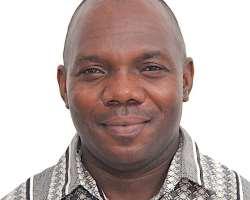
“Currently, private investigators operate informally in Nigeria, often assisting individuals, businesses, and legal practitioners in gathering information. However, the absence of a comprehensive statutory framework governing their activities raises concerns about professionalism, accountability, privacy violations, and the potential for abuse of power. Establishing a regulated system could address these issues while enhancing the country’s justice system.”
In Nigeria, it is rare for a day to pass without an unsettling headline. Reports of violent killings, kidnappings, building collapses, or yet another sophisticated scam that further tarnishes the nation's reputation have regrettably become defining features of the national landscape. Despite the frequency and seriousness of these incidents, many are seldom thoroughly investigated, and very few, if any, result in successful prosecutions. This ongoing failure to ensure accountability continues to erode public confidence in the justice system and the rule of law.
Just a few days ago, as we were trying to unravel the mystery of a dubious agency operating from the Federal Secretariat, yet another scandal surfaced—this time involving an elaborate fraud that allegedly cost a Nepalese businessman ₦1.6 billion. According to reports, the victim, a Nepalese national identified as Bista, was lured to Nigeria by a Cameroonian, Emmanuel Masa, under the guise of a lucrative business venture and travel arrangements involving international flights. What appeared to be a promising commercial opportunity allegedly turned out to be a carefully orchestrated scheme that resulted in the loss of an enormous sum of money, adding yet another chapter to Nigeria's growing catalog of high-profile financial fraud cases.
The scam appeared legitimate because meetings were held in a conference room at the Nigerian Police Headquarters in Abuja. The victim reported that a police CSP guaranteed the safety of the transactions and the people involved. What makes this case even more surprising is the allegation that the Managing Director of Azaman Airlines played a significant role in the scam. Before these meetings, the victim had paid hundreds of thousands of dollars to the airline for ticketing and visa documentation. What is more troubling is not only the substantial amount reportedly lost but also the fact that a foreigner felt compelled to seek assistance from VDM rather than use the established institutions responsible for investigating such matters. Shockingly, a criminal case of this magnitude was reported to a “son of nobody” rather than to the government securities agencies.
The growing reliance on VeryDarkMan in cases like this is not solely a reflection of his personal influence; it also highlights a failure of institutions that many Nigerians view as slow, unresponsive, or reluctant to act unless public pressure forces them to act. In a nation where trust in public institutions has steadily diminished, an activist such as VDM has increasingly filled this void, amplifying the voices of victims who fear they would otherwise go unheard. This should alarm all Nigerians. A society governed by the rule of law should not rely on viral videos or social media campaigns to secure justice.
A thought-provoking follow-up question arises: Should Nigeria embrace private investigators? There is a compelling case for legalizing and regulating private investigators in Nigeria, but this should be done within a robust legal and ethical framework that complements, rather than replaces, law enforcement. Currently, private investigators operate informally in Nigeria, often assisting individuals, businesses, and legal practitioners in gathering information. However, the absence of a comprehensive statutory framework governing their activities raises concerns about professionalism, accountability, privacy violations, and the potential for abuse of power. Establishing a regulated system could address these issues while enhancing the country’s justice system.
Nigeria is grappling with significant security and governance challenges, including rising cybercrime, financial fraud, kidnapping, corporate espionage, and complex civil disputes. Law enforcement agencies are often overstretched because of limited personnel, funding, and technological resources. Licensed private investigators could help fill this gap by conducting lawful background checks, locating missing persons, investigating insurance and corporate fraud, gathering evidence for civil litigation, and assisting legal professionals with case preparation. Their contributions could improve access to justice without infringing on the police's constitutional responsibilities.
Introducing private investigators raises several legitimate concerns. Without proper oversight, they may engage in unlawful surveillance, infringe on individuals' privacy rights, intimidate witnesses, or be used for political persecution and commercial espionage. These risks underscore the pressing need for a comprehensive regulatory framework. Such a framework should include licensing requirements, professional training, background checks, ethical standards, data protection obligations, clearly defined limits on investigative powers, and effective disciplinary mechanisms.
Private investigators should not have arrest or detention powers and must remain subject to judicial oversight and existing criminal laws. Their primary role should be to gather lawful evidence rather than to exercise police authority. International experience shows that private investigation can coexist with public law enforcement. Countries such as the United States, the United Kingdom, Canada, Australia, and South Africa have implemented licensing systems to regulate private investigators, establishing professional standards that protect civil liberties. Nigeria could benefit from learning from these jurisdictions while adapting the framework to fit its own constitutional and socio-political context. Therefore, the debate should not be framed as a choice between public policing and private investigation. Rather, the crucial question is whether regulated private investigators can act as responsible partners in enhancing the delivery of justice.
With robust legislation, independent oversight, and a commitment to constitutional rights, the legalization of private investigators could bolster investigative capacity, increase public confidence, and contribute to a more effective justice system. However, in the absence of sufficient safeguards, such a system risks undermining privacy, due process, and the rule of law. Therefore, the success of this reform hinges not only on the legalization of the profession but also on the rigorous regulation and consistent enforcement of those regulations.
However, in Nigeria, the bill proposing the establishment of private investigators recently came before the National Assembly but failed to pass the second reading. Lawmakers expressed concerns that, if enacted, the bill would grant private individuals the authority to intrude into the personal lives of perceived adversaries. During the debate, Mr. Osita Ngwu, the bill’s proponent, highlighted the various roles private investigators could fulfill, noting that some specialize in tracing while others focus on technical surveillance countermeasures. He explained that this latter category includes tasks such as detecting and mitigating unwanted electronic surveillance, including in bugged boardrooms used for industrial espionage.
Supporters of the bill argued that it was a thoughtful initiative to address the shortcomings of the EFCC, ICPC, and other security agencies. They contended that with proper diligence, many high-profile crimes could be prevented from being overlooked. Opponents, including Adams Oshiomhole, raised strong objections, asserting that it would be unwise to establish an open-ended body with the authority to invade personal privacy. He warned that it could become a tool for political adversaries. Following the debate, the Senate unanimously rejected the bill and decided to withdraw it for further legislative consideration and discussion.
The growing reliance on VeryDarkMan to uncover alleged misconduct points to a deeper issue: a substantial portion of the Nigerian populace is actively seeking alternative ways to access truth, accountability, and justice. In a context where trust in traditional institutions may be eroded by perceptions of ineffectiveness, sluggishness, or lack of transparency, figures like VeryDarkMan have become vital sources of information for many.
Regardless of one's personal views on VeryDarkMan's tactics or the validity of his claims, the number of people following him signals a pronounced public demand for independent, credible fact-finding. This observation raises critical questions about social media's role as a catalyst for social justice and its potential consequences for public trust in established institutions.
In light of these dynamics, Nigeria must engage in a serious, comprehensive national dialogue to determine whether a legal and regulatory framework can professionalize private investigation. Such a framework could allow licensed private investigators to operate within ethical and legal boundaries, thereby enhancing accountability without undermining law enforcement functions. This dual approach could complement the existing justice system, offering citizens more robust options for pursuing truth and justice when conventional avenues seem ineffective.
Rev. Ma, S.J., is a Jesuit priest and public policy analyst. He currently writes from Abuja, Nigeria.