
Deterrence Without Destruction: When Arrogance Becomes A Strategic Liability
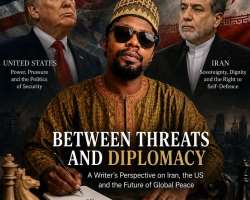
The language of deterrence has long been a defining feature of international politics. Throughout history, powerful states have relied on military strength, strategic ambiguity and credible threats to discourage aggression and preserve national security. From the Cold War to the present day, deterrence has remained one of the principal instruments through which states seek to influence the behaviour of rivals without resorting to war. Yet deterrence achieves its purpose only when it is exercised with restraint, proportionality and a clear commitment to international law. When threats become excessive or appear to disregard established legal and diplomatic norms, they risk producing the very conflict they are intended to prevent.
Recent remarks by the President of the United States, warning that any successful attempt to assassinate him would result in the complete destruction of Iran, have once again drawn global attention to the delicate balance between national security and responsible statecraft. While every sovereign nation possesses the inherent right to protect its leaders and citizens against external aggression, the manner in which that protection is communicated carries profound strategic, legal and diplomatic consequences. In international relations, words are never merely words. They shape perceptions, influence calculations and, in moments of heightened tension, can alter the course of history.
For decades, the United States has portrayed itself as a principal defender of the rules-based international order, advocating respect for sovereignty, the peaceful settlement of disputes and adherence to international law. Consequently, statements emanating from Washington carry exceptional weight. Allies interpret them as signals of policy, adversaries assess them as indicators of intent, while neutral states evaluate them as measures of American leadership. A declaration suggesting overwhelming or total destruction of another sovereign state therefore extends far beyond bilateral relations between Washington and Tehran. It inevitably raises wider questions about the future of global stability, the credibility of international institutions and the standards expected of major powers.
The central issue is not whether the United States has the right to defend its President and its people. That right is beyond dispute. The more important question is whether threats of overwhelming destruction represent the most effective and responsible means of achieving that objective. If the stated priority is truly the wellbeing of Americans, then one must ask why trillions are allocated to war rather than to rebuilding American communities, and why similar resources are not directed towards development and humanitarian purposes in less developed states.
Yet questions of credibility also arise. Over the past 15 years, several Iranian nuclear scientists have been killed in attacks widely attributed to Israel, with the United States accused of providing intelligence support. As we have seen, the Supreme Leader, Ayatollah Ali Khamenei, stated his willingness to stand with his people rather than seek personal safety, and was ultimately martyred by what Tehran and many observers described as US aggression. Against that backdrop, it is worth asking whether escalating threats genuinely enhance security or merely deepen hostility and prolong conflict. And does it reflect strength, or concern that Iran has demonstrated the capacity to respond in ways that make escalation costly for the US? These questions matter because deterrence is effective only when it is perceived as principled, not selective.
History repeatedly demonstrates that security is strengthened not merely through military superiority but through disciplined leadership, strategic patience and the prudent exercise of power. Deterrence succeeds when it convinces an adversary that aggression will fail, not when it creates conditions in which escalation becomes increasingly difficult to control.
At this point, the discussion moves beyond policy to principle. For history has never been kind to leaders who mistake power for permanence. Every empire that believed itself untouchable eventually discovered a truth that no arsenal, economy or alliance could erase: arrogance is often the first step towards decline. The greatest threat to a powerful nation is not always a foreign adversary; it is the illusion that its strength places it above restraint, above justice and above the rules it expects others to obey.
A president who speaks as though military might alone can command the world may inspire fear, but fear is not the same as respect. Threats can silence voices for a moment, yet they cannot extinguish the desire of nations to defend their sovereignty and dignity. Indeed, history teaches that excessive coercion often forges stronger resistance, deeper alliances and greater determination among those who refuse to be intimidated.
The same lesson applies to allies who applaud every display of force without question. Loyalty divorced from wisdom becomes complicity. Alliances are strongest when they encourage prudence, not when they reward recklessness. To follow power blindly is to gamble with global peace.
At a time when geopolitical rivalries are intensifying, confidence in international institutions is under pressure and regional conflicts continue to threaten global peace, the world cannot afford rhetoric that risks transforming crises into confrontations. The antidote to arrogance is not vengeance but accountability. It comes through the collective resolve of the international community to uphold law above power, justice above intimidation and diplomacy above destruction. It is the quiet but unyielding reminder that no flag flies above humanity, no government stands above international law and no leader, however powerful, is greater than the principles that preserve civilisation.
Sustainable security is built not upon fear alone, but upon the careful integration of credible defence, effective diplomacy and respect for international law. Power remains indispensable, but power exercised without restraint can undermine the very peace it seeks to preserve.
Power commands attention. Wisdom commands history. Those who choose intimidation may win headlines, but those who choose restraint earn a legacy. The future will remember not who threatened the loudest, but who possessed the courage to exercise power with justice, humility and reason.
Ahmad Shuaibu Isa [email protected]