
2027 Poll: How Politics Of Bitterness May Determine Atiku's Fate
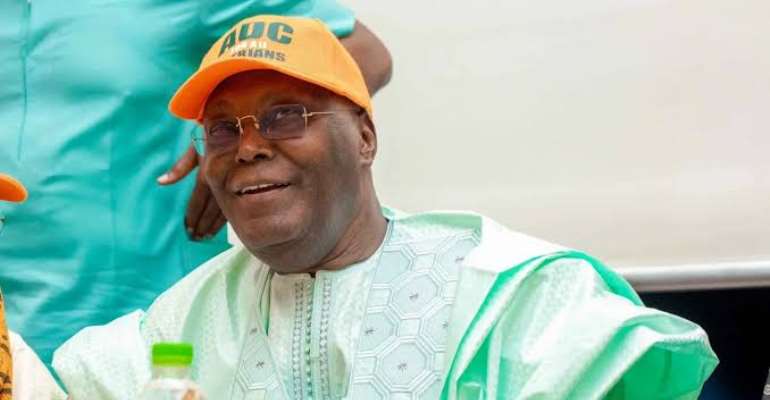
If former Vice President and presidential hopeful of the African Democratic Congress (ADC), Alhaji Atiku Abubakar, wants to win his "last" political battle of no retreat no surrender, and achieve his life-long ambition to be President of Nigeria, he should, in addition to his messaging, do one thing: Expel bitterness and hatred from his heart.
Particularly, Atiku should tweak his publicly-displayed attitude towards President Bola Ahmed Tinubu of the All Progressives Congress (APC), as what hasn't escaped discerning Nigerians, and Tinubu's supporters and followers is Atiku's constant look at the president with condescension, as "a nobody" to respect both his person and his office!
In his 1832 treatise On War, the Prussian military strategist, Carl von Clausewitz, describing "politics as war by other means," highlights that "both are competitive struggles for power and resources, using strategy, negotiation, and influence instead of physical violence." (AI Mode conversation)
Politics shouldn't also be appropriated by politicians to assassinate character; make derogatory remarks; bear grudges, bitterness, and hostility; and regard electoral co-competitors or opponents as inconsequential.
While he doesn't disguise these impertinences in public – one can imagine his behaviour behind the scenes – Atiku's attitude towards Tinubu is political "bad belle"! For a man, who's attained and held the position of Vice President for eight years (1999-2007), Atiku knows the protocols reserved for the Office of President, which Tinubu occupies.
After Tinubu's spent three years in office, Atiku can't bring himself to address him as "President," as his heart is filled with bitterness in his burning desire, almost his entire political life, to be President of Nigeria – a desire he perhaps believes Tinubu thwarted at the 2023 General Election.
In signed or physically-delivered comments, remarks, statements and posts, Atiku simply addresses the president as "Bola Tinubu" or "Bola Ahmed Tinubu." And in official, social or chance meetings, Atiku, his face taut, tries hard to avoid looking at Tinubu straight in the eyes.
Sacrificing a reported prior friendship, whether chummy or businesslike, for political reasons, Atiku, even when he's workable suggestions on how to tackle Nigeria's problems – though he rarely offers solutions but amplification of problems, and criticisms of Tinubu and his government thereof – undermines the messaging with his facial expression and tone of delivery.
What hasn't escaped discerning Nigerians, and particularly Tinubu's supporters and followers, is Atiku's constant look at the president with condescension, as perhaps "a nobody" he should respect both his person and his office!
Canvassing for the 2027 poll, Atiku gives the impression that there're no economic, social and security problems in Nigeria before May 29, 2023, when Tinubu assumed office. There're problems in leaps and bounds, and Nigerians groaned, complained and protested about anything and everything!
Yet, if you observed, economic and social lives were disrupted as soon as Tinubu declared in his inaugural speech at the Eagle Square in Abuja, Nigeria's capital city, that "Subsidy is gone" from petrol, shooting up pump price instantly nationwide, as filling stations adjusted their meters.
It means that those in positions to influence fuel prices were locked and loaded, ready and waiting for action to increase the price of petrol, which quickly pushed up prices of other petroleum products, and general goods and services that haven't abated despite government's efforts to redress the situation.
Tinubu and his main competitors for the 2023 presidency – Atiku and Labour Party (LP) candidate and presidential hopeful of Nigeria Democratic Congress (NDC) in 2027, Mr Peter Obi – had pledged, if elected president, to remove subsidy from petrol, to arrest the thievery under "importation" of petroleum products.
The immediate upward swing of price of petrol reveals a stark reality: That whoever of the candidates in the February 25, 2023, presidential election that promised to remove subsidy from petrol – and did so quickly or later in office – would've faced the oil cartels and consumers' furies!
Atiku and Obi blame President Tinubu for the one-fell-swoop, twin issues that dog his government: Hasty removal of fuel subsidy without ameliorative measures in place; and floating the naira exchange rate – both policies subject to the dictates of international market forces and speculations.
As Atiku and Obi weren't elected President, we can't determine what they would've done differently with the fuel subsidy – as informed Nigerians don't buy their latter-day pontificating that they would've put cushioning measures in place before taking such a far-reaching decision.
President Tinubu's instantaneous removal of the subsidy worsened a bad situation of fuel price increase from N195 to between N210 and N238 per litre late on in President Muhammadu Buhari's government, jumping to N510 aftermath of Tinubu's speech, and to an average national retail price hitting "a record peak of N1,532.93 in April 2026," according to the National Bureau of Statistics (NBS).
Describing marketers and operators' instant increase of pump price from N210 to N510 as "a knee-jerk reaction," the Foundation for Investigative Journalism (FIJ) noted on July 19, 2023, that, "as Nigerians were gradually coming to terms with their new reality, news again emerged that oil marketers had further increased fuel pump price to N617 per litre on Tuesday" (July 18, 2023).
Then-managing director and chief executive officer of the Nigerian National Petroleum Company Limited (NNPCL), Mr Mele Kyari, attributed the pump price increase of about 200% "to market forces" that've continually pushed the price upward.
While Arise News reported that "Nigeria's fuel price increased by 463.03% to a minimum of N1,340 per litre on June 2, 2026, compared to the N238 per litre rate recorded before President Tinubu assumed office," Facebook/TheCable noted that "the average price of petrol rose to ₦1,532.93 per litre in April (2026) up from ₦1,288.54 recorded in March 2026, going by data released by the NBS."
Daily Post Nigeria reported lately that "prior prices for the product typically hovered between N1,000 and N1,350 at filling stations," but that "following this peak (N1,532.93 per litre), "global oil price slumps, and increased local supply led prices to begin dropping, with Dangote Refinery reducing its ex-gantry rates, and average retail prices easing back down to between N1,125 and N1,300 per litre, depending on the location and supplier."
What everyday Nigerians needed/need was/is amelioration in their livelihoods, and not additional hardships from the new president, nor the back and forth between the APC-led Tinubu government and the opposition over the jumps in petrol price and associated negative impacts.
Tinubu defends the subsidy removal and floating of the naira exchange rate as necessary measures to curb corruption in the system, and free up resources, cornered by few privileged Nigerians, for development of infrastructure, and provision of social amenities and services.
The president and his team reel out the gains of subsidy removal to include, among others, construction, rehabilitation and upgrading of roads, bridges, railways, airports, seaports, housing, health and education facilities; and strengthening power and digital infrastructure across Nigeria, and platforms of the Armed Forces and other security agencies, to meet the emerging security challenges nationwide.
The government creates and funds additional Regional Development Commissions; introduces CNG buses and subsidises installations for commercial vehicles; subsidises implements and inputs to farmers; establishes a Students' Loan scheme (NELFUND); disburses stipends to the poor; pays off legacy debts to Oil Majors and foreign airlines; offsets loans from the International Monetary Fund (IMF); increases foreign reserves; and allocates more resources to state and local governments.
Well-intentioned and executory as these claims are, they sound strange to opposition members, and most Nigerians, and thus fall on deaf ears of those impacted by the "Tinubunomics" of three years, from which they say they "see no respite" now and in the immediate future.
Which's why typical opposition figures like Atiku and Obi – perceptively not better alternatives than those they crave to replace – gain traction among dissatisfied, "hungry and angry" Nigerians with their avowal to sack President Tinubu from government in 2027.
But the opposition figures haven't presented what they'll do differently, and better with the power they plead with Nigerians to help snatch from Tinubu's grip before he perfects and implements his alleged plot to render them comatose, "kill democracy and turn Nigeria into a one-party state."
On their good days – or when it's convenient for them to so proclaim, such as when court rulings and judgments favour them – the opposition members would admit that "democracy is alive," and no longer dead in Nigeria. Otherwise, in their echo chambers, democracy is always dying or has died in Nigeria, as long as Tinubu and the APC are in control of government and its governance apparatuses.
For instance, during the ADC primary on May 24, 2026, Atiku admitted that "democracy has come to stay" in Nigeria, as The Punch reported on May 25, 2026, quoting a statement by the Atiku Media Office and shared on X after Atiku cast his vote at the Ajiya Ward polling unit in Jimeta, Yola, capital city of Adamawa State.
In his remarks, Atiku said: "The large turnout of voters is a clear indication of how party members are willing to participate in the ADC internal democratic processes. I have no doubt that democracy has come to stay." But Atiku's since gone back to his pastime of claiming democracy is dying in the country due to alleged plot by Tinubu to decimate the opposition, "stand unopposed" in the January 16, 2027, poll, and turn himself into a "Life President."
Having won the presidential primary, and secured the ADC ticket, Atiku should quit the sideshows of accusing Tinubu of plotting to derail Nigeria's democracy, and purge his heart of real or imaginary bitterness toward the president, and other political competitors or opponents he nurses whatever grudges against.
As time is running out, Atiku should imbibe this advice, and approach the General Election with open mind, believing God's will to prevail, as power belongs to Him, and He gives to whomever He wishes! Goodluck to the 'Waziri Adamawa' in his "last" political battle of no retreat no surrender!
Mr Ezomon, Journalist and Media Consultant, writes from Lagos, Nigeria. Can be reached on X, Threads, Facebook, Instagram and WhatsApp @EhichioyaEzomon. Tel: 08033078357.