
From Survival To Prosperity: Why Small Businesses And Agriculture Hold The Key To Nigeria’s Economic Recovery
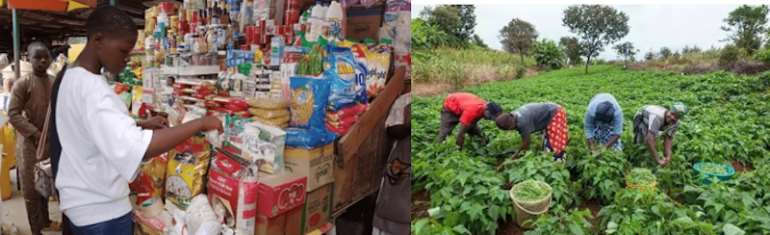
Across Nigeria today, millions of families wake up every morning with one pressing question: How do we survive another day in a difficult economy? Rising food prices, inflation, unemployment, and the high cost of transportation have made life challenging for households across the country. Yet, amid these hardships lies an opportunity that many Nigerians are beginning to rediscover—the power of small businesses, petty trading, and agriculture.
Economic recovery is not built by governments alone. While public policies can create the right environment, lasting prosperity is ultimately driven by the creativity, resilience, and enterprise of ordinary citizens.
The economic reforms introduced by President Bola Ahmed Tinubu have been accompanied by difficult adjustments that have placed pressure on many Nigerians. However, the broader objective of these reforms is to build a more sustainable economy capable of attracting investment, boosting production, and creating jobs over time. As these reforms continue to unfold, many citizens are looking for practical ways to adapt and improve their livelihoods.
One of the most encouraging voices in this conversation has been Nigeria’s First Lady, Oluremi Tinubu. She has consistently emphasized that there is dignity in honest work and has encouraged Nigerians not to look down on petty trading or small-scale enterprises. Her message is simple but profound: every successful business starts somewhere. This perspective deserves serious attention.
Many of Nigeria’s biggest entrepreneurs did not begin with multinational companies or large factories. They started with roadside stalls, neighbourhood shops, small farms, tailoring businesses, food vending, transportation services, or simple trading activities. Through discipline, consistency, and reinvestment, these modest ventures grew into thriving enterprises that now employ hundreds or even thousands of people. The same path remains open to today’s generation.
Agriculture, in particular, offers enormous opportunities. Nigeria possesses vast arable land, favourable weather across many regions, and a growing domestic market hungry for locally produced food. Whether through crop cultivation, poultry, fish farming, livestock, vegetable gardening, food processing, or agribusiness services, agriculture has the potential to create employment while improving food security and reducing dependence on imports.
Beyond farming, countless opportunities exist in small-scale manufacturing, fashion design, catering, digital services, logistics, artisan trades, cosmetics, recycling, repairs, and retail businesses. Many of these ventures require more determination and creativity than large amounts of capital.
Importantly, entrepreneurship should not be viewed merely as a means of survival. It should become a pathway to wealth creation. A person who begins by selling vegetables today may eventually own a chain of grocery stores. A young graduate operating a small poultry farm may later become a commercial producer supplying supermarkets nationwide. Every successful enterprise begins with a first customer and a willingness to persevere.
This does not mean the challenges should be ignored. Access to affordable finance, reliable electricity, good roads, security, quality education, and a supportive business environment remain essential. Governments at all levels have a responsibility to continue improving these conditions so that entrepreneurs can thrive. Economic reforms are most effective when they are matched by policies that support small businesses, farmers, and manufacturers.
At the same time, Nigerians themselves must embrace a culture of productivity, innovation, and self-reliance. Rather than waiting indefinitely for white-collar jobs, many young people can acquire vocational skills, embrace digital entrepreneurship, or explore agriculture and other productive sectors. Small businesses may not produce instant wealth, but they often provide a foundation for long-term financial stability.
History has shown that nations recover when their people produce more than they consume. They recover when citizens invest in local industries, cultivate the land, manufacture goods, provide services, and create employment for others. Nigeria is no exception.
The journey out of economic hardship will not happen overnight. It will require patience, sound policies, private sector investment, and the determination of millions of hardworking Nigerians. But if citizens seize opportunities in agriculture, petty trading, and small businesses—as encouraged by First Lady Oluremi Tinubu—while taking advantage of emerging opportunities under the current economic reforms, the country can steadily build a more resilient and prosperous economy.
The future of Nigeria will not be written only in government offices or corporate boardrooms. It will also be written in the farms of rural communities, the markets of bustling cities, the workshops of artisans, the stalls of petty traders, and the dreams of entrepreneurs who refuse to give up.
For many Nigerians, the road to national recovery may well begin with one small business, one farm, one customer, and one determined step at a time.
Georges Macnobleson-Idowu, a UK-based Nigerian veteran journalist writes in from Birmingham.