
Nigeria's First Lady's Akara Misfire: The Bigger Question About Empowerment
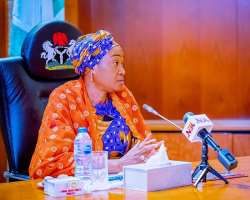
The torrent of reactions that has followed Senator Oluremi Tinubu's controversial remarks on the Renewed Hope Initiative grants has largely missed the central issue. Many have either misunderstood her comments or deliberately shifted the conversation to avoid addressing the more fundamental question: Is the government's approach to empowerment truly capable of lifting vulnerable Nigerians out of poverty?
I deliberately refrained from commenting until I had watched the full video several times. I wanted to understand the argument advanced by those who insisted that the First Lady's message was never about frying akara or roasting corn, but rather about the dignity of honest work and encouraging entrepreneurship, no matter how modest the venture.
After watching the full speech repeatedly, I respectfully disagree.The First Lady was not merely encouraging people to work hard. She was speaking about the legacy of the Renewed Hope Initiative and what her administration considers a meaningful empowerment strategy.
For emphasis, here is the portion of her statement that sparked the controversy:
"We're trying to give hope, and to start akara business doesn't take a lot of money. To start roasting corn, or somebody even said kuli-kuli doesn't take much. We didn't give them a loan; we gave it to them as a grant. So we've encouraged Nigerians as best as we could. What is within our hands, I have given, and I keep giving."
To understand why many Nigerians found the remarks problematic, it is important to consider the grants being distributed under the Renewed Hope Initiative (RHI).
Among the intervention programmes are:
₦200,000 for persons with disabilities to recapitalise existing businesses.
₦250,000 for vulnerable elderly beneficiaries under the Elderly Support Scheme.
₦500,000 for selected women farmers under the Agriculture Support Programme.
₦50,000 for women traders and small business owners under the Women Economic Empowerment Programme.
It is this ₦50,000 grant that the First Lady referred to when she spoke about starting businesses such as frying akara, roasting corn, and producing kuli-kuli.
The Debate Is Not About Akara
The criticism has never been that akara, roasted corn, or kuli-kuli are unworthy businesses.
Neither is it about discouraging people from starting small. Nor is it about denying the dignity of honest labour. The real concern lies in the appropriateness and adequacy of presenting such businesses as a flagship empowerment strategy during one of Nigeria's worst cost-of-living crises.
The Reality of Starting an Akara Business
The suggestion that ₦50,000 is sufficient to establish an akara business appears disconnected from present economic realities.
A modest akara business requires, among other things:
A frying pan
Frying spoon
Gas cylinder and cooking gas, or a tripod and firewood setup
Aluminium sieve
Mixing bowl or bucket
Mortar or other mixing equipment
Transparent display container
Table or stand
Parasol or market umbrella
Nylon bags
Beans
Vegetable oil
Pepper
Onion
Salt
Shop space or a suitable selling location
Considering current market prices, it is difficult to argue that ₦50,000 can adequately establish and sustain such a business.
A Micro Solution to a Macro Problem
The statement also reflects what many Nigerians see as government's recurring tendency to offer micro-level solutions to macroeconomic problems.
Nigeria is grappling with soaring inflation, rising unemployment, declining purchasing power, increasing transportation costs, expensive cooking gas, higher rents, rising school fees and worsening poverty.
Against this backdrop, many expected conversations around empowerment to focus on creating sustainable jobs, supporting productive enterprises, expanding access to technology, strengthening vocational skills and improving the overall business environment.
Instead, the emphasis on petty trading appeared inadequate for the scale of the economic crisis.
Double Standards in Political Empowerment
Another reason the remarks attracted criticism is the apparent contrast between how political allies and ordinary Nigerians are empowered.
For the vulnerable poor, the conversation centres on ₦50,000 grants for akara and roasted corn.
Yet, only days earlier, the First Lady presented vehicles to APC women leaders from five opposition-controlled states during the inauguration of the Tinubu Torchbearers, stressing that the vehicles were personal property to be registered in the recipients' names.
The contrast inevitably raises uncomfortable questions. How many political associates would be advised to start an akara business with ₦50,000? Would the government recommend the same model of empowerment to members of the political elite?
Yes, Akara Can Be Profitable
There is no doubt that akara business can be profitable. Many families have been sustained through it. Personally, I know a woman who built a storey building from the proceeds of selling akara, potatoes, plantain and pap. But for every success story, there are countless others struggling to survive from one day to the next.
The relevant question, therefore, is not whether akara business can generate income.
The real question is whether its profit margin, under today's economic realities, is sufficient to lift vulnerable women out of poverty. Nigeria Has Changed. Nigeria today is vastly different from the Nigeria of ten or fifteen years ago. The cost of living has increased dramatically. House rents have multiplied. Transportation costs have skyrocketed. Cooking gas is significantly more expensive. School fees have become unaffordable for many families.
Food prices continue to rise.
By way of personal experience, my final tuition in a state university in 2011 was ₦36,000, while my annual rent as an undergraduate was ₦30,000.
Today, tuition in that same institution exceeds ₦200,000, while annual rent ranges between ₦150,000 and ₦250,000. During my National Youth Service in 2012, my monthly income of ₦24,800—comprising the ₦19,800 NYSC allowance and ₦5,000 state allowance—was enough to cover my expenses, and I still managed to save roughly ₦150,000 before completing service. That would be virtually impossible under today's economic conditions.
Beyond Handouts
The First Lady's remarks also reinforce concerns that government continues to rely on short-term interventions rather than transformative empowerment. According to the World Bank, approximately 139 million Nigerians—about 62% of the population—live below the poverty line.
Can small grants for akara and corn businesses significantly reduce poverty on such a scale?
Is this the kind of empowerment capable of helping Nigeria achieve the Sustainable Development Goals (SDGs)?
How does this compare with the models adopted in countries such as Rwanda and Kenya, where women's empowerment increasingly focuses on education, technology, skills acquisition, agricultural value chains and access to finance?
The Bigger Picture
Ultimately, the controversy is not about akara.
It is about expectations. Nigerians expect empowerment programmes that expand opportunities, improve productivity and create lasting economic mobility. Women deserve more than survival. They deserve opportunities to build sustainable businesses, acquire modern skills, embrace technology, access affordable finance and participate meaningfully in the formal economy. Empowerment should not merely help people endure poverty; it should equip them to escape it.
That is why the debate surrounding Senator Oluremi Tinubu's remarks continues. The issue is not the dignity of frying akara or roasting corn. Honest work deserves respect.
The real issue is whether, in 2026, this should represent the face of government empowerment in Africa's largest economy. See less
Franklin Ebuka is a broadcaster with over 8 years experience in broadcast media. His experience spans across news reporting, editing and reading, sports presentation, hosting of political and personality interviews, programme production and office administration. He has featured on Arise News and News Central TV programmes. He also partners with a couple of African journalists in Kenya and South Africa.