
Nuhu Ribadu And The Patient Work Of National Security
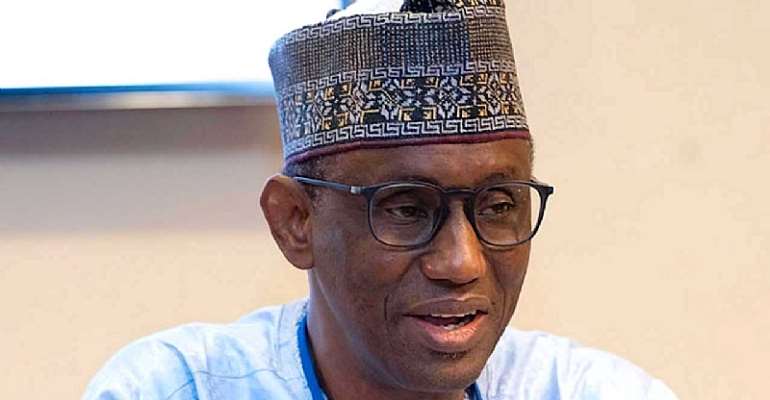
When security forces foiled a planned terrorist attack on students writing the West African Senior School Certificate Examination (WASSCE) in Kogi State and neutralised the notorious terrorist leader, Kachalla Ibrahim Battijo, the immediate public reaction was one of relief. A tragedy had been prevented. But beyond the operational success lay something equally important: a window into the security philosophy that has increasingly defined the work of National Security Adviser, Nuhu Ribadu.
At the 15th National Security Seminar organised by the Alumni Association of the National Defence College (AANDEC), in collaboration with the Office of the National Security Adviser (ONSA) and the National Defence College (NDC) in Abuja, June 16–17, 2026, under the theme, “Strengthening Nigeria’s Border Security Architecture for National Stability,” Ribadu turned attention to the longstanding challenge of porous borders and the risks they pose to national stability. He noted that weak border governance creates vulnerabilities that can be exploited by criminal and terrorist networks and called for the deployment of modern technology, biometric systems, enhanced surveillance, and stronger regional cooperation.
Speaking earlier in Kano on June 8, 2026, at a seminar organised by the European Union and Bayero University Kano (BUK), in collaboration with ONSA, on the theme, “Whole-of-Society Approach and Conflict in Northern Nigeria,” Ribadu highlighted another dimension of the security question: the social conditions that leave many young people in northern Nigeria—particularly those disconnected from education, opportunity, and social support systems—vulnerable to recruitment by violent groups. He emphasised that military operations alone cannot sustainably resolve insecurity if the underlying conditions that facilitate recruitment remain unaddressed.
Taken together, Ribadu’s interventions in Kano and Abuja reveal a coherent philosophy of national security. They suggest an approach that extends beyond kinetic operations and places equal emphasis on capable institutions, resilient communities, and the state’s ability to anticipate threats before they become crises.
This matters because Nigeria’s security challenges did not emerge overnight. They evolved over many years through institutional weaknesses, economic pressures, ungoverned spaces, and criminal networks that learned to exploit every available opening.
No serious observer expects such challenges to disappear within a single administration. The more meaningful question is whether the country is developing the capacity required to confront them in a sustained and effective manner.
That is where Ribadu’s approach deserves closer attention.
The Kogi operation offers a useful illustration. Beyond the elimination of a dangerous figure, it demonstrated the value of acting on credible intelligence before a threat becomes a national tragedy. Its significance lies not only in the removal of a terrorist leader but also in the fact that students were able to sit their examinations without disruption.
The National Security Adviser also understands that security increasingly depends on the quality of information within society. Terrorist organisations exploit not only physical spaces but also digital platforms to spread propaganda, recruit followers, and amplify fear. Countering these threats therefore requires effective strategic communication that strengthens public trust, promotes credible information, and builds resilience against misinformation, disinformation, and extremist narratives. In today’s security environment, communication has become an essential instrument of national security.
Security is often discussed through statistics and operational reports. Yet its value is ultimately measured in everyday experiences. A child attends school. A journey is completed without incident. Families go about their lives with greater confidence.
Such outcomes rarely happen by accident.
They result from preparation, effective intelligence gathering, and cooperation among agencies able to connect disparate pieces of information before events spiral beyond control.
The same emphasis on anticipation is evident in Ribadu’s focus on border security.
Nigeria's vast borders have long created opportunities for terrorists, arms smugglers, traffickers, and other transnational criminal actors. The effects have been felt across different regions, sometimes in ways that become visible only after a security breach has occurred.
The National Border Management Strategy seeks to address this challenge through technology, biometric systems, enhanced surveillance capabilities, and stronger collaboration with neighbouring countries. The objective is straightforward: a country is better positioned to manage threats when it can identify them early and track them effectively.
In many respects, that shift reflects the difference between reacting to insecurity and staying ahead of it.
Equally revealing is Ribadu's recognition that national security must embrace both a whole-of-government and a whole-of-society approach to be effective.
At the Kano workshop, he spoke about conditions that often make recruitment into violent groups easier. Young people who see no pathway to a better future can become vulnerable to manipulation. Communities facing persistent hardship are often easier targets for those who trade in violence and extremism.
The observation is hardly new, but it remains profoundly important.
A nation cannot rely exclusively on arrests and military operations to secure lasting stability. Peace ultimately depends on communities that possess confidence in the future and a genuine stake in the wider society.
That understanding reflects an appreciation of how contemporary security challenges evolve. Armed groups may carry weapons, but their influence often expands where governance is weak, institutions are fragile, and opportunities are limited.
For that reason, sustainable security requires more than successful operations. It requires stronger communities and a society that offers meaningful alternatives to those who might otherwise be drawn into criminal or extremist networks.
The encouraging aspect of this perspective is that it places security within the larger project of nation-building. It recognises that responsibility extends beyond intelligence agencies and military formations to government institutions, civil society, the private sector, the media, and citizens themselves.
There are early indications that this broader approach is beginning to produce measurable results.
Recent operations have led to the rescue of kidnapped victims, the recovery of weapons, and the disruption of criminal networks. Community groups and civil society organisations have also pointed to improvements in coordination among security agencies.
At the same time, the challenges remain substantial.
Parts of the North West continue to experience serious security pressures. Border management remains an ongoing task. Infrastructure constraints still affect operational effectiveness in several regions. Public expectations remain high—as they should.
The House of Representatives has sought further engagement with the National Security Adviser and the service chiefs on these concerns. Such scrutiny is an essential feature of democratic governance. Security institutions perform best when they remain accountable to the citizens they serve.
The larger question, naturally, is whether Nigeria is moving in the right direction.
Recent developments suggest that it is.
Security is not built through isolated successes. It emerges from institutions that function effectively, intelligence that is acted upon in time, and policies that address both immediate threats and the conditions that allow those threats to flourish.
Viewed through that lens, Ribadu's tenure reflects an effort to strengthen foundations rather than pursue short-term acclaim. The emphasis has been on building institutional capacity, improving coordination, and expanding the state's ability to respond to increasingly complex threats.
Ultimately, the true measure of any national security strategy lies not in the headlines it generates, but in the ordinary lives it quietly protects. Its success is reflected in children who go to school without fear, farmers who cultivate and return home safely, traders who travel the nation's highways with confidence, and communities that trust the institutions established to safeguard them.
That is the patient work of national security. It rarely produces instant victories or dramatic applause. It demands persistence, coordination, and the steady strengthening of institutions over time.
Judged against that standard, the direction of travel appears encouraging. The ultimate verdict, as always, will rest not in official reports but in the lived experiences of Nigerians.
Chido Onumah, PhD, is Special Adviser to the National Security Adviser on Strategic Communication and Civil Society Liaison. ([email protected])