
What If The Greatest Threat To South Africa's Youth Is Not Immigrants, But Voting Apathy?
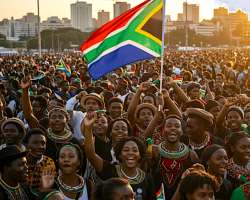
Fifty years ago, the youth of Soweto, a township in South Africa, faced the barrel of a state that denied them a future. They were shot for demanding to be taught in their mother tongue, but their courage did more than expose the brutality of apartheid - it lit a fuse that would ultimately burn the entire edifice of racial oppression to the ground. As we mark this golden jubilee under the theme "Reset at 50 – The Future Calls", we carry a profound responsibility: to honour their sacrifice not with nostalgia, but with strategic, forward-looking action.
Yet, as we look at the state of our nation today, we must confront an uncomfortable truth. The youth of 1976 fought for the right to learn; the youth of 2026 are fighting for the right to earn. Statistics South Africa's latest Quarterly Labour Force Survey paints a stark picture: unemployment among those aged 15 to 24 stands at a staggering 60.9%, with over 45% of all young people aged 15 to 34 out of work. Millions are classified as NEET - Not in Employment, Education or Training. For many, the dream of a better life has curdled into a daily struggle against poverty and, tragically, the lure of substance abuse, which has devastated families and communities across our townships.
This cocktail of despair is undeniably potent. It is no wonder, then, that some young South Africans are being drawn to the false promise of anti-immigrant and Afrophobic marches. Frustrated by systemic exclusion, they direct their anger at foreign nationals - our brothers and sisters from Mozambique, Zimbabwe, and beyond. This is a dangerous and self-defeating diversion. We must address this with diplomatic honesty: while the government bears a significant share of the blame for failing to create an enabling economic environment, scapegoating our fellow Africans will not build a single factory, open a single university door, or treat a single addict. It betrays the very essence of the 1976 struggle, which was intrinsically linked to the broader liberation of the African continent. The youth of Soweto understood that apartheid was a regional problem requiring Pan-African solidarity. Today, we must reclaim that legacy. African unity is not a utopian ideal; it is a strategic imperative for our collective prosperity.
So, where do we turn? How do we channel this frustration into constructive power? The answer lies in looking outward to our peers in the BRICS nations and inward, to the power we hold in our hands when we step into a voting booth. Across the BRICS nations - Brazil, Russia, India, and China - young people are confronting similar structural challenges not by turning against one another, but by embracing their democratic power, educating themselves, fostering unity, and upskilling to become innovators and entrepreneurs. Their example offers us a powerful roadmap for progressive organisation.
From Brazil, we learn the importance of youth political participation as a tool for transformation. Brazilian youth have consistently shown up at the polls in growing numbers, recognising that voting is not merely a civic duty but a strategic act of self-determination. In recent elections, young Brazilians have mobilised through social media, fact-checking platforms, and community organising to hold their leaders accountable. They understand that policy decisions on education funding, job creation, and social welfare are directly shaped by who occupies public office. Brazilian youth have also embraced civic education, with grassroots movements teaching young people in favelas and rural areas about their constitutional rights and the levers of power. They have learned that an informed voter is an empowered citizen. When young Brazilians demand accountability, they do so with the full weight of their demographic power and politicians listen.
From Russia, we see how youth are educating themselves for active citizenship while embracing national unity. Russian youth have increasingly engaged with state-sponsored civic education programmes that teach not only the mechanics of voting but also the importance of community service and collective responsibility. The "Learning through Service" programme, which integrates volunteer work into the education system, has taught young Russians that their individual success is inseparable from the wellbeing of their communities. This has fostered a culture of unity, where young people see themselves as part of a larger national project rather than isolated individuals competing for scarce resources. By combining civic education with practical service, Russian youth are building a generation that is both skilled and socially conscious - ready to contribute to their nation's development rather than tear it apart.
From India, we derive a powerful lesson in innovation and upskilling as pathways out of despair. Indian youth have responded to high unemployment not by targeting immigrants or minorities, but by equipping themselves with the skills that the global economy demands. The NAVYA initiative trains young women in tribal and underserved regions in emerging sectors like AI-enabled services, drone assembly, and solar PV installation. India's Skill India Programme, restructured in 2025, has created a unified ecosystem for youth skilling, with initiatives like BharatSkillNxt and SOAR for AI Readiness preparing young Indians for automation and the digital economy. Indian youth are not just joining the workforce - they are creating it. They are launching start-ups, embracing the gig economy, and finding innovative solutions to local problems. They understand that waiting for the government to create jobs is a losing strategy; instead, they are building their own futures through education, entrepreneurship, and relentless self-improvement.
From China, we witness the power of collective purpose and national unity in driving youth development. Chinese youth have embraced a model of voluntary service as a pathway to social change, with tens of thousands of university graduates volunteering to work in remote rural areas each year. But beyond service, Chinese youth are also deeply engaged in their own self-education and skill development. The average age of core R&D teams in cutting-edge fields like artificial intelligence, aerospace engineering, and biomedicine has fallen to around 35. Young Chinese innovators are not bound by conventional wisdom; they are earning the respect of the market through their achievements. This has been made possible by a national culture that celebrates education, innovation, and collective progress. Chinese youth are encouraged to think big, to take risks, and to contribute to their nation's rise - not through division, but through unity and shared purpose.
These are not perfect models, but they offer actionable insights. They prove that the youth of the Global South are not passive victims of global economic currents - they are active architects of their own destinies.
Education and Upskilling: The Foundation of a Prosperous Future
The youth of our BRICS partners have shown us that education is not a passive endeavour - it is an active, lifelong commitment to self-improvement. In South Africa, too many young people complete their formal education only to discover that their qualifications do not match the demands of the labour market. We must urgently address this mismatch. We must demand an education system that prepares us for the future, not the past. This means advocating for curricula that include digital literacy, coding, artificial intelligence, renewable energy technologies, and entrepreneurial skills. It means supporting Technical and Vocational Education and Training (TVET) colleges, which have been systematically underfunded and undervalued. It means embracing lifelong learning - not just through formal institutions, but through online platforms, mentorship programmes, and peer-to-peer knowledge sharing.
But education alone is not enough. We must also upskill ourselves proactively. The youth of India and China have shown us that waiting for opportunities is a losing game; we must create our own opportunities. This means embracing entrepreneurship, exploring the gig economy, and finding innovative solutions to the challenges we face. It means forming cooperatives, sharing resources, and building networks of mutual support. It means refusing to accept that our destiny is determined by circumstances beyond our control.
The Ballot: Our Most Diplomatic Weapon
However, the most profound lesson we must internalize is that protest must be paired with political participation. The youth of 1976 had no vote. They faced a regime that was immune to democratic pressure. Today, we live in a constitutional democracy. We have the power to hire and fire our leaders. Yet, voter apathy among the youth remains persistently high, and this is a luxury we cannot afford. Being progressive is not just about marching; it is about strategic engagement. The youth manifesto being retraced through Soweto today is a powerful document. It demands an overhaul of the education system, the expansion of vocational training, and urgent intervention on drug proliferation. These are legitimate, well-articulated demands. But a manifesto carried on foot will only travel so far. To institutionalize these demands, they must be translated into votes.
When we stay home on election day, we surrender our future to the very status quo we claim to despise. We hand over the budget allocations, the policy decisions, and the ministerial appointments to older generations who may not feel the urgency of our plight. The coalition politics we have witnessed in recent years have shown that every single vote counts - that the youth demographic, if mobilized, could reshape the tectonic plates of our political landscape. Let us be diplomatic but firm: we cannot expect the government to listen to our cries if we refuse to wield the only constitutional tool that compels them to listen. We must register in our millions. We must scrutinize party manifestos not for empty rhetoric, but for concrete plans on job creation, skills development, and social welfare. We must hold our representatives accountable between elections and decisively remove them at the polls if they fail us.
As we reflect on 50 years of resilience, we must reject the path of destruction. The solution to drug abuse is not violence against foreigners; it is demanding effective rehabilitation centres and social workers. The solution to unemployment is not xenophobia; it is demanding a structural economic reform that prioritizes local manufacturing and the industrialised economy. The solution to poverty is not isolationism; it is deepening our ties with Africa and the Global South to create a bloc of young, energetic, innovative nations.
The youth of 1976 were doers, not talkers. They shocked the world because they were united in their purpose. Today, we face a different enemy which is despair and disorganization. But we have weapons they could only dream of; mobile technology to organize, international platforms to learn from, and the sacred right to vote.
Let us honour the Class of 1976 by building a movement that is diplomatic enough to engage, progressive enough to innovate, and powerful enough to shift the balance of power. Let us use our numbers to determine our own destiny.
The future is calling. Our ancestors are watching. Will we answer with stones, or will we answer with ballots, ideas, and an unwavering commitment to African unity? The choice is ours. Let us choose wisely.
Mr Neo Mohlabeng - BCom in Marketing Management, University of Johannesburg, BCom Honours in Business Science/Marketing, Wits (candidate) Innovation & Talent Manager: The Commonwealth Youth Council African Region