
Middle-East Crisis: US, Iran Set To Sign Peace Deal On Sunday, Reopen Strait Of Hormuz
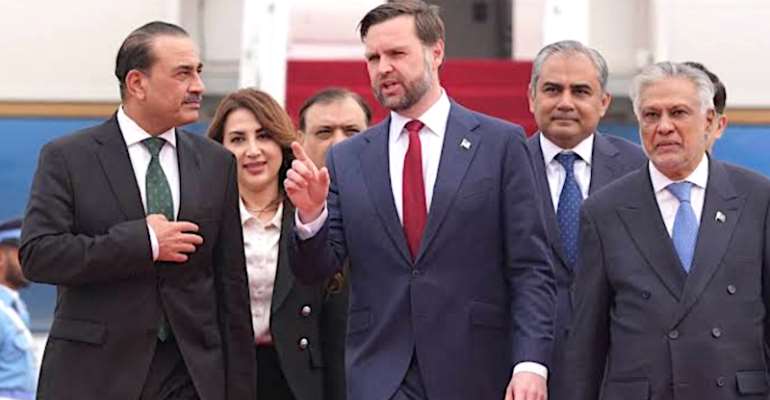
United States President, Donald Trump, has announced that Washington and Tehran are poised to sign a peace agreement aimed at ending months of tensions and conflict in the Middle East, with the deal expected to pave the way for the immediate reopening of the strategically vital Strait of Hormuz.
Trump made the announcement on Saturday in a post on his Truth Social platform, expressing confidence that the agreement would mark a major breakthrough for regional stability and international trade.
“The Deal is scheduled to get signed tomorrow, and immediately after it is signed, the Hormuz Strait is OPEN TO ALL,” Trump wrote.
The Strait of Hormuz is one of the world's most important maritime corridors, handling a significant share of global oil shipments. Any reopening of the waterway is expected to ease concerns in international energy markets and improve the flow of global commerce.
Trump also disclosed plans regarding Iran’s enriched uranium stockpile, stating that the material would eventually be secured, processed and destroyed under the terms of the agreement.
“At the appropriate time, when all is calm, we will go in and get the Nuclear Dust, buried deep under the powerful sunken granite mountains, thanks to our beautiful B-2 Bombers and their brilliant pilots, and downblend and destroy it, whether in Iran, or the United States,” he said.
The US president added that Washington was prepared to pursue a new chapter of engagement with Tehran and the wider Middle East.
“We look forward to working with Iran, and the entire Middle East, long into the future,” Trump stated.
Despite his optimism, Trump warned that the United States retained other options should the peace process collapse.
“Hopefully, this process will all work out quickly, easily, and smoothly. If it doesn’t, we have the ultimate alternative, hopefully never to be used again,” he said.
However, uncertainty remains over the timing of the agreement's formal signing.
Iran’s Foreign Ministry appeared to contradict Trump's timeline, with spokesperson Esmaeil Baghaei indicating that no signing ceremony was expected on Sunday.
“We will have to wait and see about the exact date of the signing of the memorandum of understanding, although it will not be tomorrow,” Baghaei said.
“The possibility of this happening in the coming days cannot be ruled out.”
Iran has consistently maintained throughout negotiations that it retains the right to enrich uranium, a key issue that has remained at the centre of discussions between both countries.
Adding to expectations of a breakthrough, Pakistan’s Prime Minister, Shehbaz Sharif, announced that the United States and Iran were expected to conclude a peace agreement within the next 24 hours following weeks of negotiations reportedly facilitated by Islamabad.
Sharif said both parties had reached a final framework and agreed on the text of the proposed accord, with preparations underway for an electronic signing ceremony.
“We are closer to a peace deal than ever before,” the Pakistani leader said, expressing confidence that the agreement could lay the foundation for lasting peace and stability across the region.
According to Sharif, Pakistan played a central mediating role throughout the negotiations, helping officials from Washington and Tehran bridge differences and develop a framework for de-escalation.
He noted that technical-level discussions could begin shortly after the agreement is signed to facilitate implementation of its provisions.
The anticipated accord comes after months of heightened hostilities between the United States and Iran, a situation that has raised security concerns across the Middle East and disrupted international trade routes, particularly around the Strait of Hormuz.
While Pakistan remains optimistic about an imminent breakthrough, Iranian officials have urged caution, insisting that discussions are still ongoing and that a final signing date has yet to be confirmed.