
Beyond Personalities: The Questions Nigeria Must Answer Before 2027
As political activities gradually gather momentum ahead of Nigeria's 2027 presidential election, public discourse is increasingly revolving around personalities, alliances, defections, and possible candidates. Yet history suggests that nations rarely transform because of personalities alone. Sustainable progress emerges when elections become opportunities for collective reflection on the direction of the state.
The real question before Nigeria is therefore not simply who will occupy Aso Rock in 2027. The more important question is what national challenges the election will compel us to confront.
The Independent National Electoral Commission (INEC) has fixed the presidential election for January 16, 2027, with campaigns already scheduled to commence in August 2026. The nation is therefore entering a defining political season.
As Nigerians prepare for another democratic exercise, five fundamental questions deserve greater attention than campaign slogans and partisan rhetoric.
1. What Economic Model Will Deliver Prosperity?
Economic growth remains important, but growth without broad-based prosperity creates frustration rather than stability.
For millions of Nigerians, the central concern is not abstract economic statistics but the daily realities of food prices, transportation costs, employment opportunities, and household purchasing power.
The next election should therefore encourage a serious national conversation about how economic expansion can translate into improved living standards. Voters should be interested not merely in promises of growth but in credible pathways to prosperity.
As former United Nations Secretary-General Kofi Annan once observed:
«"Good governance is perhaps the single most important factor in eradicating poverty."»
The challenge before Nigeria is not simply creating wealth, but ensuring that opportunity is accessible across regions, classes, and generations.
2. How Can Nigeria Become More Secure?
No nation can fully realise its potential amid persistent insecurity.
From terrorism and banditry to kidnapping and communal conflicts, security remains one of the most important tests of governance. Yet security should be understood in broader terms than military responses alone.
Citizens require confidence that their communities are safe, their businesses can operate, and their children can pursue education without fear.
Security is not merely the absence of violence; it is the presence of stability.
The 2027 election should therefore challenge candidates and citizens alike to think beyond immediate crises and towards long-term strategies capable of strengthening national cohesion.
3. What Future Are We Offering Young Nigerians?
Nigeria possesses one of the youngest populations in the world.
The country's greatest asset is neither oil nor natural resources but its people. Yet many young Nigerians continue to face uncertainty regarding employment, education, entrepreneurship, and social mobility.
The late Nelson Mandela famously remarked:
«"Education is the most powerful weapon which you can use to change the world."»
The statement remains relevant to Nigeria's circumstances.
A nation that fails to invest adequately in its youth risks underutilising its greatest resource. The 2027 election should therefore focus substantial attention on human capital development, innovation, and skills acquisition.
4. What Institutions Will Outlive Political Administrations?
Strong nations are ultimately built upon strong institutions.
Presidents come and go. Political parties rise and decline. Institutions endure.
The health of any democracy depends not merely on the quality of its leaders but on the strength of the structures that govern public life.
The words often attributed to former American President Barack Obama remain instructive:
«"Africa doesn't need strongmen. It needs strong institutions."»
For Nigeria, the challenge is ensuring that governance becomes increasingly dependent on institutions rather than individuals.
A mature democracy is measured not by the popularity of its leaders but by the resilience of its systems.
5. What Kind of Nation Do Nigerians Want to Build?
Perhaps the most important question is also the simplest.
What kind of Nigeria do we collectively seek?
Elections often reveal political preferences. They should also reveal national aspirations.
Whether one supports the ruling party, the opposition, or any emerging political movement, there should be common ground regarding national unity, constitutional order, economic opportunity, and democratic accountability.
Patriotism is not blind loyalty to any government. It is a commitment to the enduring success of the nation itself.
The 2027 election offers another opportunity for Nigerians to define their collective expectations and democratic values.
Conclusion
As campaign season approaches, personalities will inevitably dominate headlines. Alliances will shift. Political calculations will intensify. Speculation will flourish.
Yet long after campaign posters fade and election rallies end, Nigeria will still confront the same fundamental questions about prosperity, security, opportunity, institutions, and national purpose.
The quality of the 2027 election may ultimately depend on whether Nigerians focus exclusively on who should lead or whether they also insist on a deeper conversation about where the nation should go.
The future of Nigeria will not be determined solely by the winner of the next presidential election.
It will be determined by the questions the nation chooses to ask before the votes are cast.
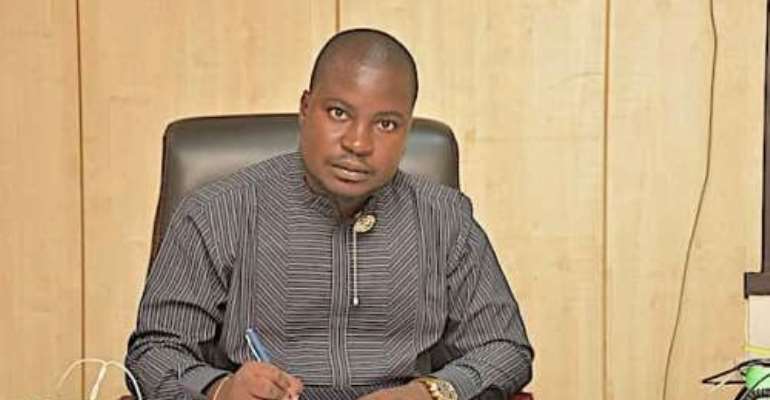
Julius Bokoru is a Nigerian political commentator and public affairs analyst whose writings focus on governance, democratic institutions, political communication, leadership, and national development.