
Grassroots Leadership And Community Development: Lessons From Alhaji Dauda Okekere
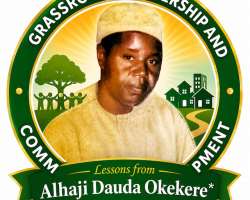
In many Nigerian communities today, development is no longer viewed as the responsibility of government alone. Across towns and villages, community progress increasingly depends on individuals who use their influence, resources and leadership to improve the lives of ordinary people. These grassroots leaders mobilise people, support education, encourage peace and promote collective development. One outstanding example of such leadership was the late Alhaji Dauda Okekere of Ilorin. His life and contributions remain a strong reminder that genuine leadership is not measured by political titles or personal wealth, but by service to humanity and commitment to community welfare. Nigeria continues to face serious challenges at the grassroots level. Many communities still struggle with poverty, unemployment, poor infrastructure, inadequate healthcare services and limited educational opportunities. In several places, local communities survive because respected individuals step forward to provide support where government presence is weak.
Alhaji Dauda Okekere belonged to this rare category of leaders whose impact extended far beyond personal success. He became widely respected in Ilorin because of his humility, generosity, fairness and willingness to help others. Many people described him as an “eniyan ire,” meaning a person of goodness and kindness. What distinguished his leadership was his strong belief in service and participation. Unlike leaders who distance themselves from the people, he was known for listening to community members, encouraging dialogue and supporting collective decision-making. His leadership style promoted unity, peaceful coexistence and social harmony within the community.
One of his greatest contributions was in the area of education and human development. At a time when western education was not widely embraced in some traditional communities, he successfully combined Islamic values with modern education. He studied administration at Kaduna Polytechnic and later attended professional training abroad, including at University of Connecticut. His educational exposure enabled him to assist many young people in gaining access to schools, employment opportunities and social advancement. Through mentorship and guidance, he supported individuals who later became successful professionals and contributors to society. Education remains one of the most powerful tools for community transformation. Communities that invest in education create opportunities for economic growth, social mobility and poverty reduction. Alhaji Dauda Okekere understood this reality and devoted much of his influence to helping people improve their future through learning and personal development. Beyond education, he was deeply involved in philanthropy and humanitarian service. He quietly assisted people in need without seeking public praise or political recognition. His contributions included helping vulnerable individuals, supporting community welfare and encouraging people to participate in communal development. His leadership also promoted peace and unity. In many societies today, divisions based on politics, religion and social differences continue to weaken community relationships. Leaders who encourage tolerance, dialogue and fairness are therefore essential for sustainable development.
Alhaji Dauda Okekere’s leadership demonstrated that peacebuilding begins from the grassroots. His approach to leadership reduced tension, encouraged cooperation and strengthened relationships among members of the community. People respected him not because of fear or authority, but because of his integrity and concern for others. An important aspect of his enduring legacy can also be seen in the achievements and service of some of his children, who have distinguished themselves in different professional fields while continuing the values of excellence, service and community development instilled by their father. Among them is Dr. Kayode Dauda, an accomplished accountant who rose to the peak of his professional career and became a Fellow of the Institute of Taxation. His success reflects the importance Alhaji Dauda Okekere placed on education, discipline and professional integrity.
Similarly, Dr. Rafat Dauda has distinguished herself as an educationist and exceptionally brilliant academician whose contributions to learning and intellectual development continue to impact society positively. Her academic accomplishments further demonstrate the family’s long-standing commitment to knowledge and human capital development. Also noteworthy is Dr. Engineer Kamil Dauda, a successful engineer and philanthropist widely recognised for his kind-hearted nature and active participation in community development initiatives. Like his father, he is known for supporting people quietly and contributing to humanitarian causes that uplift vulnerable members of society. His activities strongly reflect the culture of compassion and service that Alhaji Dauda Okekere represented throughout his lifetime.
Another important aspect of his legacy is the continuation of his values through the Alhaji Dauda Okekere Okoh Foundation established by his family. The foundation continues to sponsor educational programmes, examination fees and empowerment initiatives for widows and vulnerable members of society. This continuity shows that true leadership leaves lasting values that can be transferred from one generation to another. A good leader does not merely solve immediate problems but also inspires future generations to continue the work of community development. There are important lessons Nigeria can learn from the life of Alhaji Dauda Okekere.
First, leadership should be rooted in service. Too often, leadership in Nigeria has become associated with personal enrichment and political competition rather than sacrifice and responsibility. Grassroots leadership should instead focus on improving the welfare of ordinary people. Second, honesty and accountability remain essential for public trust. Communities are more willing to cooperate with leaders who are transparent, fair and sincere in their actions. Third, education and youth empowerment must remain priorities for national development. Investing in young people creates long-term benefits for society and reduces problems such as unemployment, crime and social unrest. Fourth, philanthropy and community support are necessary in addressing social challenges. While government has important responsibilities, individuals and private organisations also have important roles to play in supporting the less privileged. Finally, peaceful coexistence and unity are foundations for sustainable development. Communities cannot progress in an atmosphere of conflict, hatred and division. Leaders who encourage dialogue, understanding and cooperation contribute greatly to social stability.
The story of Alhaji Dauda Okekere also highlights the importance of documenting the contributions of grassroots leaders in Nigeria. Many local leaders have made remarkable impacts in education, peacebuilding and community development, yet their stories are rarely preserved in formal history. Nigeria’s future development depends not only on national policies but also on strong local leadership built on integrity, compassion and service. Communities flourish when leaders place collective interest above personal ambition. As the country continues to search for solutions to economic and social challenges, the example of leaders like Alhaji Dauda Okekere provides an important reminder that sustainable development begins from the grassroots. Leadership guided by humility, honesty and commitment to humanity remains one of the strongest foundations for community progress and national transformation.