
2027 Elections: Femi Falana Warns Of A Potential One-candidate Race
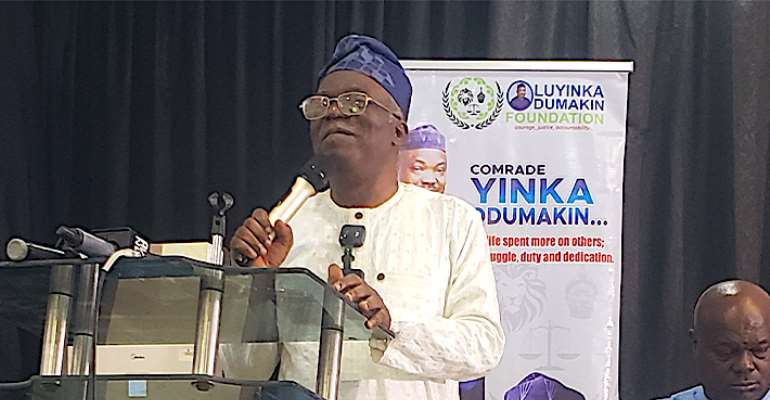
Human rights lawyer Femi Falana has warned that persistent judicial interference in political party affairs could lead to a scenario with only one presidential candidate in Nigeria's 2027 general election. Speaking at the 5th Comrade Yinka Odumakin Memorial Lecture in Lagos, he highlighted the danger of such interference on the future of Nigeria's democracy.
The lecture was attended by notable figures, including Joe Ajaero , Omoyele Sowore , and Senior Advocate of Nigeria, Olumide Fusika. Their presence highlighted the gravity of the issues discussed regarding the nation's political and legal systems.
Other attendees included Joe Odumakin, President of the Oluyinka Odumakin Foundation, along with Lanre Arogundade, Agba Jalingo, and Richard Akinola. The event served as a platform to reflect on the potential for reduced political competition in the upcoming election cycle.
Femi Falana expressed deep concern over the growing trend of using court orders and conflicting judgments to destabilize political parties. He warned that if this trajectory continues, Nigeria could face a reality where only one political party is able to field a presidential candidate, effectively stifling democratic competition.
These remarks follow a recent move by the Independent National Electoral Commission (INEC) to stop recognizing factions of the African Democratic Congress (ADC) led by David Mark. INEC justified the decision by citing a Court of Appeal ruling that mandated the commission to maintain the status quo while leadership legality remains under judicial review.
Falana strongly criticized the judiciary for interfering in these internal party matters. He argued that such meddling directly contradicts the Electoral Act, which is designed to limit court involvement in the private administration of political organizations.
“Through the manipulation of Nigerian courts and senior lawyers, you may have only one candidate contesting the presidential election in this country. If that happens, Nigeria may not even need to spend money on a presidential election,” he said.
He further warned that undermining democratic processes could trigger unrest if citizens feel deprived of genuine electoral choices.
Falana called on civil society groups, labour unions, and political activists to organise in defence of democracy, cautioning that uncoordinated protests could lead to chaos.
“We must stop agonising and start organising in the interest of our people and democracy,” he added .