UGANDA: UPDF Declares National Unity Platform a Rebel Outfit Amid Post-Election Tensions
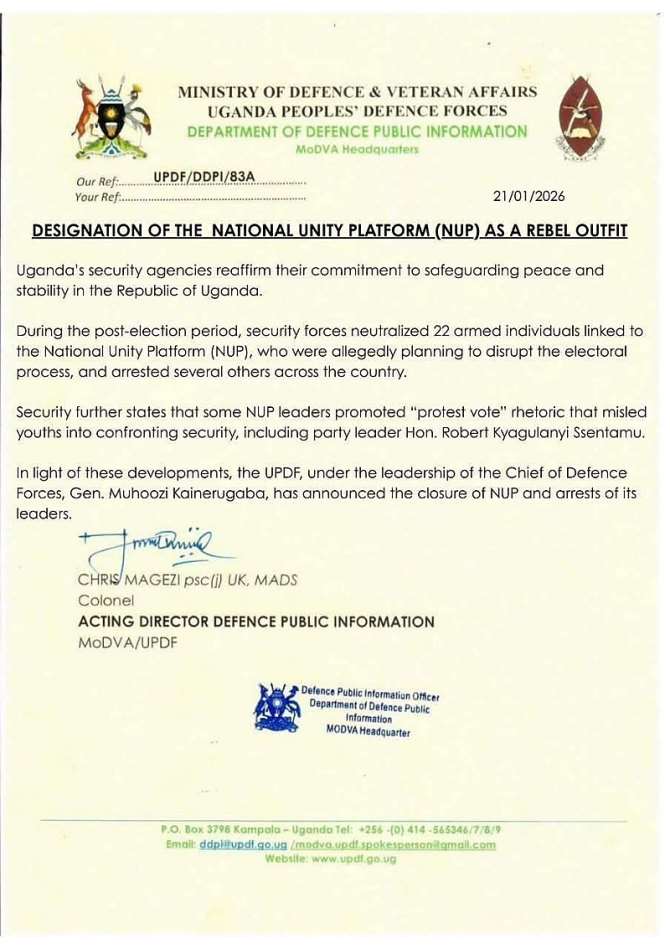
Uganda’s political landscape has entered a new phase of tension following the declaration by the Uganda People’s Defence Forces (UPDF) that the opposition National Unity Platform (NUP) is a “rebel outfit.”
In a statement released this week, the Chief of Defence Forces, General Muhoozi Kainerugaba, announced the closure of NUP offices and the arrest of several of its leaders, citing national security concerns.
The UPDF’s Acting Director of Defence Public Communication, Chris Magezi, said security forces had “neutralised” 22 armed individuals allegedly linked to the NUP during the post-election period. According to Magezi, the group was suspected of planning to disrupt the electoral process. No independent verification of these claims has yet been made, and NUP officials have not formally responded to the allegations.
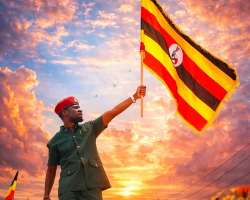
Meanwhile, the leader of the National Unity Platform, Hon. Robert Kyagulanyi Ssentamu, popularly known as Bobi Wine, is reported to have gone into hiding. Security sources suggest that elements within the NUP leadership promoted what they termed “protest vote” rhetoric, which they argue encouraged young supporters to confront security forces during and after the elections.
President Yoweri Museveni secured a decisive victory in the presidential polls, winning 72 percent of the vote. Bobi Wine finished in second place with over 24 percent, according to official results released by the Electoral Commission.
The ruling National Resistance Movement (NRM) continues to dominate Uganda’s political map. The party will send 354 Members of Parliament to the 12th Parliament, scheduled to be sworn in from May 13 to 15, 2026. The National Unity Platform, now the largest opposition bloc, is set to occupy 50 parliamentary seats.
At the local government level, the NUP registered a significant victory in the capital. Its candidate, Balimwezo Ronald Nsubuga, was officially declared winner of the Kampala City Lord Mayor race after securing a commanding majority in the 2026 Local Government Council elections.
Political analysts warn that the designation of a major opposition party as a rebel outfit could deepen divisions in the country and heighten tensions between the state and its critics. Human rights groups have called for transparency, due process, and restraint, urging authorities to distinguish between political dissent and armed activity.
As Uganda prepares for the inauguration of its new Parliament, the unfolding standoff between the government and the National Unity Platform is likely to shape the country’s political climate in the months ahead.