
Canonizing Author Meja Mwangi Using Professor Goro’s Lens
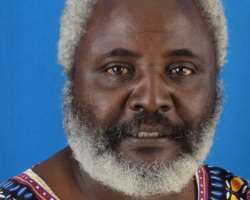
The reading of Meja Mwangi’s trilogy by Professor Nicholas Kamau Goro is quite transformative. It lifts Mwangi’s works into the literary canon. Professor Goro critiques Mwangi’s isalienation, segregation and marginalization within the literary world. He is hitherto unwelcome to the literary canon. Mwangi is excluded from the literary league of inter alia Chinua Achebe, Ngugi wa Thiong’o and Wole Soyinka.
This marginalization is what Professor Goro terms as unfair treatment of the great author. Mwangi deserves recognition and appreciation. His contribution to African literature should be celebrated beyond the African borders.
It is Mwangi’s marginalization that prompts Professor Goro to examine the three Mwangi’s novels. His aim to demonstrate that Mwangi is an author that transcends the test of African literary values. Using Mwangi’s trilogy, Professor Goro ostensibly opens our literary eyes to appreciate Meja Mwangi’s works. Goro joins a few literary scholars that are canonizing author Meja Mwangi.
Consequently, Mwangi’s trilogy; Kill Me Quick, Going Down River Road and The Cockroach Dance portray the impacts of the dream deferred. This dream as Professor Goro postulates is the failure of the independent Kenya to deliver opportunities to its youth. The youth are disillusioned. They are disappointed by the disfranchised economic system. A system that offers hopelessness and exclusion. Characters: Meja, Maina,Ben and Dustman are representatives of the structurally disfranchised generation. A generation that is sent way by employers for lack of opportunities. Infact employers have put signages with a message of “NO VACANCY.” A generation that must adapt to a filthy environment. A generation that must grapple with Poor governance that has birthed slams. The underclass or call them second class citizens are deprived of descent lives and pushed into horrible slam conditions.
Moreover, Professor Goro states that political emancipation had only buoyed the Kenyan souls with the aspirations of national renewal, economic growth and social inclusion. However, such aspirations and or dreams of the nation morphed into a dystopian farce. The postcolonial project of prosperity for all curdled into post-apocalyptic moment.
Professor Goro appreciates the way Mwangi blends satire, realism and irony in demonstrating the survival of the youths in Nairobi. Goro elucidates that Mwangi ‘s works of city realism foreground survival over heroism, and endurance over triumph. Nairobi on the other hand, has collapsed and cannot hold together as the center. It is unable to uniformly supply blood to all its parts. It is a dysfunctional heart that employs favoritism. It excludes the youth from participating in the civic life of the nation.
Kill Me Quick illuminates the system that offers no employment to its educated youth. In Professor Goro’s words, Kill me Quick critiques the futility of education in an economy without opportunity. Going Down River Road explores the erosion of dignity in the commodified city whereas The Cockroach Dance satirises the bureaucratic inertia employed by the state to detriment of the nation and its youth.
But why should Meja Mwangi, a prolific writer that is admired beyond the literary circle remain at the margins? Why would he be marginalized? Is it because as Professor Goro says that Mwangi distinguished himself from his contemporaries by turning away from nationalist idealism and toward the realities of the city? Why should Mwangi be termed as a ‘popular ‘writer? Professor Goro however argues that Mwangi’s marginalization is simply based on the literary form. Nonetheless Mwangi’s decision to anchor his writing on the suffering of the underclass, unemployed and the underemployed youth in the city is adequate for inclusion into the literary canon.
It is therefore unfair to marginalize Mwangi based on his commitment to urban realism, his focus on the mundane and the marginal and the refusal to offer redemptive closure, position his work outside the dominant paradigms of the African literary values. Mwangi should rather be canonized for his great eminent contribution in literary world. Mwangi should be praised for choosing a form that focuses on the lives of the urban dwellers.
I hereby implore literary minds to examine and or re-examine Meja Mwangi’s works. It goes without saying that Professor Nicholas Kamau Goro dedicated his time and mind in examining Meja Mwangi’s trilogy.
This literary commentary is based on Professor Goro’s 2025 publication title a dream deferred: Youth, disillusionment and the postcolonial city in Meja Mwangi’s urban fictions.
Professor Goro lectures in the department of literary communication at Laikipia University.