
Nigeria's Sinking Delta
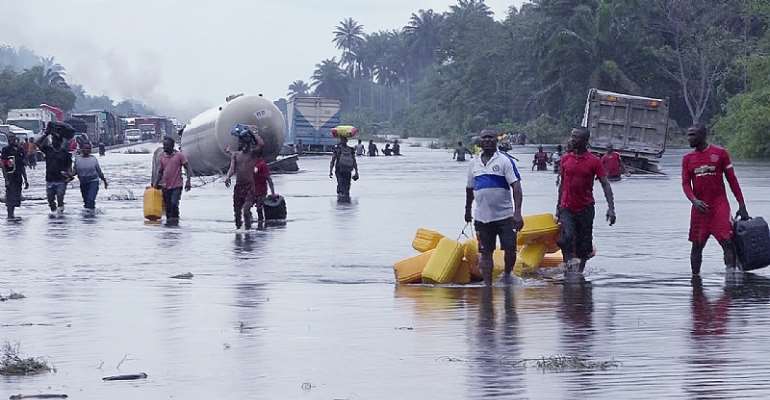
Niger Delta under climate change is not just a story of vanishing land, but of livelihoods, conflicts, and a fragile ecosystem in peril.
Rising sea levels, salinization, and the migration of fish and people have created a perfect storm of environmental and social crises.The loss of mangrove forests and biodiversity is devastating, while government responses have often exacerbated tensions and mistrust. As the international community increasingly recognizes the local impact of climate change, Nigeria has made commitments to reduce emissions and align with the Sustainable Development Goals. But for these promises to have real meaning, urgent and well-funded action is needed at the local level. The story is a stark reminder that climate change is not just a global issue, but a deeply personal and urgent one for the millions living on the front lines of this slow-motion catastrophe, ODIMEGWU ONWUMERE examines
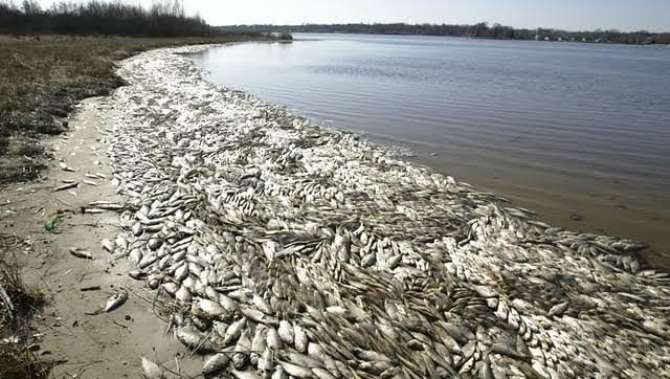
The old chief, Douye Tari, does not need a scientist’s chart to understand the water. He understands it in the ache of his bones on damp mornings and in the memory of a shoreline that no longer exists.
He stands on what is left of his village’s beach, a thin strip of sand littered with the plastic debris of a distant world, and points a trembling finger toward the churning, grey-brown expanse of the Atlantic.
“There,” he says, his voice a low, gravelly rasp against the constant sigh of the waves.
“When I was a boy, my father’s house stood there. We had three rows of houses between us and the water.
"We grew cassava behind the house. Now, it is all gone. The water has eaten it. It is eating us.”
Chief Tari is in his late seventies. His face is a beautiful, intricate map of a life lived by the rhythms of the tide. But the rhythms have changed. They have become violent, unpredictable, and hungry.
Igbetaewoama, a fishing community that has existed here for generations, is on the front line of a slow-motion catastrophe. It is a war being waged not with guns, but with centimeters of rising water, and it is a war this community, and countless others like it across the Niger Delta, is losing.
This is the story of Nigeria’s sinking heartland. The Niger Delta, a region of astonishing biodiversity and immense oil wealth, is disappearing. Along with the sprawling, chaotic metropolis of Lagos, this coastal plain is being slowly erased by the rising sea, a direct and devastating consequence of a warming planet. The problem is no longer a future prediction; it is a present, life-altering reality for millions.
As the water claims the land, it brings with it a cascade of crises: homes are swallowed, livelihoods are destroyed, ancient communities are displaced, and a delicate social fabric, already strained by poverty and neglect, is being torn apart. This is a journey into a land of vanishing coastlines and mounting desperation, where the global crisis of climate change is etching its most profound and human scars.
The science is as clear as it is terrifying. Global warming, driven by the burning of fossil fuels—the very resource extracted from beneath the Delta’s soil—is melting polar ice caps and causing the thermal expansion of the oceans. The result is a steady, inexorable rise in global sea levels. For a low-lying, coastal nation like Nigeria, this is an existential threat.
A leading hydrologist at a university in the country who wouldn't want the name in print, has spent two decades studying the Nigerian coastline. His projections, once academic warnings, now read like a present-day diagnosis.
“We are not talking about a distant future,” the hydrologist explains from his office, surrounded by topographical maps and satellite images.
“We are living in the early stages of the inundation. The flooding in Lagos and the Delta is no longer just seasonal; it’s becoming a permanent feature.
"The high tides push further inland each month. The storm surges, which were once rare events, are now more frequent and far more destructive.”
The numbers are staggering in their implications. Experts are deeply concerned that a sea-level rise of just 20 centimeters—a conservative estimate for the coming decades—could permanently displace the inhabitants of nearly 200 villages along the Delta’s coast. Should the rise exceed one meter by the end of the century, a scenario well within the projections of the UN’s Intergovernmental Panel on Climate Change (IPCC), a vast portion of the Niger Delta could be completely submerged. Such an event would create a humanitarian crisis of unimaginable scale, potentially forcing up to 80% of the Delta’s 30 million inhabitants to flee inland in search of higher ground.
This is not just about losing land; it is about the fundamental disruption of life. The constant presence of water makes communities more vulnerable to waterborne diseases like cholera and typhoid. It contaminates freshwater sources with salt, making it undrinkable and poisoning the very soil needed for agriculture. A vicious cycle is created: as the land shrinks, people are pushed closer together, putting immense pressure on already scarce resources and creating the perfect conditions for both disease and conflict.
For generations, the people of the Niger Delta have lived in a delicate partnership with their environment. Their livelihoods were woven from the threads of the ecosystem: fishing in the brackish creeks and the open sea, farming the fertile alluvial soil. Climate change is systematically destroying this partnership.
Chief Tari speaks of a time when the nets came up heavy, shimmering with bonga shad and silver catfish.
“A man could feed his family and have enough left to sell at the market in Yenagoa,” he recalls.
“It was a good life. A hard life, but a good one.”
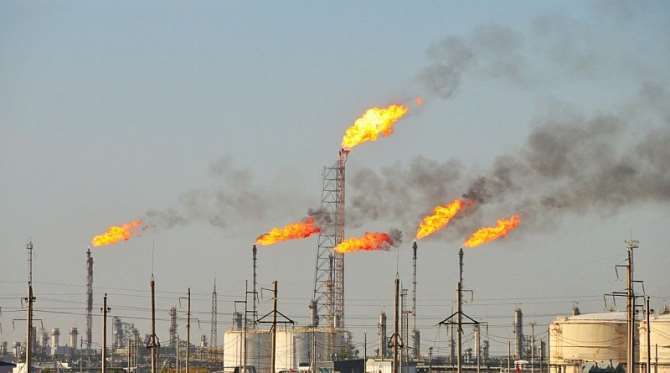
That life is vanishing. Rising sea levels and warming ocean temperatures are fundamentally altering the marine ecosystem. Fish stocks, sensitive to changes in salinity and temperature, are migrating to cooler, deeper waters, far beyond the reach of the local fishermen and their wooden canoes. The resources that remain are dwindling, and the competition for them is becoming fierce.
The story of Igbetaewoama is a case in point. For years, they shared fishing grounds with a neighboring community. But as the fish became scarcer, old agreements broke down.
“They say the fish are now only on their side of the creek,” says a young fisherman named Godstime, mending a torn net with deft fingers.
“We say the creek belongs to everyone. Words became shouts. Shouts became threats. Last year, men were beaten. Boats were destroyed.”
This local skirmish over fishing rights is a small but potent example of a much larger trend: climate change acting as a "threat multiplier," taking existing social and economic tensions and pouring fuel on them.
This migration is not limited to the fish. As the coast becomes uninhabitable and traditional livelihoods collapse, people are forced to move. This phenomenon, known as "eco-migration," is creating a new and volatile dynamic across Nigeria. Families from the Delta are moving inland, seeking land to farm or jobs in overcrowded towns, placing new pressures on host communities.
Simultaneously, far to the north, desertification and drought—another consequence of climate change—are pushing Fulani pastoralists southward in search of grazing land for their cattle. The collision of these two migrations, of displaced coastal farmers and migrating northern herders, is a recipe for conflict. Clashes over land and water resources, often framed in ethnic and religious terms, have become increasingly common and deadly. The root cause, however, is often environmental. The land itself is shrinking, unable to support all those who depend on it.
The Niger Delta is one of the world’s most important wetlands. It is a jewel of biodiversity, a sprawling ecosystem of freshwater swamps, lowland rainforests, and mangrove forests that is home to an incredible array of plant and animal species. This natural wonder is now under severe threat.
The most critical battle is being fought in the mangrove forests. These remarkable ecosystems, with their tangled, stilt-like roots, are the foundation of the Delta’s health. They serve as the kidneys of the region, filtering pollutants from the water. They are the nurseries of the sea, providing a safe breeding ground for countless species of fish and crustaceans. And they are the land’s first line of defense, their dense root systems acting as a natural barrier that absorbs the power of storm surges and prevents coastal erosion.
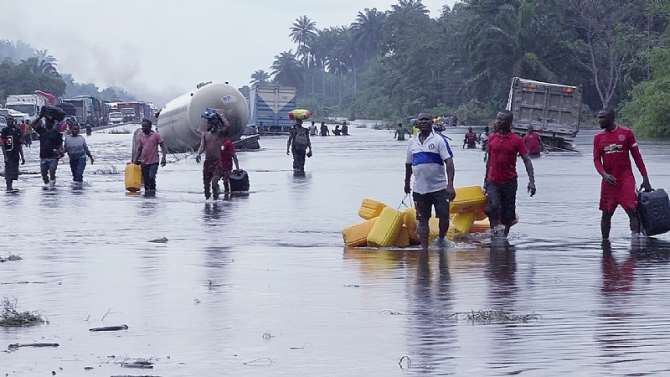
But the mangroves are dying. Rising sea levels are pushing saltwater further and further into the freshwater ecosystems. This process, known as salinization, is poisoning the mangroves, which are adapted to brackish water but cannot survive in highly saline conditions. As the mangroves die, the coast is left exposed and vulnerable. The natural shield is gone.
The loss of this habitat has devastating consequences for wildlife. The Delta is a vital stopover for migratory birds, many of which depend on its wetlands for nesting and feeding. It is home to unique species like the pygmy hippopotamus and the Niger Delta red colobus monkey. As their habitats are flooded or destroyed, these species are pushed closer to extinction.
The destruction of this biodiversity is not just an ecological tragedy; it is an economic one. The ecosystem services provided by the Delta—clean water, carbon storage, coastal protection—are worth billions of dollars. As these services are lost, the cost is borne by the local communities whose survival is inextricably linked to the health of their environment.
Faced with growing instability and resource conflicts, the Nigerian government’s response has often been to treat a complex socio-environmental problem as a simple security issue. The deployment of military-led internal security operations (ISOs) has become a common tactic. The goal is to keep the peace, but the results are often the opposite.
Reports from human rights organizations have documented numerous instances where these military operations have led to abuses, deepening the mistrust between local communities and the state. Instead of addressing the root causes of the conflict—the desperation born of lost livelihoods and disappearing land—this hard-security approach often exacerbates tensions.
The humanitarian crisis triggered by the constant flooding is another area where the official response has struggled to keep pace. In recent years, major flood events have displaced millions of Nigerians, creating sprawling camps for internally displaced people (IDPs). These camps are frequently overwhelmed, lacking adequate food, clean water, and sanitation. The United Nations has repeatedly highlighted the urgent need for humanitarian assistance, but the scale of the displacement is immense.
“You cannot solve a climate crisis with a gun,” says Chioma Nwosu, a development worker based in Port Harcourt.
“People are not fighting because they are inherently violent. They are fighting because they are desperate.
Their world is being washed away, and they have been given no alternative.
"We need adaptation strategies, not just soldiers.
"We need new livelihoods, not just refugee camps.”
The climate change crisis in the Niger Delta is a stark reminder that climate change is a global issue with intensely local consequences. Recognizing this, international bodies like the United Nations are playing an increasingly important role.
The UN is involved in coordinating international support for disaster response, helping to fund and implement projects aimed at building resilience in vulnerable communities.
The goal is to align Nigeria’s efforts with the broader Sustainable Development Goals (SDGs), ensuring that the response to climate change also addresses issues of poverty, health, and education.
Nigeria, for its part, has acknowledged the severity of the threat. The country has updated its commitments under the Paris Agreement, pledging a significant reduction in greenhouse gas emissions by 2030. This commitment is a crucial step, aligning the nation with the global effort to combat climate change through cooperative action.
However, the gap between international agreements and the reality on the ground remains vast. For the commitments made in conference halls in Paris or Glasgow to have any meaning in places like Igbetaewoama, they must be translated into urgent, well-funded, and locally-led action.
Onwumere is Chairman, Advocacy Network On Religious And Cultural Coexistence (ANORACC)