
Nepal’s Youth Unrest Leaves Dozens Dead, Prime Minister Resigns
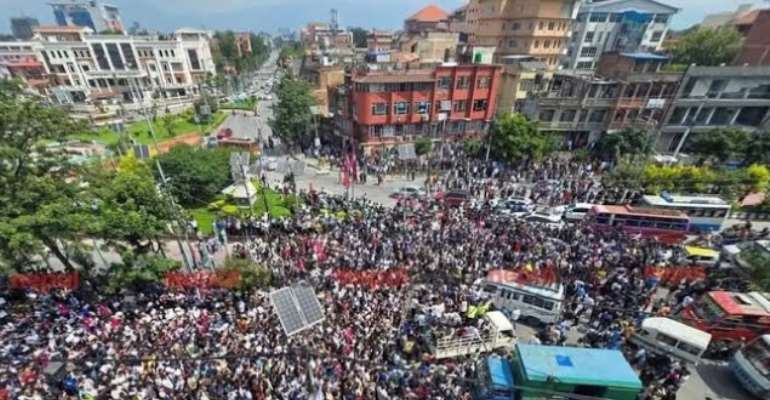
Kathmandu - Nepal is facing its most serious political crisis in years after youth-led protests against a government social media ban escalated into deadly clashes, leaving at least 19 to 25 people dead and hundreds injured.
The unrest began in early September after the government ordered a ban on major social media platforms, citing regulatory non-compliance. The ban was lifted within days, but demonstrations continued to grow, fuelled by anger over corruption, youth unemployment, and years of fragile coalition politics. Protesters said the ban represented an attempt to silence dissent and symbolised a deeper disconnect between the political class and ordinary citizens.
Protests quickly spread beyond the capital, Kathmandu, and took on a nationwide character. In the capital, the situation turned violent. Government buildings, including parts of the Singha Durbar complex that houses the prime minister’s office and ministries, were set on fire. Police fired on crowds in clashes that left scores injured. Hospitals reported treating more than 600 people for injuries sustained during the demonstrations.
In response, authorities declared curfews across Kathmandu and other areas. The Nepal Army was deployed to secure key state institutions and enforce order. Streets around parliament and the president’s residence have been placed under heavy guard.
Prime Minister K. P. Sharma Oli resigned under pressure on 10 September, creating a leadership vacuum. Protest groups and some political figures have proposed the appointment of former Chief Justice Sushila Karki as an interim leader, though no consensus has been reached. The presidency is managing the caretaker transition while parliament remains surrounded by soldiers.
The violence has caused severe disruption to daily life. Schools and businesses have closed under curfew orders. Flights at Kathmandu’s Tribhuvan International Airport were briefly suspended but later resumed under military oversight. Tourism, one of Nepal’s most vital industries, faces fresh uncertainty as images of burning government buildings and clashes spread globally.
Regional fallout has also been felt. Indian states including Andhra Pradesh and Telangana have begun evacuation efforts for citizens stranded in Nepal. Helplines have been set up for families, and special flights have been arranged to bring stranded travellers home.
Analysts point to long-standing frustrations as the backdrop to the crisis. Nepal became a federal democratic republic in 2008 after the abolition of its monarchy, but governance since then has been marked by corruption scandals, unstable coalitions, and weak accountability. Many young Nepalis have sought work abroad, fuelling discontent among those who remain. The attempt to restrict social media, which for many serves as a public square and livelihood tool, was seen as emblematic of a system out of touch with the country’s youth.
The government has pledged to restore calm, but the scale of the protests and the anger expressed suggest the crisis is far from over. Families continue to grieve loved ones killed in the clashes, and activists vow to remain in the streets until a new political settlement is reached.
Observers warn that if Nepal’s leaders fail to address the underlying grievances of its young population, instability could persist. The current violence has already drawn comparisons with past cycles of unrest, including the Maoist insurgency of the 1990s, which left thousands dead before a peace settlement was reached.
Nepal’s immediate future now rests on whether its political institutions can weather the shock of mass protests, loss of life, and a sudden change of leadership. The country stands at a delicate moment, balancing between the promise of democratic renewal and the threat of prolonged instability.
Divramredje Lawrence Efeturi, KSJI, Assoc.ACIEPUK