
Unpacking The Use Of U.S. Wartime Powers Against A Criminal “Invasion”
What is happening?
On 15 March, the White House announced that President Donald Trump was invoking the Alien Enemies Act of 1798 in response to what the administration terms “irregular warfare” waged by a criminal network known as Tren de Aragua, which it alleges follows the orders of President Nicolás Maduro’s government in Venezuela. Although legal challenges to this move began immediately, Trump claims that the law – intended for use in wartime, and most recently employed to controversial effect during World War II – gives him the authority to summarily deport anyone accused of belonging to Tren de Aragua, whose objectives, he says, include destabilising the U.S. at Maduro’s behest. The State Department had designated Tren de Aragua as a foreign terrorist organisation on 19 February, following an executive order signed by the president on the day of his inauguration.
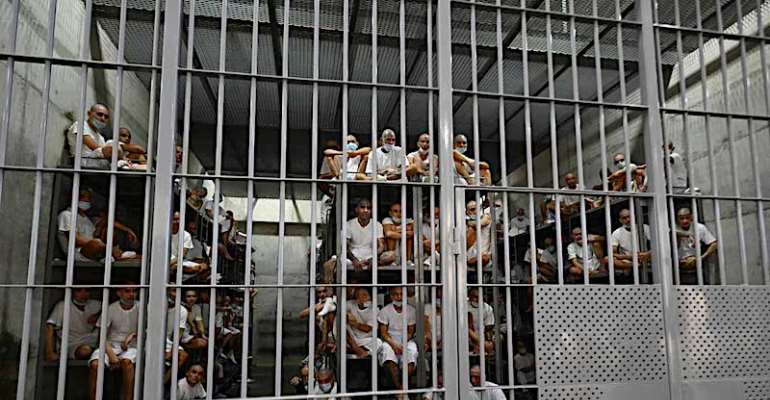
Three flights carrying 238 Venezuelan deportees (as well as 23 Salvadorans) landed at San Salvador airport on the night of Trump’s announcement. Of the Venezuelans, 137 were deported under the terms of the Alien Enemies Act, according to the White House. El Salvador is to be paid to incarcerate them for at least a year in the Centre of Confinement of Terrorists, the maximum-security jail that is a prominent symbol of President Nayib Bukele’s iron-fist approach to fighting crime. Known as CECOT, the prison was built to house up to 40,000 alleged members of the Salvadorian gangs known as maras.
The Trump administration has in effect sought a pretext for speeding up mass summary deportations.
The ramifications of these expulsions are still unwinding. Fusing a hardline approach to a criminal group of disputable clout with an excessively broad understanding of who its members might be, the Trump administration has in effect sought a pretext for speeding up mass summary deportations. It has already met with fierce and potentially ground-breaking legal opposition. Within hours of Trump’s move, lawyers representing Venezuelan men in U.S. immigration custody began to challenge the application of the Alien Enemies Act to their clients, earning a judicial ruling ordering their clients’ return, but that did not stop the flights. In court, the U.S. government has offered a range of reasons for why the deportations did not flout the judge’s order, while appearing intent on pressing ahead with a zero-tolerance policy toward undocumented migrants and even legal residents who arrived under President Joe Biden’s administration. After receiving a wave of criticism for apparently ignoring a judicial order, Tom Homan, the U.S. border czar, said the administration will not defy court rulings, but restated that he does not “care what judges think in the Alien Enemies Act case”.
By using El Salvador as a destination, the Trump administration has also appeared ready to enlist the country home to Latin America’s best-known model of heavy-handed policing and mass incarceration as the chosen partner in and exponent of its new approach. While many of the deportees’ family members have voiced despair and indignation over the unknown fate of their loved ones, many of whom they claim were innocent and targeted merely for having tattoos, the U.S. has set itself up for further action – deportations of alleged members of criminal groups designated as foreign terrorist organisations, as well as possible military strikes on these groups, particularly in Mexico.
What is Tren de Aragua?
Tren de Aragua is a criminal group that emerged around 2014 in a Venezuelan prison in the state of Aragua, about 130km west of the capital, Caracas, although it may have existed earlier under a different name. The Centro Penitenciario de Aragua, better known as Tocorón, was controlled by its heavily armed inmates, whose leader (or pran in Venezuelan prison argot) was Héctor Guerrero Flores, alias “El Niño” Guerrero. Tren is a term adopted by a number of gangs in various regions of Venezuela, especially those that were formed in prison. From the jail, Guerrero and his gang ran a lucrative criminal enterprise, encompassing drug trafficking, robbery, kidnapping, extortion, contract killing and illegal mining. They ran the prison itself as a business, as well as a protection racket, with ordinary prisoners forced to pay a fee (la causa) or face physical abuse and starvation.
Under President Hugo Chávez (1999-2013), Venezuela’s already violent prisons became some of the most dangerous in the world. Over 6,000 inmates were murdered during that period, due to inter-gang rivalry and state repression. The government eventually ceded control of many penitentiaries, collectively housing almost half the prison population, to criminal networks. To avoid turf battles, the Chávez administration allowed each prison to be run by a single gang.
Chávez’s successor, Maduro, has presided over more than a decade of economic collapse, bruising political conflict and authoritarian drift. The Venezuelan economy shrank by as much as 80 per cent until 2023, mainly as a consequence of mismanagement and corruption but also due to foreign sanctions. With criminal violence rising to heights previously unseen in Venezuela, national and local authorities responded with a mix of overwhelming force and tacit consent. Thousands died “resisting arrest” during draconian crackdowns in poor neighbourhoods. But the authorities also struck intermittent deals with criminal outfits in parts of Venezuelan territory, particularly certain cities and stretches of the rural interior, with the stated intent of mitigating violence. The government set up what it called “peace zones”, ostensibly with the aim of disarming the gangs, but these became no-go areas for the security forces in which organised crime groups were free to pursue illicit activities within certain limits. In some areas, the criminal groups came to exercise a form of de facto local government. By 2018 or so, Tren de Aragua was perhaps the most powerful of a score of major crime gangs in the country, known as megabandas. Its prison stronghold boasted a swimming pool, a zoo, bars and casinos.
[Tren de Aragua] came to control ... some of the most critical informal crossings ... on the Colombia-Venezuela border.
Criminal networks began to seek out new sources of income just as millions of their impoverished fellow citizens were streaming out of the country in search of a better life. Spotting an opportunity, Tren de Aragua exploited the migrants, engaging in human smuggling and a wide range of other illegal activities, establishing a presence along the migrant routes all the way from Chile to the U.S. The gang came to control – and charge for the use of – some of the most critical informal crossings, or trochas, on the Colombia-Venezuela border, after battling with Colombian guerrillas and other non-state groups. Its numbers swelled, certainly into the hundreds, and possibly several thousand, seemingly still under the overall command of Guerrero and his associates. Tren de Aragua established a reputation for extreme violence throughout the Americas.
In September 2023, the Maduro government mounted a massive operation involving over 10,000 members of the security forces to take back control of the Tocorón prison. Although the operation succeeded, the top leaders of Tren de Aragua, including Guerrero, either evaded capture or were allowed to escape. The precise relationship between the authorities in Caracas and the criminal group remains murky. According to the Venezuelan prisoners’ rights organisation Una Ventana para la Libertad (A Window for Liberty), the operation to retake the prison was discussed beforehand with the gang’s leaders, allowing them to make their getaway. The Maduro government’s own version of the gang’s evolution has been inconsistent: it has sometimes claimed that the Venezuelan political opposition created Tren de Aragua and other megabandas, and even that Guerrero is a U.S. agent charged with destabilising its rule. At other times, however, Maduro government officials have denied the gang’s existence. In April 2024, for instance, Foreign Minister Yvan Gil said the gang was a “fiction invented by the international media”.
Perhaps the most serious indication that the gang may at times do the government’s bidding is the kidnap, torture and murder of a Venezuelan dissident in Chile, Lieutenant Ronald Ojeda, in February 2024. Ojeda fled Venezuela after taking part in a military rebellion in 2017 and obtained asylum in Chile. Police there have arrested at least seven alleged members of a gang linked to Tren de Aragua in connection with the case, and according to Chilean prosecutors, evidence points to a contract killing ordered from Caracas by senior government figures. Chilean authorities have also sought the extradition of other suspects from Colombia and the U.S. The intermediary, it is alleged, was Guerrero himself.
Trump says Tren de Aragua is engaged in a campaign to unsettle democratic governments on the orders of Maduro, who supposedly “emptied his jails” in pursuit of this aim. “They’re no different than ISIS”, U.S. National Security Advisor Mike Waltz has said. But evidence for these claims is sketchy at best, and experts consulted by Crisis Group say the group’s power and reach, especially in the U.S., has been exaggerated. Without doubt, some Venezuelan migrants with links to Tren de Aragua have been implicated in grisly crimes, including murder, kidnapping and human trafficking and sexual abuse. In the most prominent case, alleged gang members took over three apartment complexes in Aurora, Colorado, in 2024, extorting and terrorising the Venezuelan migrants who lived there. Alleged gang members have also been accused of forcing Venezuelan women into sex work to pay off the debts they owe for having been smuggled into the U.S.
What experts think is implausible is the claim that the Tren de Aragua’s expansion or its presence in the U.S. forms part of a destabilisation plot hatched by Maduro. There is no evidence to indicate a major presence in the country nor anything by way of a leadership structure, much less a concerted campaign of any kind ranging across multiple U.S. states. Media reports indicate that U.S. intelligence analysts agree with that evaluation. Equating Tren de Aragua with more powerful and sophisticated organised crime groups, including Mexican cartels, seems instead to be part of a strategy popular among Trump supporters to pare back the numbers of recent migrants to the U.S., many of whom are Venezuelans.
What awaits deportees in El Salvador?
Images of the deportees’ arrival in El Salvador, posted on social media by President Bukele, show them handcuffed and forced to walk in a crouch, with heads bowed, past a line of heavily armed police before being transported by bus to CECOT. Though the identities of the deportees have been leaked to the press, the Trump administration has provided no evidence that any of them has committed a crime or belonged to Tren de Aragua. A sworn statement by U.S. Immigration and Customs Enforcement acknowledged that “many” were not accused of crimes in the U.S. but claimed they had been “vetted” and found to be members of the criminal organisation. Trump administration sources are quoted as saying 101 of the 238 belong to this category. Several have since been identified by relatives, who deny any link to organised crime. On the evening of 19 March, Salvadoran media reported that the Bukele administration had acknowledged that at least 20 per cent of the Venezuelans at CECOT are not members of Tren de Aragua.
Bukele has modelled himself as a strongman. Since declaring a “state of exception” in 2022, his approach to tackling the country’s murder rate, the highest in the world a decade ago, has been to round up thousands of young men and children as young as twelve suspected of belonging to local gangs (mostly Mara Salvatrucha and Barrio 18) and jail them indefinitely. Over 100,000 people, or 1.7 per cent of the country’s population, are now behind bars, and rights organisations say as many as 350 have died in prison during the “state of exception”. Thousands may have been wrongly imprisoned, according to media reports.
Bukele’s deal with Trump has paved the way for creating a “transnational penal colony”, whose inmates ... will have few rights.
In the words of a prominent civil society activist in El Salvador, Bukele’s deal with Trump has paved the way for creating a “transnational penal colony”, whose inmates, whether Salvadorans or foreigners, will have few rights. Access to Salvadoran jails is routinely denied to lawyers, independent investigators and even family members, according to Human Rights Watch, while Crisis Group interviews with former detainees reveal a pattern of ill treatment and harsh conditions. El Salvador’s justice minister Gustavo Villatoro, for his part, has indicated that inmates at CECOT will never be released. “We … will ensure that the penalties are severe enough so that no one who enters CECOT will ever walk out; they will only be able to leave in a coffin”, he said two years ago. The U.S. is paying El Salvador $6 million to hold deportees for a year, but there is no guarantee of release, either at the end of that period or, indeed, ever.
U.S. Secretary of State Marco Rubio has said a prisoner found not to be a gang member could get out of CECOT. “If one of them turns out not to be, then they’re just illegally in our country, and the Salvadorans can then deport them to Venezuela”, he said. So far, however, there is no indication of any review process once the Venezuelans reach CECOT.
What are the implications for the United States?
The Trump administration’s deportation of Venezuelan migrants to El Salvador represents another step in the militarisation of U.S. responses to both migration and organised crime, as well as part of a broader assault on the rule of law in the U.S. In February, Rubio designated Tren de Aragua and seven other Latin American (mainly Mexican) outfits as foreign terrorist organisations – an unprecedented step against what are profit-seeking criminal groups. The designation imposes both financial and travel sanctions on the groups and exposes anyone who provides them with “material support” (a broadly defined concept that includes money, other resources and even advice) to potential criminal penalties. Several members of the Trump administration have suggested that designating an entity in this manner is the equivalent of authorising the use of military force against them, with Elon Musk posting on social media that those designated are “eligible for drone strikes”.
The subsequent invocation by President Trump of the Alien Enemies Act with respect to Tren de Aragua is built upon the prior terrorism designation and, like that decision, repurposed a national security legal authority to a completely new end. The law provides that:
Whenever there is a declared war between the United States and any foreign nation or government, or any invasion or predatory incursion is perpetrated, attempted or threatened against the territory of the United States by any foreign nation or government, and the President makes public proclamation of the event, all natives, citizens, denizens or subjects of the hostile nation or government, being of the age of fourteen years and upward, who shall be within the United States and not actually naturalized, shall be liable to be apprehended, restrained, secured and removed as alien enemies.
Dating back to the 18th-century Quasi-War with France, the Alien Enemies Act has been invoked on only three occasions, each involving a war declared by the U.S. Congress: the War of 1812 (against the United Kingdom), World War I and World War II. The last time the law was invoked resulted in the internment of tens of thousands of U.S. citizens and residents based on their ethnic background. In his proclamation invoking the act, Trump claimed that Tren de Aragua was “perpetrating an invasion” of the U.S. and that the entity was “closely aligned with, and indeed has infiltrated, the Maduro regime”. Notably, Trump stopped short of directly accusing Venezuela of invading the U.S., possibly due to the administration’s continuing desire for greater cooperation in repatriating migrants directly from the U.S.
The invocation of the wartime authority of the Alien Enemies Act occurs amid a drive to expel undocumented migrants in the U.S. and rescind residency rights for other newcomers, particularly those from Latin America and the Caribbean, as well as a broader militarisation of U.S. policy toward migration at the cost of basic legal protections. The Trump administration has used U.S. military aircraft for deportation flights and transferred migrants from the country to the military detention facility at Guantánamo Bay, Cuba. U.S. Secretary of Defense Pete Hegseth has also dispatched thousands of troops to the U.S.-Mexico border. Meanwhile, as with the detention of suspected terrorists by President George W. Bush’s administration, including at Guantánamo Bay, the U.S. government’s deportation of supposed members of Tren de Aragua raises serious and unanswered questions as to how broadly membership of the group is construed, what the criteria are for determining who is a member and whether there is due process in adjudicating whether a suspect is a member or not. The Department of Justice acknowledges that it has little information regarding some of those deported and that several have committed no crime.
What lies ahead?
The deportation of alleged members of Tren de Aragua to El Salvador may be a harbinger of further measures that the Trump administration has already hinted at. Secretary of State Rubio has previously touted an offer from El Salvador to accept U.S. citizens now in U.S. jails for imprisonment in that country. Such an arrangement would seem to lack a domestic legal basis in U.S. law, and to be inconsistent with the U.S. Constitution, but that is no guarantee that the Trump administration will not try it out. The application of the Alien Enemies Act to Tren de Aragua could also be a test case for similar steps against alleged members of other groups, particularly other criminal organisations the administration designated as foreign terrorist organisations in February. Continuing to use coercion to address the problems of migration and organised crime could also set the stage for U.S. military action, likely against Mexican drug cartels.
Observers in the U.S. and Latin America, meanwhile, are keenly awaiting the political fallout from these deportations. Some in the U.S. fear the country could edge toward a constitutional crisis if the executive decides to ignore judicial orders that clash with its migration policies. As for Latin America, Trump’s open display of support for Bukele has come at a moment when many people in the region appear ready to sacrifice democratic norms and human rights protections in the name of greater security. Whether the White House’s moves will fuel or quell this trend remains to be seen