
Managing Tensions Between Algeria And Morocco
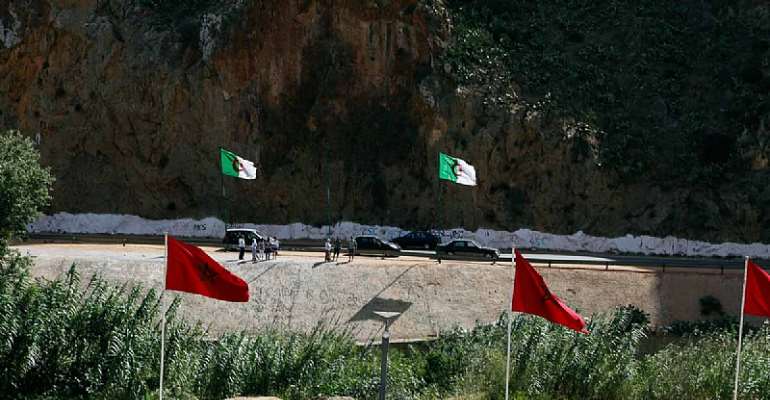
What’s new? Since 2021, Algeria and Morocco have been embroiled in a diplomatic crisis. Incidents in Western Sahara risk bringing the two countries to blows, and Rabat’s relations with Israel are a source of friction.
Why does it matter? Mutual self-restraint and U.S. pressure have helped contain tensions between the countries, but escalatory pressures could undermine the status quo. Risk factors include a bilateral arms race, the spread of misinformation online, a surge of militancy among youth in Western Sahara’s pro-independence Polisario Front and the change in U.S. administrations.
What should be done? Outside actors should stress the importance of protecting civilians and allowing the UN mission to operate effectively in Western Sahara. They should also keep engaging with the Algerian and Moroccan governments, calibrate arms sales and help relaunch UN-sponsored talks on Western Sahara to prevent further escalation.
Executive Summary
Since Algeria cut ties with Morocco in 2021, the two countries have managed to avoid armed confrontation despite several incidents in Western Sahara that could have led to escalation. Morocco had moved in 2020 to normalise relations and pursue military cooperation with Israel. Algeria saw Israel’s increasingly close ties with Morocco – amid other developments – as a threat to its national security. But the key flashpoint between the countries is Western Sahara, where Morocco asserts sovereignty and Algeria backs the pro-independence Polisario Front. So far, mutual self-restraint and U.S. diplomacy have maintained peace between the neighbours, but hostilities in Western Sahara, online disinformation, a bilateral arms race and the advent of President-elect Donald Trump’s administration are all risks. Western countries can help manage the crisis by insisting that the conflict parties in Western Sahara protect civilians and permit the UN mission there to do its job, limiting arms transfers, supporting UN talks about Western Sahara and pressing social media firms to curb online hate speech in both Algeria and Morocco.
Over the past few years, Morocco and Algeria have both assumed a more assertive foreign policy posture. Under King Mohamed VI, Morocco has enhanced its regional influence, particularly through pressure on Western Sahara, and expanded its international relations. In contrast, Algeria’s clout diminished following President Abdelaziz Bouteflika’s 2013 stroke and the 2019-2021 pro-democracy protest movement, which kept the authorities preoccupied with domestic stability. But under President Abdelmadjid Tebboune, elected in 2019, Algiers has been trying to regain its historical prominence in North African and Sahelian affairs.
Against this backdrop, considerable friction has developed between the two countries. The normalisation of relations between Morocco and Israel in late 2020 antagonised Algeria, which sensed a conspiracy against its interests. Subsequent events, including Morocco’s statement of support for self-determination in Algeria’s Berber-majority Kabylia region and its alleged use of Israeli spyware to gather intelligence on Algerian officials, exacerbated tensions. In August 2021, Israeli Foreign Minister Yair Lapid accused Algeria of meddling in Sahelian affairs while visiting Rabat, triggering Algiers’ decision to suspend relations with its neighbour. A series of subsequent incidents have propelled the dispute, spurring both Rabat and Algiers to buy new weapons systems from abroad in a spiralling competition. Online disinformation in both countries has only added fuel to the fire.
Fighting has broken out anew in Western Sahara, with the Polisario Front renouncing a 30-year-old ceasefire in late 2020.
Meanwhile, fighting has broken out anew in Western Sahara, with the Polisario Front renouncing a 30-year-old ceasefire in late 2020. Since then, Rabat and the Polisario have been locked in a war of attrition, which has imperilled the UN mission in Western Sahara since 1991. In 2022 and 2023, the mission said it might have to withdraw, which in turn might have brought Moroccan and Algerian troops face to face on the border, dramatically increasing the risk of a cross-border war. The mission was preserved, thanks to U.S. intercession, and tensions subsequently eased.
External actors have played a variety of roles. From Washington, the Biden administration has tried to prevent a direct conflict by deepening its engagement with all three parties at the core of the crisis – Algeria, Morocco and the Polisario. European governments, by contrast, have struggled with their diplomacy, caught in the middle of the zero-sum game between Algiers and Rabat. Spain and France tried to stay on good terms with both countries but eventually aligned themselves with Morocco, expressing support for its preferred solution to the Western Sahara conflict. In both cases, the shift alienated Algeria. The European Union has tried to shield its relationship with Morocco from the repercussions of a long-running legal battle over Western Sahara at the European Court of Justice, striving (with mixed success) to balance this effort with outreach to Algeria.
The Algeria-Morocco rivalry has spilled over into other parts of North and sub-Saharan Africa. Morocco has taken advantage of Algeria’s declining influence in the Sahel to offer to build a motorway connecting this region to Moroccan-controlled Western Sahara. In response, Algiers has proposed a new North African grouping that includes Libya and Tunisia and excludes Morocco. At the African Union, frictions between the two neighbours have at times undermined the regular functioning of institutions.
Through mutual self-restraint and with U.S. help, Algeria and Morocco have managed to avoid a military clash, but the danger is not past. In Western Sahara, through trial and error, the two sides appear to have settled on certain rules of the game (underpinned in some respects by their obligations under international law) that involve protecting civilians and safeguarding the UN mission’s role on the ground. But the precarious status quo could be shaped by several risk factors. These include calls from restless Polisario activists for more aggressive action against Morocco; the arms race between Algiers and Rabat; the effects of online rhetoric; and the possibility that the incoming Trump administration will upset the diplomatic equilibrium fashioned by the Biden team.
With the U.S. in a moment of political transition, European governments may need to take the lead in helping manage tensions between the two neighbours. They and other interested outside actors should encourage the parties to treat as sacrosanct the emerging rules of the game, encourage suppliers to calibrate their shipments to Rabat and Algiers in order to contain the risk of a destabilising arms race, help relaunch UN-led negotiations over Western Sahara, and encourage social media platforms to monitor and curtail incendiary disinformation. When conditions are ripe, the next step will be for Algeria and Morocco to restore ties – and ideally to go beyond diplomatic normalisation to promote cooperation on border security, infrastructure and trade as the basis for a more stable, productive and enduring relationship.
Algiers/Rabat/Brussels, 29 November 2024
I. Introduction
North African neighbours Algeria and Morocco have long had a fraught relationship. Their recurring disagreements date back to a failed unification project. The idea of a single North African state comprising Algeria, Morocco and Tunisia – all of which were under different forms of French colonial rule as of the early 1950s – was popular in all three countries at the outset of the Algerian war for independence in 1954.1 But in 1956 the French government decided to grant independence to Morocco and Tunisia, in order to concentrate on retaining control of Algeria. This move reduced the likelihood that the three peoples would mount a joint struggle to form a unified state. The post-colonial Moroccan and Tunisian armies were too weak to intervene on Algeria’s behalf.
Immediately after Morocco’s independence, King Mohamed V began espousing the concept of North African unity, but in the form of an irredentist “greater Morocco” discourse promoted by aristocrats in Fez, the long-time seat of various Moroccan dynasties. This notional “greater Morocco” spanned what is now Western Sahara and other areas held by Spain at the time, such as the coastal enclaves of Ifni, Ceuta and Melilla.2 It also included a swathe of southern Algeria, stretching from Colomb Béchar south to Tindouf and from Hamada du Guir east to Erg Iguidi. Finally, it extended eastward to Tanezrouft (part of present-day Mali) and encompassed all of Mauritania.3 Moroccan sultans in Fez had ruled all these lands at various times in centuries past, though their control was often contested or incomplete, depending on the circumstances.4
In February 1961, after Mohamed V died, his heir Hassan II began putting greater emphasis on the Moroccan claims in Algeria. The aim was threefold. First, taking over regions immediately to Morocco’s east, Tindouf and Colomb Béchar, would allow Rabat to more easily control the nomadic tribes living in its existing domain.5 Secondly, the king believed he could weaken the pan-Arabist Moroccan left, which was energised by the Algerian liberation movement’s victory in 1962.6 Finally, the invocation of Morocco’s imperial past served to blunt the anti-monarchist currents in political thought emanating from newly independent and socialist Algeria, which improved the kingdom’s relations with the West amid the Cold War.7
Morocco’s claims led to quarrels over the definition of the [Algeria–Morocco] frontier.
Morocco’s claims led to quarrels over the definition of the frontier, which Rabat said the French had drawn in a way allocating territory to Algeria that had traditionally been controlled by tribes loyal to the Moroccan monarchy. This disagreement, in turn, escalated into a series of border skirmishes, followed by open warfare in October 1963. The fighting, which came to be known as the Sand War, was confined to the borderlands, but it resulted in hundreds of deaths on both sides, both of which also took hundreds of prisoners. In February 1964, after other parties had made several unsuccessful attempts at mediation, the Organisation of African Unity (OAU) negotiated a ceasefire that left the border unchanged.8
The Sand War, and the patriotic fervour it created on both sides, consolidated the two newly independent states and their respective authoritarian regimes, while “strengthen[ing] both armies in their nationalism”, as a Moroccan historian put it.9 In Algeria, it reinforced both President Houari Boumediene’s power and the army’s ascendancy within the governing National Liberation Front. In Morocco, it bolstered the rule of King Hassan II.
Competition between the two nationalisms continued to have an ideological component. Algeria, a self-described socialist republic that was non-aligned during the Cold War, steered diplomatically closer to the Eastern Bloc while achieving a degree of economic independence thanks to its oil and gas riches. Morocco, by contrast, was a conservative monarchy with a liberal economy, more inclined toward the West.10
Over the next 60 years, the two countries went through cycles of détente and tension in their relations. On 15 June 1972, they signed a border demarcation agreement recognising that colonial-era boundaries are inviolable, a principle championed by the OAU across the continent.11 They also agreed to increase bilateral cooperation in all areas and refer any outstanding disputes to joint commissions.12 Finally, they announced the founding of a joint Algerian-Moroccan company to mine lead and zinc at El Abed on the border.13
But the Western Sahara question soon sparked a major crisis in bilateral relations. In 1973, the Polisario Front – which had formed that year in Mauritania to seek independence on behalf of Western Sahara’s Sahrawi people – began fighting to liberate the territory from Spain. After Madrid withdrew its forces two years later, Mauritania and Morocco each took over parts of the former Spanish colony.14The Polisario continued to battle both, and (despite lacking territorial control) it declared a state, the Sahrawi Arab Democratic Republic, in 1976.
Citing its support for the principle of self-determination, and wishing to afflict King Hassan II with what Algerians sometimes referred to as a “fixation abscess”, as he had failed to get the border demarcation agreement through the Moroccan parliament, Algiers recognised the Polisario’s claim to statehood.15 In a show of solidarity, it expelled 45,000 Moroccans from Algerian territory, after which Morocco cut diplomatic ties. In 1979, Mauritania withdrew from Western Sahara under Polisario fire, leaving Rabat in control of most of the disputed area. Morocco’s actions in Western Sahara brought sharp criticism from the OAU, leading it to quit the organisation in 1984.
It was only in 1988 that Algeria and Morocco re-established diplomatic ties. They agreed to intensify trade exchanges and form the Arab Maghreb Union, which is still the most ambitious attempt at regional integration (though it eventually failed).16 The Algerian and Moroccan energy ministers also approved construction of a gas pipeline connecting Algeria to Europe via Morocco.17 Frictions eased on the Western Sahara front as well, as a 1991 UN-mediated Settlement Plan introduced a ceasefire and created a buffer zone that divided the territory between Morocco (which was left in control of 80 per cent) and the Polisario. Ever since, a UN mission called MINURSO has been monitoring the buffer zone, which by the ceasefire terms is to remain free of either Moroccan soldiers or Polisario fighters. The UN also proposed a referendum on self-determination, in which the territory’s residents would choose absorption by Morocco or independence.
The rapprochement [between Algeria and Morocco] cooled in 1994, following a spat over a shooting that killed two Spanish tourists at the Atlas-Asni hotel in Marrakesh.
But the rapprochement cooled in 1994, following a spat over a shooting that killed two Spanish tourists at the Atlas-Asni hotel in Marrakesh. Two of the men arrested for the attack were French nationals of Algerian origin (the third was a Frenchman of Moroccan heritage). The Moroccan interior ministry accused the Algerian military of being behind the attack, and Rabat soon began requiring entry visas for Algerian nationals in Morocco.18 Algeria denied responsibility, imposing its own visa requirements on Moroccan citizens and closing its land border with Morocco.
Over the next two decades, the two countries gradually resumed bilateral cooperation in some areas, notably to combat contraband and drug trafficking. They eventually abolished the entry visa requirements, though without opening the land border. Relations remained testy but calm.19
The “greater Morocco” idea has repeatedly resurfaced in the Moroccan media and among officials during the post-independence decades, usually in reference to Béchar and Tindouf. Its persistence has stoked Algerian fears that Morocco harbours expansionist ambitions, though Rabat did eventually ratify the border demarcation agreement in 1992, twenty years after signing the accord.20From their side, Moroccans dismiss their neighbours’ concerns as paranoia, saying Rabat dropped any claim to Algerian or other territories (with the notable exception of Western Sahara) long ago.21 Both states have used the tensions to mobilise nationalist sentiment among their respective citizenries, thus diverting attention from domestic problems deriving notably from authoritarian rule and poor economic performance.
This report looks at the latest round of tensions between Algiers and Rabat, which started in August 2021 with Algeria’s decision to suspend diplomatic relations with Morocco, and the factors that underpin the subsequent crisis. It looks at the major drivers contributing to the risk of escalating violence, with a focus on the conflict between Morocco and the Polisario Front. This conflict remains unresolved, as the envisioned self-determination referendum has never occurred and both sides have hardened their positions. (The UN continues to list Western Sahara as a non-self-governing territory.) The report suggests ways for Western capitals to minimise incidents that, while they have been isolated to date, could escalate into a shooting war. It is based on dozens of interviews with Algerian and Moroccan officials, as well as Western diplomats and scholars, journalists, researchers and civil society activists from both Algeria and Morocco. Roughly 70 per cent of the interviewees were men and the rest women. The report also relies on official statements, social media posts and previous Crisis Group publications.
II. A Frozen Conflict Begins to Thaw
Over the last two decades, first Morocco and then Algeria have become more assertive in pursuing their foreign policy priorities, which sometimes clash, leading to growing animosity between the two. The main point of contention is Western Sahara, where Morocco is pressing its claim to sovereignty with increasing success and Algeria continues to back the Polisario Front. The 1991 UN-brokered truce has collapsed, and at various points since late 2020 Moroccan-Polisario firefights have threatened to draw in the Algerian military. But there are other sources of friction as well.
A. An Increasingly Confident Morocco
1. Charting its own course
Under King Mohamed VI, whose reign began in 1999, Morocco has more confidently charted its own course in foreign affairs. It has stayed close to its traditional Western patrons, particularly the U.S. In 2004, for instance, it began hosting the annual U.S.-led African Lion military exercises with a series of NATO and African partners.22 Yet Moroccan officials have also observed a shift from U.S. hegemony toward a multipolar world order in which Russia, China and others will figure prominently. They see this dynamic as giving them more leeway in dealing with Western interlocutors.23
Mohamed VI has sought to diversify Rabat’s foreign relations, developing political and economic ties with China and Russia.24 In addition, through visits to capitals throughout sub-Saharan Africa, the king has helped repair the damage to Morocco’s reputation done by its move into Western Sahara and its subsequent departure from the OAU.25This charm offensive culminated in Rabat’s 2017 readmission to the OAU’s successor organisation, the African Union (AU).26
2. A tougher line on Western Sahara
At the same time, Mohamed VI has backed an increasingly tough stance on Western Sahara. Since 1991, Morocco had nominally accepted the idea of a UN-sponsored referendum on self-determination for the territory. The plebiscite has never taken place, however, due to disagreements between Morocco and the Polisario over who should be allowed to vote.27 Rabat grew increasingly dubious of the referendum’s value, and Mohamed VI decided to pull the plug on it. In a 2002 speech, the king began expressing scepticism, saying a referendum was “unworkable”.28 Five years later, Morocco officially withdrew its support for the endeavour, replacing it with an “autonomy plan” that provided for partial devolution of powers to Western Sahara as a region under Rabat’s sovereignty.29 The Polisario rejected the scheme. Algeria did as well.
These reactions reinforced Morocco’s opinion of the Polisario as an Algerian proxy implicated in an artificial dispute that should be resolved as part of a regional grand bargain over borders and security.30 In keeping with this view, Rabat expects the parties to discuss the issue in a roundtable format including Algeria and Mauritania. Two such roundtables took place in 2019, albeit without yielding a resolution, and Morocco wants them to continue. The Polisario, backed by Algiers, participated in 2019; it was encouraged by the UN Security Council’s renewed involvement with the conflict (which owed to personal efforts by then-U.S. National Security Advisor John Bolton). But in 2020 it backed out, due to its frustration with the UN process, which it sees as skewed in Rabat’s favour and desires to reset.31
The issue is now central to Morocco’s foreign relations.32 Rabat has become increasingly intolerant of external actors who express sympathy for Sahrawi self-determination, triggering diplomatic rows – some more public than others – with the European Union, Germany, Spain, Sweden and Tunisia. In an August 2022 speech, the king defined the Western Sahara question as
the prism through which Morocco considers its international environment and the yardstick that measures the sincerity of friendships and the effectiveness of partnerships established by the kingdom.33
Since 2019, Rabat has encouraged foreign governments to open consulates in Laayoune and Dakhla in Western Sahara to signal recognition of Moroccan sovereignty over the territory. A number of African, Latin American and Middle Eastern countries have done so, testifying to the success of Morocco’s gambit.
The Polisario watched these developments with mounting disquiet. Many within the movement argued that international diplomacy was leading nowhere and called for a return to arms. The flashpoint came in late 2020, when pro-Polisario activists (soon joined by a small number of Polisario fighters) set up camp in the middle of a road connecting Morocco to Mauritania through Western Sahara and the UN-monitored buffer zone. Morocco sent in troops to clear the blockade. Both actions violated the ceasefire, which the Polisario renounced on 14 November, commencing a round of attacks on Moroccan positions.34
But Morocco would score a diplomatic triumph the next month, during the last days of U.S. President Donald Trump’s administration, when the U.S. recognised Moroccan sovereignty over Western Sahara in return for the kingdom normalising diplomatic relations with Israel. For Washington, it was a break with decades of U.S. policy supporting a negotiated settlement of the Western Sahara question. It was also a somewhat surprising decision for Rabat to take. Although it advanced Morocco’s agenda in North Africa, many Moroccans who sympathise with the Palestinian cause were unhappy to see their government draw closer to Israel.35 But the move did not generate enough pushback to trouble officials. A former Moroccan diplomat explained that the kingdom wants “to diversify its ties with the rest of the world. … There is no taboo as long as it fits our national interests”.36
B. Algeria Reasserts Itself
Algeria, too, has been bolder in its foreign policy in recent years, largely to recover the clout it believes it should have as it seeks to protect North Africa and the Sahel from what it sees as foreign meddling. For decades after independence, Algeria was widely seen as a leader of nations emerging from colonial rule, particularly in Africa and the Arab world, and was respected for its long struggle to throw off the French yoke. Even after its costly civil war (1992-2002), it retained considerable sway in North Africa and the Sahel as it rebuilt under President Abdelaziz Bouteflika. But its influence declined after Bouteflika suffered a stroke in 2013. He was often unable to participate in decision-making, which in Algeria’s highly centralised political system threw foreign policy into near paralysis.37
Algeria’s foreign policy bandwidth shrank further between 2019 and 2021. The pro-democracy Hirak movement staged weekly mass protests that pushed Bouteflika to resign in April 2019. For months, the interim authorities, backed by the army, were busy managing the delicate transition. That December, Abdelmadjid Tebboune won the presidency, embarking on a reorganisation of the political system through constitutional reform and fresh legislative elections.38 In the first two years of his term, he had only limited time to devote to international affairs.39
As a result, Algerian observers believe, various outsiders have been able to encroach upon Algeria’s historical diplomatic turf in North Africa and the Sahel, particularly in neighbouring countries where crises have emerged. In Libya, episodic war between two rival governments over the period 2014-2020 brought interventions from Qatar and Türkiye, on one side, and Russia and the United Arab Emirates, on the other. In Mali, the expansion of jihadist groups led to two coups (in 2020 and 2021), the departure of French troops that had been aiding the government (in 2022) and the arrival of Russian security contractors to assist the new military authorities. An Algerian diplomat said “other actors tried to fill [the] void” left by failed Western interventions, while Algeria’s internal problems limited its own foreign policy effectiveness.40 Israel’s new ties to Morocco were a further source of concern, said an Algerian analyst.41
Tebboune accordingly began to refocus on regional issues as the Hirak movement lost momentum, due partly to COVID-19-related restrictions on public gatherings and partly to heavier government repression. An Algerian diplomat explained that foreign policy
is a priority for the president, who believes that it is high time for Algeria to regain its centrality on various issues and return to the forefront of diplomatic action. He believes in a dynamic diplomacy to reaffirm Algeria’s role as an inescapable partner in North Africa, the Sahel, the Arab world and the African continent.42
The army also played an active role in setting the country’s external priorities. Tebboune frequently went to the High Security Council, which is composed of the president, senior ministers and the highest-ranking military officers, to take key foreign policy decisions.43
C. Diplomatic Turbulence
The two countries’ growing assertiveness did not automatically set them on a collision course, despite the fresh hostilities in Western Sahara. In November 2020, after Morocco and the Polisario resumed shooting at each other, rather than pin the blame on either side, Algeria called on both “to demonstrate a sense of responsibility and restraint” and respect the ceasefire.44
But the normalisation of diplomatic relations between Morocco and Israel a month later caused an uproar in Algeria.45 The authorities promptly denounced Morocco for taking this step. On 12 December, Prime Minister Abdelaziz Djerad declared, “We are surrounded by danger and war. There is a desire to bring the Zionist entity next to our borders”.46 An Algerian diplomat added:
Algeria will never accept Israel’s presence on its borders, even symbolically, and we know that in this case it’s not just a symbolic presence. The [Moroccan] king has introduced an enemy into our neighbourhood.47
In the following months, a series of diplomatic incidents fuelled tensions. In July 2021, after Algerian Foreign Minister Ramtane Lamamra reiterated his country’s support for Western Sahara’s right to self-determination at a meeting of the Non-Aligned Movement, Morocco’s ambassador to the UN, Omar Hilale, said Kabylia, Algeria’s sometimes restive Berber-majority region, has the same right.48 Algiers rejects this idea; two months earlier, the High Security Council had banned the Kabylia Movement for Self-determination (MAK, per the French acronym) as a terrorist organisation.49 A few days after Hilale spoke, Algeria recalled its ambassador from Rabat.50 “Morocco attacked our territorial integrity with this reference to Kabylia”, said an Algerian diplomat. “We expected a rectification from the authorities, but it never came”.51
Later that July, an international journalistic consortium alleged that Morocco had used Israeli-made Pegasus spyware to intercept the communications of some 6,000 Algerian officials.52The Algerian foreign ministry condemned what it called an “illegal, unwelcome and dangerous practice [that] jeopardises the climate of trust that should govern exchanges and interactions between officials and representatives of states”.53Moroccan Foreign Minister Nasser Bourita denied that Morocco had done as alleged, saying the journalistic investigation was based on supposition.54
At the end of the month, Mohamed VI tried to extend an olive branch to Algiers. In a speech, the king offered guarantees of non-interference in Algeria’s internal affairs.55A Moroccan diplomat explained, “Morocco does not want an escalation, which is why the king has offered a dialogue without preconditions”.56 Yet Algerian officials considered the king’s message insufficiently clear, feeling that it sidestepped the issues at the core of the spat, namely Hilale’s remark about Kabylia and the alleged espionage.57
Tensions went up a notch in August 2021, when Israeli Foreign Minister Yair Lapid visited Rabat and declared his “concern regarding the regional role of Algeria, which has aligned itself with Iran and is currently leading a campaign against Israel’s admission to the African Union as an observer”.58 Israel had long sought this status to expand its reach and legitimacy in Africa, and AU Commission Chairperson Mahamat Faki granted it in 2021. Several AU member states, led by Algeria and South Africa, objected to the decision, which remains suspended pending review by a panel of African leaders. Reacting to Lapid’s remarks, an Algerian diplomat exclaimed, “An Israeli minister attacking an Arab country from the capital of another Arab country – it’s unheard of!”59
There is no evidence that contacts among Algeria, the Polisario, Iran and Hizbollah go beyond diplomatic exchanges.
Algiers was frustrated for other reasons as well. An Algerian journalist spoke of a widely held Algerian view that Rabat had been disseminating a narrative in Western media about “a rapprochement between Hizbollah, the Polisario and the Wagner Group in Western Sahara”.60 Such ideas have spread in policy circles, particularly in Israel and among right-wing U.S. think-tanks, though there is no evidence that contacts among Algeria, the Polisario, Iran and Hizbollah go beyond diplomatic exchanges.61 Algiers argues that the notion is inaccurate and an attempt to isolate it in the Middle East by associating it with what many regard as rogue actors.62 Following Lapid’s comment, the authorities in Algiers accused Rabat of colluding with the MAK to undermine Algeria’s national security. On 18 August, the High Security Council claimed that Morocco and the MAK were behind forest fires that had raged in Kabylia that month, as well as the murder of Djamel Bensmail, a left-wing activist accused of starting the blazes and then burned to death by an angry crowd.63The MAK denied the allegations, while Morocco refrained from official comment.64
These events formed the backdrop for Algeria’s decision to suspend diplomatic relations with Morocco. On 24 August 2021, Lamamra issued a long statement announcing this decision, which he said sprang from four principles underpinning the previous rapprochement with Rabat. Those principles involved a shared commitment to cooperation; respect for all previous bilateral treaties; work to build a North African political union; and defence of the Palestinian right to statehood. Lamamra said Morocco had flouted all four by inciting separatism in Kabylia, spying on Algerian officials, allowing an Israeli official to verbally attack Algeria from Moroccan territory and frustrating UN mediation efforts in Western Sahara, among other things.65 Rabat expressed surprise at the move to cut ties, with a Moroccan diplomat calling it an unjustified, “unilateral decision”.66
Algeria took further measures to express its displeasure. In September 2021, the High Security Council decreed the immediate closure of Algeria’s airspace to Moroccan civil and military aircraft.67 In October, President Tebboune ordered the state-owned hydrocarbon company, Sonatrach, not to renew its contract with Morocco expiring at month’s end, thus cutting off the supply of natural gas via the Maghreb Europe Gas pipeline that connects Algeria to Spain via Morocco.68
D. Clashes and an Arms Race
Relations soon went from bad to worse, though the deterioration stopped well short of full-blown conflict. On 3 November 2021, Algeria announced that three of its nationals had been killed in an airstrike in Western Sahara, while driving trucks along the road that connects Ouargla in Algeria with Mauritania’s capital Nouakchott. Algeria blamed Morocco and vowed revenge.69 A later MINURSO investigation said the deaths were “caused by the explosion of an air-to-ground projectile and the resulting fire” but made no attribution of responsibility.70 Mutual self-restraint prevented a dangerous escalation. Moroccan officials denied any connection to the incident and made clear that Rabat did not want war with Algeria.71Algeria refrained from retaliation, its earlier statements notwithstanding, and instead sent messages to the UN Secretary-General, the president of the AU Commission, the Arab League secretary-general and the secretary-general of the Organisation of Islamic Cooperation to denounce an act of “state-sponsored terrorism”.72
While the neighbours managed to stave off war, the situation did not improve. Morocco’s growing military cooperation with Israel continued to feed Algerian threat perceptions. In November, Israeli Defence Minister Benny Gantz signed a memorandum of understanding with his Moroccan counterpart, formalising intelligence sharing, establishing ties between the two countries’ arms industries and paving the way for joint military exercises. It was the first such agreement between Israel and an Arab country.73 Officials in Algiers said the accord is aimed at weakening Algeria.74
Against this backdrop, the two countries began to prepare for the possibility that their dispute might evolve into armed conflict. Both sides ramped up military spending. Morocco bought Israel’s anti-drone Skylock Dome system in November and its Harop drones in December.75 In February 2022, it additionally acquired Barak MX, a modular Israeli-made system that can knock down both missiles and drones.76 Finally, in April 2023, the U.S. State Department approved the sale of eighteen U.S. HIMARS multiple rocket launchers, along with other military equipment, to Morocco.77
Algeria rushed to keep pace with these purchases. In November 2022, the Algerian parliament approved a staggering increase in the 2023 military budget to around $23 billion, up from around $11 billion the previous year.78 In late 2022, local media indicated that the authorities were preparing to buy Su-57 stealth jets, SU-34 bombers and Su-30 fighters, in addition to new air defence systems, such as the S-400, from Russia.79To diversify its weapons sources, Algeria turned to Türkiye to buy Anka S+ drones and to China to acquire Halcon drones, to give two examples.80
These shopping sprees stoked fears on both sides, further heightening tensions. “International actors need to acknowledge their role”, argued a Western analyst.81 In selling weapons to Algeria, Morocco or both, outside powers were helping drive an arms race that risked altering the balance of power.
E. The Western Sahara Tinderbox
Meanwhile, the situation in Western Sahara continued to fester, contributing to the risk of a direct confrontation between the two neighbours. Since late 2020, the Polisario and Morocco have been engaged in a low-intensity war of attrition that, thus far, no one has tried hard to stop. The UN Security Council remained silent for months after the ceasefire collapsed, whipsawed between the two sides (the Polisario wanted external actors to step in, while Morocco opposed the idea). Several members felt that the conflict was sufficiently contained that the Council need not take action.82
Meanwhile, the parties continue to disagree over the terms of a possible resumption of UN-led negotiations. The Polisario has insisted on returning to bilateral talks that would pave the way for a referendum on self-determination, along the lines of the 1991 UN Settlement Plan. By contrast, Rabat has stuck to its autonomy plan, with the roundtable format that the parties adopted in 2019. Amid this stalemate, the Polisario started to come under increasing pressure from its activists, especially younger ones, to escalate militarily. Many consider the Front’s tactics to date insufficient to force Morocco to accept a referendum.83
Spurred by these restless constituents, the Polisario has occasionally experimented with a more confrontational approach. In August 2022, when an alleged Moroccan drone strike destroyed a Polisario truck used to carry water to MINURSO posts in the buffer zone, the Front suspended its convoys to these sites, allowing only two helicopter resupply flights per month.84 With this action, it sought to signal that, with no ceasefire in place and no talks under way, the UN mission was no longer fit for purpose. The Polisario hoped thereby to nudge outside powers to take a more active interest in resolving the conflict, rather than stay satisfied with the status quo.85
In so doing, however, it set in motion a series of escalating moves that could have culminated in conflict between Morocco and Algeria. The first link was that, as its fuel and food stores began to run low, MINURSO warned it might have to pull out. Hilale, Rabat’s ambassador to the UN, replied by asserting that if the mission were to dissolve, then Morocco “would be entitled to regain the part of the Sahara that was handed over [by Morocco] to MINURSO”, ie, the buffer zone.86 In that scenario, Moroccan troops would be taking up positions along the border between Western Sahara and Algeria, close to Tindouf, site of Sahrawi refugee camps in Algeria housing an estimated 173,000 refugees. There, they would be exposed to Polisario attacks from Algerian territory, which could in turn prompt Rabat to invoke a right of pursuit, perhaps leading to clashes between Algerian and Moroccan troops.
The risk of such a confrontation jolted the U.S. into action. U.S. officials pressed Algeria to convince the Polisario to lift the blockade on the MINURSO posts.87 Eventually, in April 2023, the Polisario agreed to provide “safe passage, on an exceptional and provisional basis” for convoys supplying the mission.88 It has kept renewing this “provisional” measure to this day.
On two separate occasions ... Polisario units fired rockets at the city of Smara, in Moroccan-controlled Western Sahara.
Two more incidents created potential flashpoints a few months later. On two separate occasions in late October and early November 2023, Polisario units fired rockets at the city of Smara, in Moroccan-controlled Western Sahara. In the first instance, they targeted a residential area, and in the second, they aimed at the local airport. The attacks occurred just before and just after the UN Security Council’s annual vote to renew the MINURSO mandate. They also came amid the heightened regional tensions after Hamas’s 7 October 2023 attack on Israel and Israel’s retaliatory assault on Gaza. The rockets killed a French-Moroccan national, the first civilian casualty on Rabat’s side since the resumption of hostilities in 2020, drawing strong condemnation from Ambassador Hilale, who laid the blame not just on the Polisario militants but also on “those who support them, those who shelter them and those who provide them with missiles, Katyushas and mortars”.89 It was a broad hint that Algeria had been involved.
Once again, mutual restraint and U.S. pressure kept the incidents contained. Algeria did not comment on Hilale’s thinly veiled accusation, while Morocco limited its retaliation to a series of drone strikes on Polisario units inside the buffer zone.90 In December, Washington sent Deputy Assistant Secretary of State Joshua Harris to Algiers and Rabat, where he delivered a message that a U.S. diplomat summarised as “please calm down; you need to avoid an escalation”.91
Yet tensions between the Polisario leadership and activists over the Front’s refusal to step up attacks on Morocco continued to brew beneath the surface. In February 2024, the Polisario’s representative to the EU, Mansour Omar, articulated the movement’s dilemma in a candid interview:
The countries of the Maghreb and the Sahel are in a volatile situation. There have been coups in neighbouring countries. … We must defend our rights, but tread very carefully, so that this conflict doesn’t escalate into an open war with greater dimensions and therefore greater losses.92
In a rare public display of dissension within the Polisario, activists directed a torrent of criticism at Omar online.93
F. Animosity Spreads to Social Media and Society
In both Algeria and Morocco, loud voices in traditional and social media have taken an aggressive tone toward the other country. Social media platforms have seen disinformation, harassment and propaganda spread rapidly. Since 2017, a network of Moroccan far-right accounts identifying themselves by the name “Moorish” has emerged on Twitter/X, Facebook and, to a lesser extent, other platforms.94 Posts on these accounts disparage independent journalists, feminists and left-wing activists for their ideas, while at times glorifying violence against the Polisario Front and Algeria.95 It is unclear who is behind “Moorish”. But a European researcher said, “It seems there is someone running this movement from above. For example, some of the Twitter handles belong to people close to certain diplomats”.96 A number of Moroccan journalists suspect that the intelligence services are running the network, though they cannot provide any evidence for this claim.97
Fake accounts seem to play a considerable role in whipping up public hostility. In February 2021, Meta removed 385 Facebook and 40 Instagram accounts that, together, had about 150,000 followers, on the grounds of “coordinated inauthentic behaviour”. According to Meta, these accounts, originating in Morocco, had posted “praise for the government’s response to the coronavirus pandemic, its diplomatic initiatives, Moroccan security forces, King Mohammed VI and the director of the General Directorate for Territorial Surveillance”.98
A Moroccan journalist noted the increasing diffusion of “Moorish” talking points in society: “Every day I hear people in the streets using the ‘Moorish’ rhetoric. There is a collective obsession with Algeria”.99Another Moroccan journalist called the “Moorish” network a version of Frankenstein’s monster, once controlled by its creator (which this journalist surmised was the state), but since then taking on a life of its own.100
The “Moorish” online offensive seems to have provoked a mirror-image phenomenon in Algeria. Sometimes called “Dzoorish”, a portmanteau of Algeria’s .dz internet domain for Algeria and “Moorish”, these accounts spread hostile memes and disinformation aimed at their Moroccan counterparts. The result, a European researcher said, is “a war to win, or silence, hearts and minds. … It’s a virtual arms race between two armies using indiscriminate online violence”.101
Hate speech and slurs are not confined to online exchanges. In January 2024, after South Africa eliminated Morocco from the Africa Cup of Nations football tournament, masses of Algerians took to the streets to celebrate, chanting racist lines such as, “Give them bananas. Moroccans are animals”.102 The episode shocked Moroccans, prompting a journalist to write “the poison of hatred has spread from an active minority to reach entire segments of the [Algerian] population”.103
III. The Role of External Actors
A. U.S. Attempts to Contain the Risk
When President Joe Biden entered the White House in January 2021, his administration inherited from Donald Trump’s the recognition of Moroccan sovereignty over Western Sahara. Rather than wrestle with this legacy (which would have strained relations with both Morocco and Israel), the Biden administration carefully recalibrated Washington’s stance to avoid reference to Moroccan sovereignty. So far, it has not made good on Trump’s promise to open a U.S. consulate in Dakhla (Western Sahara). It also dropped his administration’s reference to the autonomy plan as “the only basis” for resolving the conflict, instead calling it “a potential approach” to settling the dispute.104 This exercise in ambiguity appears aimed at placating Algeria and the Polisario but without angering Morocco by reversing Trump’s action.
As for its diplomatic efforts, the Biden administration first concentrated on getting a new UN envoy appointed for Western Sahara.105 The new envoy, Staffan de Mistura, started work in November 2021. Having helped put him in place, Washington shifted to renewing its engagement with both Algeria and Morocco in an attempt to contain mounting bilateral tensions. Diplomats were trying to balance two apparently conflicting goals: rebuilding confidence with Algeria and the Polisario, which had been damaged by Trump’s recognition of Western Sahara, while maintaining traditionally strong U.S. ties with Morocco. A U.S. official explained Washington’s approach as “deliberate in investing in both Algeria and Morocco. We seek avenues to cool tensions, as conditions are not yet ripe to facilitate an improvement in their relations”.106
U.S. officials for the first time dangled the prospect of official consultations with the Polisario.
As the U.S. engaged further with the neighbours, certain focus areas emerged. In Rabat’s case, Washington continued to cultivate ties through regular diplomatic exchanges and security cooperation, including weapons sales.107 With Algeria, U.S. officials concentrated on re-establishing dialogue that was interrupted during the Trump administration. A U.S. diplomat described this effort as centred on economic links.108 In addition, U.S. officials for the first time dangled the prospect of official consultations with the Polisario. In September 2023, Deputy Assistant Secretary Harris met with Front officials in Tindouf, encouraging them to engage with de Mistura and restart negotiations.109 It appeared to be the first time a U.S. official of this rank had consulted the Polisario on the political situation in Tindouf, as in the past U.S. officials would normally discuss only humanitarian issues when visiting. Washington has avoided defining the terms of new talks, leaving that task to the UN envoy. The calculation seemed to be that resuming negotiations would be a low-cost way to manage tensions among Morocco, the Polisario and Algeria.
Algeria and the Polisario welcomed this new engagement by the Biden administration, choosing to ignore the Trump declaration on Western Sahara. Trump’s recognition happened after he had lost the election, which was an incentive for them to disregard it. Algeria and the Polisario expected the Biden administration to restore the longstanding U.S. position eventually. These good-will gestures were enough to contain tensions, but insufficient to generate momentum for resuming talks over Western Sahara.110
B. A Divided Europe under Pressure from Both Sides
In contrast, European governments struggled to maintain working relationships with both Algiers and Rabat, as the two capitals were engaged in zero-sum competition. Spain and France offer illustrative cases.
Spain’s forays capture the predicament faced by European governments. Madrid set off a major spat with Rabat when, in April 2021, it admitted Polisario leader Brahim Ghali for treatment at a hospital in Logroño in northern Spain. Saying Madrid should have notified it in advance, Rabat suspended diplomatic relations in protest. Tensions peaked later that month, when Morocco allegedly allowed 9,000 migrants to cross into the Spanish enclave of Ceuta on the North African coast. Spanish forces summarily rounded up the migrants, and Moroccan border control halted the entry of new ones within days.111
Still, this tactic clearly got Spain’s attention. In 2022, in an indicator of how sensitive migration is to Madrid, the Spanish government moved to repair its relationship with Morocco. In a March 2022 letter to King Mohamed VI, Spanish Prime Minister Pedro Sanchez endorsed Morocco’s autonomy plan as “the most serious, realistic and credible basis” for resolving the Western Sahara conflict. In so doing, Sanchez abandoned Spain’s traditional posture of “active neutrality”, which consisted of advocating for a “fair, lasting and mutually acceptable solution” to the situation without specifying what that might be.112 The language in the March letter went further toward adopting Morocco’s position than any other Western government (even the U.S.) had gone at the time, setting a precedent Rabat hoped to convince other countries to follow.113 In return, Rabat restored its ties with Madrid.114
But Spain’s new stance on the autonomy plan had other consequences. It pushed Algiers to recall its ambassador from Madrid and introduce restrictions on bilateral trade. From Algeria’s perspective, Spain’s wording in the Sanchez letter risked preconditioning future talks about Western Sahara on acceptance of the autonomy plan as the only path to resolving the conflict. Algeria’s position, as framed by an Algerian diplomat, was that the “final decision should remain with the Sahrawi people”.115 Spanish-Algerian tensions gradually subsided after Sanchez reiterated Spain’s support for UN mediation efforts in Western Sahara in September 2022.116 In November 2023, Algiers appointed a new ambassador to Madrid.
While Morocco expected [its] traditionally close partner to adjust its stance, France calculated that any such change would undermine its ties with Algeria.
France also found itself under pressure from both countries. Its relations with Rabat had deteriorated over the course of 2021 and 2022 due to a series of incidents, including its decision to reduce the number of visas for Moroccan visitors and allegations that Rabat had used Pegasus spyware to monitor French officials’ conversations.117 But the biggest source of friction remained France’s refusal to alter its language on the autonomy plan, which it continued to describe as “a serious and credible basis for discussion”, a formula that fell short of Spain’s in Rabat’s eyes.118While Morocco expected this traditionally close partner to adjust its stance, France calculated that any such change would undermine its ties with Algeria.119
France was looking to strengthen those links. Following a visit by President Emmanuel Macron to Algiers in August 2022, France endeavoured to bring about a gradual rapprochement with Algeria, seeing better ties with Algiers as essential to setting up suitable political and security arrangements in the Sahel after the end of its military mission, Operation Barkhane, in November 2022 and the string of coups in the region.120 Yet a series of disagreements over coming to terms with the colonial past, as well as about French-Algerian opposition activist Amira Bouraoui, who had evaded prosecution in Algeria by fleeing to France in February 2022, meant that reconciliation moved only slowly.121
Frustrated, and under pressure from Morocco, President Macron chose to draw France closer to the kingdom instead. In July 2024, Paris adopted language even stronger than Madrid’s on Morocco’s autonomy plan, declaring it to be “the only basis” for settling the Western Sahara conflict. Algeria recalled its ambassador from Paris in response.122
C. The EU’s Position
The EU’s efforts to strike a balance between Algiers and Rabat have been shaped in part by legal proceedings. Rabat has long kept its eye on a Polisario-led case at the EU Court of Justice questioning the validity of including Western Sahara in EU-Moroccan trade treaties. In September 2021, the court ruled in favour of the Polisario’s claim that the EU and Morocco had signed fishery and farm product agreements without the Western Saharan population’s consent.123 On the day of the verdict, EU High Representative for Foreign Affairs and Security Policy Josep Borrell issued a statement with Moroccan Foreign Minister Bourita underlining their intent to keep working together.124 EU officials stressed that they would abide by the court’s decision; the joint communiqué, they said, was merely an attempt to shield the bilateral relationship from its effects.125 In October 2024, the court confirmed its earlier stance in a final ruling, prompting the EU and member states to reaffirm their desire to preserve their ties with Morocco.126
In parallel, the EU has been trying to revive its relations with Algiers after a period of disengagement while Algerian officials were preoccupied with domestic stability. After Tebboune’s election, Algeria signalled its intention to intensify diplomatic exchanges with the EU.127 In a March 2023 visit to Algiers, Borrell highlighted the EU’s commitment to deepening ties with Algeria and tried to defuse Madrid’s problems with Algiers. His statements made no mention of Western Sahara or tensions with Morocco.128 Yet, in a sign of irritation with Europe, a few days after the October 2024 EU Court of Justice verdict and the European statements of support for Morocco, the Algerian foreign ministry summoned the ambassadors of a number of EU member states, demanding an explanation for the declarations.129
IV. The Rivalry Extends to Africa
A. Algerian-Moroccan Competition in North Africa and the Sahel
The dispute between Algerian and Morocco has spilled into sub-Saharan Africa, particularly the Sahel. Algeria has been involved in attempts to reconcile the Malian government and Tuareg insurgents in northern Mali since the 1990s. In 2015, Algiers brokered an agreement to end this conflict, alienating members of the Malian establishment who believed the deal had weakened the central state’s authority in the north, although Algiers continued to be involved in efforts to secure that region.130After the 2021 coup in Mali, Bamako’s relations with Algiers began to deteriorate. In December 2023, Algeria attempted to revive the faltering 2015 peace agreement by inviting several signatories, including a Malian religious leader critical of the new authorities in Bamako, to talks. Malian officials denounced this initiative as unfriendly, prompting both countries to recall their ambassadors. Concurrently, the Malian government continued to consolidate its control of the north with the assistance of Russian weapons and private contractors.131In January 2024, Mali abrogated the 2015 agreement, officially accusing Algeria of meddling, and Algerian-Malian tensions rose further in the coming months.132
Meanwhile, the July 2023 coup in Niger heightened Algeria’s concern with security in the Sahel. After the military removed President Mohamed Bazoum from power, the Economic Community of West African States regional bloc imposed sanctions on Niamey, demanding that the junta restore the constitutional order or face the prospect that Niger’s neighbours would do so by force.133
Fearing a military intervention on its borders, Algeria sent a mediation proposal to Niger in October 2023, suggesting a six-month, civilian-led transition leading to reinstatement of the previous constitution. But confusion followed, as Algiers first claimed that Niamey had accepted the offer, only to be contradicted a few days later by Niger’s military authorities, after which the initiative fell apart.134 The two capitals were at loggerheads again in April 2024, when Niamey protested an Algerian decision to expel irregular migrants (including numerous Nigerien citizens) to Niger, dropping them at the border.135 In August, Niger’s prime minister visited Algiers, helping reduce tensions somewhat.136
Morocco has taken advantage of strains between Algerian and its Sahelian neighbours to strengthen its own ties in the Sahel. In November 2023, King Mohamed VI announced an “Atlantic initiative”, offering to build a motorway between Sahelian countries and the port of Dakhla in Moroccan-controlled Western Sahara.137 The next month, the foreign ministers of Burkina Faso, Chad, Mali and Niger met with Foreign Minister Bourita in Marrakesh to discuss the details of this proposal.138 A former Moroccan diplomat said, “In a context of complete stalemate in the Maghreb, it’s only natural that Morocco looks for alternatives, for example in the Sahel”.139
[Algeria] accused Morocco of conspiring with Israel and the United Arab Emirates to isolate it diplomatically.
Algeria appeared to resent these moves. It accused Morocco of conspiring with Israel and the United Arab Emirates to isolate it diplomatically, because it has opposed the Abraham Accords normalising relations between Israel and Gulf Arab states (just as it opposed Morocco’s move in that direction). On 10 January 2024, Algeria’s High Security Council expressed “regrets regarding the hostile actions toward Algeria emanating from a brotherly Arab country”, an indirect reference to the UAE.140 According to an Algerian official, “With Israel and the Emirates, they [Morocco] want to destabilise the region”.141 Throughout 2023 and 2024 to date, Algerian media outlets have accused the UAE of financing media campaigns in the Sahel casting aspersions on Algeria and supporting the coup in Niger.142
Soon afterward, Algiers launched its own regional cooperation initiative to isolate Morocco in North Africa. In April 2024, Tebboune and the chairman of Libya’s Presidential Council met the Tunisian president in Tunis, where they agreed to strengthen collaboration and improve border security. Officially, the framework does not exclude any country, but it was probably an intentional decision not to invite Morocco to the tripartite meeting. An Algerian diplomat explained, “We can’t remain prisoners of Morocco. The new grouping of Algeria, Tunisia and Libya is not a new organisation but a trilateral arrangement to bring peace back to Libya, to talk about trade and so on”.143
B. Tensions at the AU
The Algerian-Moroccan diplomatic battles have been particularly intense within the AU. Since rejoining the organisation in 2017, Morocco has worked to prevent it from intervening on the Western Sahara question and to remove the Sahrawi Arab Democratic Republic from its membership rolls. (The Polisario’s de facto state joined the OAU – the AU’s predecessor organisation – in 1982, causing Morocco to leave in protest two years later.) In January 2023, Morocco gathered several former African prime ministers and government officials in Tangier, where they signed a document that calls for expelling the Republic.144 Algeria has countered by pushing the AU’s Peace and Security Council to be actively involved on the Western Sahara file.145 It has largely failed, however, as the issue has almost entirely disappeared from the AU’s agenda.
These tensions have at times undermined the AU’s normal functioning. In late 2023, Algeria and Morocco each decided to run for the AU’s rotating chair, which is assigned to a different sub-regional bloc every year and was due to go to a North African country. A stalemate ensued, as neither Algeria nor Morocco was ready to yield to the other. Eventually, the AU selected Mauritania for the position, narrowly avoiding a potentially crippling institutional deadlock.146
While such infighting has hardly paralysed the AU, it has had negative effects. It has made the organisation reluctant to get involved in Western Sahara diplomacy, as presumably the Algerian-Moroccan jockeying to influence an AU mediator would be even more intense. It has also disrupted internal AU operations, such as when Algeria, Morocco and the Sahrawi Arab Democratic Republic put forward nominees for key AU positions in February 2023, drawing fierce opposition from one or more of the others. One means of minimising this disruption may be for neutral North African countries, such as Egypt and Mauritania, to help broker an arrangement to leave the conflict out of the AU or nominate compromise candidates for AU posts.
V. Risk Factors and Recommendations
A. The Risk of Regional Escalation
Despite diplomatic and military tensions, Algeria and Morocco have so far managed to avoid a direct military confrontation. When Algiers broke off relations with Rabat in 2021, it was not immediately clear what would happen. Though neither side wanted war, both indulged in inflammatory rhetoric that, together with the lack of communication channels, opened avenues for escalation. The reignited conflict in Western Sahara has also periodically threatened to bring Algeria and Morocco to blows. Three years after the diplomatic rupture, the situation is calmer. Both parties seem to have become better at resolving misunderstandings, thanks partly to the Biden administration’s timely interventions.
Yet sporadic military incidents continue to threaten the precarious status quo. While the dispute goes beyond the disagreement over Western Sahara, it is in this theatre where the danger is greatest. The two countries could have come into conflict over three incidents: the killing of the Algerian truck drivers in Western Sahara, allegedly at the Moroccan military’s hands, in November 2021; MINURSO’s withdrawal from the buffer zone in 2022; and the Moroccan civilian’s death in a Polisario bombing in Smara in October 2023. In all these instances, the situation was defused through a blend of mutual restraint and external diplomatic intercession.
Each of these episodes revealed something about the two countries’ respective red lines. When Morocco allegedly killed Algerian civilians in Western Sahara, Algeria threatened retaliation. Then, the Polisario killed a Moroccan civilian in Smara, with Rabat promising retribution. Neither followed through, but the other side understood the implicit risk of escalation and carefully avoided similarly provocative actions thereafter. Likewise, when MINURSO threatened to pull out, which might have led Moroccan troops to take over the buffer zone, coming face to face with Algerian forces along the border, there was a concerted effort to de-escalate, followed by a tacit commitment to avoid a similar scenario in the future. Though the 1991 ceasefire is over, both Rabat and Algiers want some of its arrangements to survive – in particular that MINURSO polices the buffer zone. (Morocco has kept its troops out of the zone since the Guerguerat road incident, though it now occupies the area where the standoff occurred.) As long as the war of attrition in Western Sahara remains within these limits, the risk of broader conflict seems manageable.
While these emergent rules of the game (which in some respects reflect the parties’ international humanitarian law obligations) have lowered the risks, four factors could yet plunge the region into conflagration. First, young Sahrawi activists, increasingly dissatisfied with the Polisario’s attrition war strategy, are calling for a sharp escalation. This pressure is likely to stay high, as younger mid-level officials rise through the ranks and become more influential in decision-making.147 How this internal debate evolves could matter a great deal for regional stability, particularly if the Front were once again to threaten MINURSO’s resupply operations or strike a city in Morocco-controlled Western Sahara.
Secondly, the arms race between Algeria and Morocco could offer either a temporary advantage or heighten threat perceptions, pushing one neighbour to inflict damage on the other. While the Algerian army remains superior overall to the Moroccan one, the latter has been acquiring equipment from the U.S. and Israel that could tilt the balance of power in its favour in a hypothetical war.148Should either side think the equilibrium has shifted for good or try to pre-empt a shift, it could decide to strike in the expectation of winning a conflict limited in time and scope. While this risk is modest, both sides are concerned about it. A Moroccan analyst said Morocco was preparing for the possibility of armed conflict, while an Algerian researcher thought that “the risk of an escalation leading to war is there”.149
The Biden administration has managed to cool tempers by re-engaging with all parties.
The third factor is Donald Trump’s election as U.S. president for a second time. During his first term (2017-2020), his administration fanned regional tensions – and arguably heightened Algeria’s threat perception – by recognising Moroccan sovereignty over Western Sahara and backing Morocco in normalising diplomatic relations with Israel. The Biden administration has managed to cool tempers by re-engaging with all parties. The next administration could again play a disruptive role, though it remains unknown what plans (if any) Trump’s team has for North Africa.150 If it chooses to more openly back Morocco against Algeria or works through the UN to end MINURSO, it could cause more frictions in the region. But even if it opts for a hands-off approach, the status quo between the two countries could still get more fragile, as no external actor will be working to shore it up.
Finally, the growing diffusion of online disinformation and hate speech in both Algeria and Morocco is propagating dangerous narratives among the populace that could seep into government at various levels. Much as leaders in both countries have displayed commendable restraint in handling incidents that might otherwise have escalated, they have also helped whip up ill-will in both traditional and social media. Should this trend persist, both states may find it increasingly challenging to manage incidents in Western Sahara or elsewhere, as pressure from the public and government agencies could drive them to take risky action.151
Notwithstanding these factors, the aggregate risk of open conflict remains low overall, not least because both the parties and outside actors have a sense of the stakes. The impact on the two countries and their neighbours would surely be severe. Algerians and Moroccans living along the border, as well as the Sahrawi refugee population, would likely suffer considerable casualties and displacement. In addition, war could threaten the oil and gas supply from Algeria to Europe, reduce the two countries’ ability to control irregular migration across the Mediterranean and even imperil merchant vessels passing through the Strait of Gibraltar. Finally, a conflict could disrupt trade with adjacent countries, such as Mauritania and Mali, pushing up the prices of basic commodities.
B. Consolidating the Status Quo, Moving to Reconciliation
Equilibrium in North Africa should be a priority for the two countries’ outside partners, though Western capitals may be most open to pressing in this direction. By underscoring the importance of the rules of the game that have emerged so far as clearly as possible (and, where helpful, noting their convergence with international legal obligations), the U.S. and European states could minimise the risk of direct military confrontation. In their private and public messages to all sides they should stress the overriding need to protect civilians in Western Sahara and safeguard MINURSO’s operations. Doing so will help avoid an escalatory spiral.
The U.S. and European governments should also seek to address factors that endanger the status quo, starting with the arms race between Algeria and Morocco. Western partners should make sure that their sales of military equipment do not unduly alter the balance of power, enlisting allies like Israel and Türkiye in the same project. For example, Washington should carefully consider arms transfers to Morocco that could significantly heighten Algeria’s threat perception, while pressing Israel and Türkiye to slow the pace of sales to Rabat and Algiers, respectively.152Likewise, Gulf countries, such as Saudi Arabia, could ask Moscow to calibrate its sales of weapons to Algeria to avoid escalation.
European countries should also prepare to take more of a leading diplomatic role as Trump assumes the presidency once more. Should the U.S. reaffirm the first Trump administration’s position on Moroccan sovereignty over Western Sahara, otherwise tilt more clearly toward Morocco or halt its engagement with both sides, tensions between Algeria and Morocco could climb. European states should prepare to compensate by playing a more balanced role, conveying calming messages to both sides and readying themselves to step in when incidents threaten to escalate. They should step up their diplomatic engagement with all three of Algeria, Morocco and the Polisario Front. To reduce bilateral pressure from each of Algeria and Morocco, and to deliver a consistent message, European capitals could also establish a contact group or another coordination mechanism comprising the EU, France, Spain and other major member states.153 While these efforts might not fully replace Washington’s role in the region, they might go a long way toward keeping the precarious status quo in place.
Outside actors with a stake in regional stability should also help fight the spread of hate speech and disinformation online. They should lobby social media platforms, such as Facebook, Instagram and X, to intensify scrutiny of suspicious posts concerning these countries and stand ready to intervene if harassment, disinformation and hate speech tick up, as Facebook did when it suspended the fake Moroccan accounts. Platforms should train their AI-powered content moderation tools in local dialects and strengthen partnerships with local independent fact checkers and researchers. Disabling these online campaigns could make a significant contribution to containing the risk of escalation.
European states should ... back the UN envoy’s efforts to restart negotiations over Western Sahara’s future.
However the new U.S. administration positions itself, European states should also back the UN envoy’s efforts to restart negotiations over Western Sahara’s future. De Mistura has made inroads, but he has struggled to persuade all actors to resume talks, mostly because Washington and European capitals have been reluctant to exert pressure on Morocco and the Polisario due to the high cost and likely retaliation (for the Europeans) that any kind of pressure would entail. European governments should push Morocco and the Front to make reciprocal concessions that could build a measure of confidence to accept a resumption of talks and pave the way for de Mistura to present a workable plan for dialogue. These concessions could include the release of at least some of the pro-independence Sahrawi activists in jail in Morocco and a unilateral halt to military activities by the Polisario. These measures could give de Mistura room to table a plan for resuming negotiations and ask both sides to elaborate their respective positions.
Once the status quo is consolidated and conditions are ripe for dialogue, Algeria and Morocco should aim to go beyond restoring diplomatic relations. First, they should reopen the border. They could also resurrect cooperation initiatives of past decades, for example, the joint sectoral committees that proved effective in the late 1980s, under the aegis of a high-level commission. Working together on border security, including fighting smuggling and drug trafficking, would be a good place to start. Another step in the right direction would be to revive discussions from the 1970s about joint exploitation of mineral resources and industrial cooperation. These measures could lay the foundation for broader reconciliation that puts an end to the cycle of crisis and détente, which has repeatedly threatened to spin out of control.
VI. Conclusion
Relations between Morocco and Algeria have been in a rough patch. Since Algiers suspended relations with Rabat in 2021, the sides have seen a spike in tensions, which have been managed through mutual restraint and U.S. diplomatic engagement. All parties have recognised how important it is to protect civilians and let MINURSO do its job. Yet the risk of accidental escalation remains, exacerbated by new factors – from youth activists who would like to see a more aggressive Polisario to a bilateral arms race to social media activity that encourages hate and division on both sides of the border. Trump’s pending return to the White House raises the question of whether the U.S. will keep trying to play a buffering role between the two countries or throw its weight behind Rabat.
Under the circumstances it may well fall to European actors to step into the lead diplomatically, working to manage the risk factors that make conflict more likely and encouraging a return to the peace table to resolve the situation in Western Sahara. Progress on that front would also serve the purpose of bettering neighbourly relations and paving the way for dialogue between Rabat and Algiers. When the two countries are ready, it will be important for outside actors – starting with European governments who would certainly benefit from improved relations – to encourage them to go beyond resuming diplomatic ties to deepen their cooperation. By working together on matters of shared concern, the two neighbours could help build a more stable, prosperous North Africa, with positive repercussions for both the project of regional integration and European security.
Algiers/Rabat/Brussels, 29 November 2024