
Senate demands report on Maiduguri metropolis attack
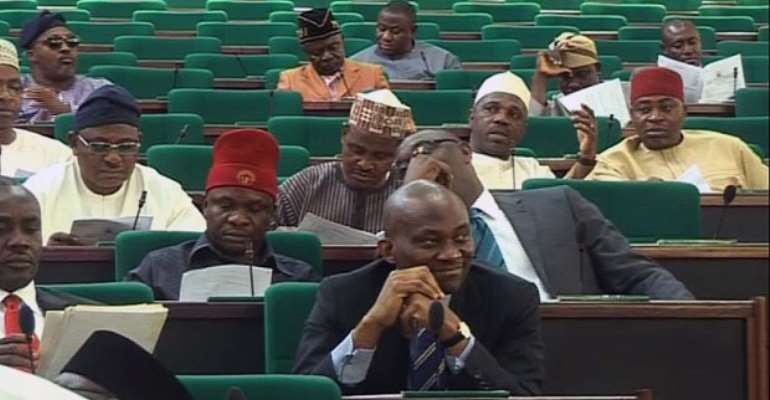
The Senate on Tuesday demanded a comprehensive account of the devastating attack on a military base in Maiduguri carried out by suspected members of a terrorist group, Boko Haram.
Hundreds of the Islamic militants in trucks and a stolen armoured personnel carrier attacked an air force base on the outskirts of Maiduguri before dawn Monday.
The attack described by officials and witnesses as one of the most by the group lead to the death of two military personnel, 24 insurgents, the destruction of three decommissioned military aircraft, two helicopters and property worth millions of naira, which were burnt during the onslaught.
As a result of the attack, , military authorities and the Borno State Government slammed a 24-hour curfew on the city and its environs.
Concerned by the development, the Senate rescheduled a planned Tuesday meeting between the Senate and Security Chiefs in Nigeria.
The meeting was scheduled to enable the service chiefs brief the senate on the ongoing state of emergency in Borno, Adamawa and Yobe States.
Announcing the deferment of the meeting, the Senate Leader, Senator Victor Ndoma-Egba, said that the hearing would now take place on Thursday, December 5, 2013.
The shock of the recent daring do by the dreaded Islamic group was felt across the board. The Presidency on Monday quickly called top security meeting to address the development.
Present at the meeting were the National Security Adviser, Col. Sambo Dasuki (rtd), Chief of Defence Staff, Admiral Ola Sa'ad Ibrahim, Chief of Army Staff, Lt. Gen Azubike Ihejirika and Chief of Air Staff, Air Vice Marshal Alex Badeh.
Nigeria’s government imposed a state of emergency in Borno and two other northeast states in May, cutting phone links in a move designed to block militants from coordinating attacks.
Monday’s attacks came after suspected Boko Haram militants killed 24 people in two separate strikes in Borno state last week and following a military pledge to tighten security in border regions due to fears of Christmas and New Year attacks.
Boko Haram, whose name translates from the Hausa language of northern Nigeria as “Western education is sin”, wants to impose a strict form of Islamic law or sharia in the region and has been blamed for thousands of deaths since 2009.
President Goodluck Jonathan imposed a state of emergency in May in three states, acknowledging the insurgents had seized control of many towns and villages, and flooded the area with security forces.
The military quickly forced the militants out of urban centers but have appeared unable to halt attacks on soft targets like schools, remote villages and major highways where they set up impromptu roadblocks.
Last week, army spokesmen said troops are increasing security and deploying to border villages amid fears of attacks over the Christmas holidays and that the insurgency has spread to neighboring Niger, Cameroon and Chad.
Boko Haram militants have claimed last month’s kidnapping of a French priest in northern Cameroon, who had given refuge to Nigerian Christian refugees from the insurgency.
Hundreds of residents have fled Maiduguri, capital of Borno state, according to witnesses. Residents at the Borno state border with Adamawa state said more than 1,000 people, mainly women children and the elderly, are at the state border where they appear to feel safer.
The Islamic extremist uprising began in 2009 , has killed thousands and threatens the security and cohesion of Africa’s biggest oil producer and its most populous nation, with more than 160 million people, divided between the mainly Christian south and the predominantly Muslim north.
The extremists say they want to impose Islamic rule across all Nigeria.
In one of the group’s highest-profile attacks, a Boko Haram member detonated a car bomb at the United Nations main offices in Nigeria’s capital, Abuja, on Aug. 26, 2011, killing 25 people and wounding more than 100 others. The United States last month designated Boko Haram a terrorist organization.